
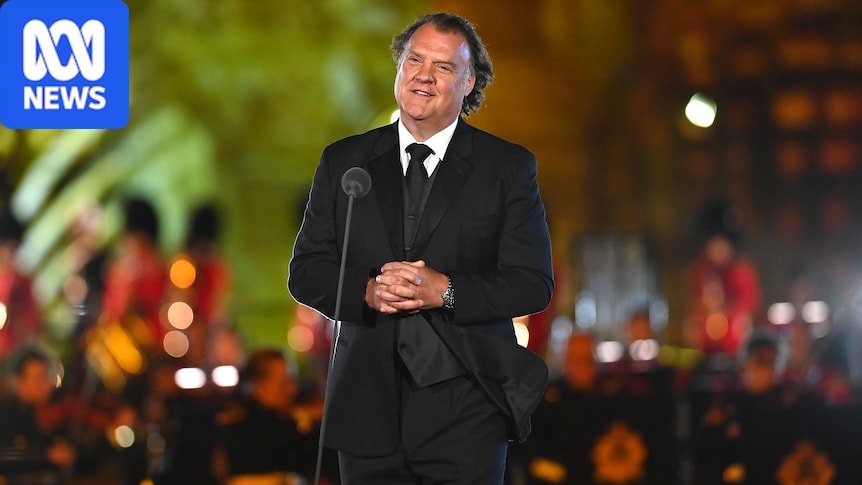
Few opera singers are as internationally celebrated as Sir Bryn Terfel, yet he still describes himself as "the son of a sheep farmer".The Welsh bass-baritone says his love of singing is inseparable from his upbringing and cultural heritage.Ahead of his Australian tour, Terfel reflects on what makes Wales so unique, recalls receiving his knighthood from Queen Elizabeth II, and explains why he remains hopeful about opera's future.What does it mean to grow up in "the land of singers"?I was born in 1965 in Wales. My parents were farmers of sheep and cows.My dad was in a male voice choir, and my mum was in a female choir. They were constantly learning words.There were words on the kitchen cupboards, and whilst they were making breakfast, tea and dinner, they were learning them.Per chance, I started singing at a very early age.Bryn Terfel says he follows in the footsteps of many opera greats who took the art form to extraordinary heights. (Supplied: Rolex/Joelle Kercan)As a teenager I competed in Eisteddfods and, if I won, I would get some money, so there was a reward for missing out on a weekend of soccer or rugby.The chapel on Sunday morning was very important. It brought people together from different villages.The congregation would always sing wonderful hymns, loud and proud and in harmony.The Welsh do have these male voice choirs.To hear 80 choristers sing together is a tremendous sound. It makes the hairs on your hands stand up to attention.Do you remember the moment opera truly captured your imagination?When I was studying at the Guildhall School of Music and Drama, BBC Wales Radio asked me to review a performance of Otello at the Royal Opera House and discuss it on air the following morning.Sir Colin Davis was conducting, Plácido Domingo sang Otello, Katia Ricciarelli was Desdemona and Justino Díaz was Iago.That was my initiation into the operatic world.It was a baptism of fire. There were sparks on stage with singers at the height of their powers.Here was this little son of a sheep farmer sitting in the stalls of the Royal Opera House, about to be entertained by the best singers in the world and the most incredible musicians in the orchestra and chorus. It was mesmerising.What are your most memorable artist encounters?Meeting Sting for the first time.I sang in his 60th birthday concert in New York, and he sang in my 50th birthday concert a couple of years later at the Royal Albert Hall.I also remember recording an opera written by Roger Waters from Pink Floyd, who wrote a piece called Ça Ira, about the French Revolution.And I have to name Sir Tom Jones and Dame Shirley Bassey, who I also worked with as well. They're in their 80s but they're so incredibly inspirational even now.Bryn Terfel and Shirley Bassey sing "World in Union" during the opening ceremony of the 1999 Rugby World Cup at Cardiff's Millennium Stadium. (Getty Images: Gary M Prior/Allsport)It's just an honour to even rub shoulders with these kinds of people.What does Wales mean to you?Wales comes first for me every time.We are punching above our weight, this little nation, especially in the operatic realm.For Sir Bryn Terfel, representing Wales and its rich traditions of music and storytelling will always come first. (Supplied: Bryn Terfel)People like Sir Geraint Evans, Dame Gwyneth Jones, Dame Margaret Price and Sir Stuart Burrows blazed a trail before my generation.There's a reason these people are Sirs and Dames. The hard work they did in the 1950s and 60s brought opera to incredible heights.Geraint Evans was instrumental in the beginning of my career, helping me secure auditions with people like Sir Georg Solti and other magnificent conductors.I was very fortunate to follow a path already laid by those great Welsh singers.Then, just before Christmas in 2017, I got that glorious letter saying I was going to be knighted.I couldn't tell anybody.Sir Bryn Terfel was knighted by Queen Elizabeth II for services to music in the 2017 New Year Honours list. (Supplied: Bryn Terfel)I stood in my kitchen with a face like a piece of white paper and an envelope shaking in my hands. My wife pretty much guessed what was happening.Recognition like that isn't just about what you've done on stage. It's about your dedication, your work with charity and your role as an ambassador for music in Wales.The denouement was singing Arglwydd, trugarhâ [Lord, have mercy] at King Charles's coronation. The piece was only a minute and 40 seconds long, but it meant Welsh was heard for the first time at a coronation.And now I'm handing on the baton to the Welsh singers coming through.Sir Bryn Terfel performs in Welsh during King Charles III's coronation ceremony in May 2023 at Westminster Abbey. (Supplied: Bryn Terfel)How do you feel about the future of opera?We've seen dwindling ticket sales in opera houses, but we go through different phases.Hopefully it'll come back now that there are some amazing young singers keeping these opera houses afloat.I think they've captured people's imagination once again, and hopefully audiences are clamouring for tickets.To keep people interested, productions have to be strong.They need to bring people into the opera house, not keep them out of it.This interview has been edited for clarity and length.Bryn Terfel will be touring Australia from October 26 to November 21 2026, performing in Sydney, Adelaide and Melbourne.Get the latest classical music stories direct to your inbox
Why Wales will always come first for Sir Bryn Terfel
Full Article
Original Source
Read the full article at Abc →KhanList aggregates and links to publicly available news content. We do not host full articles from third-party sources. Always verify important information with original sources.