
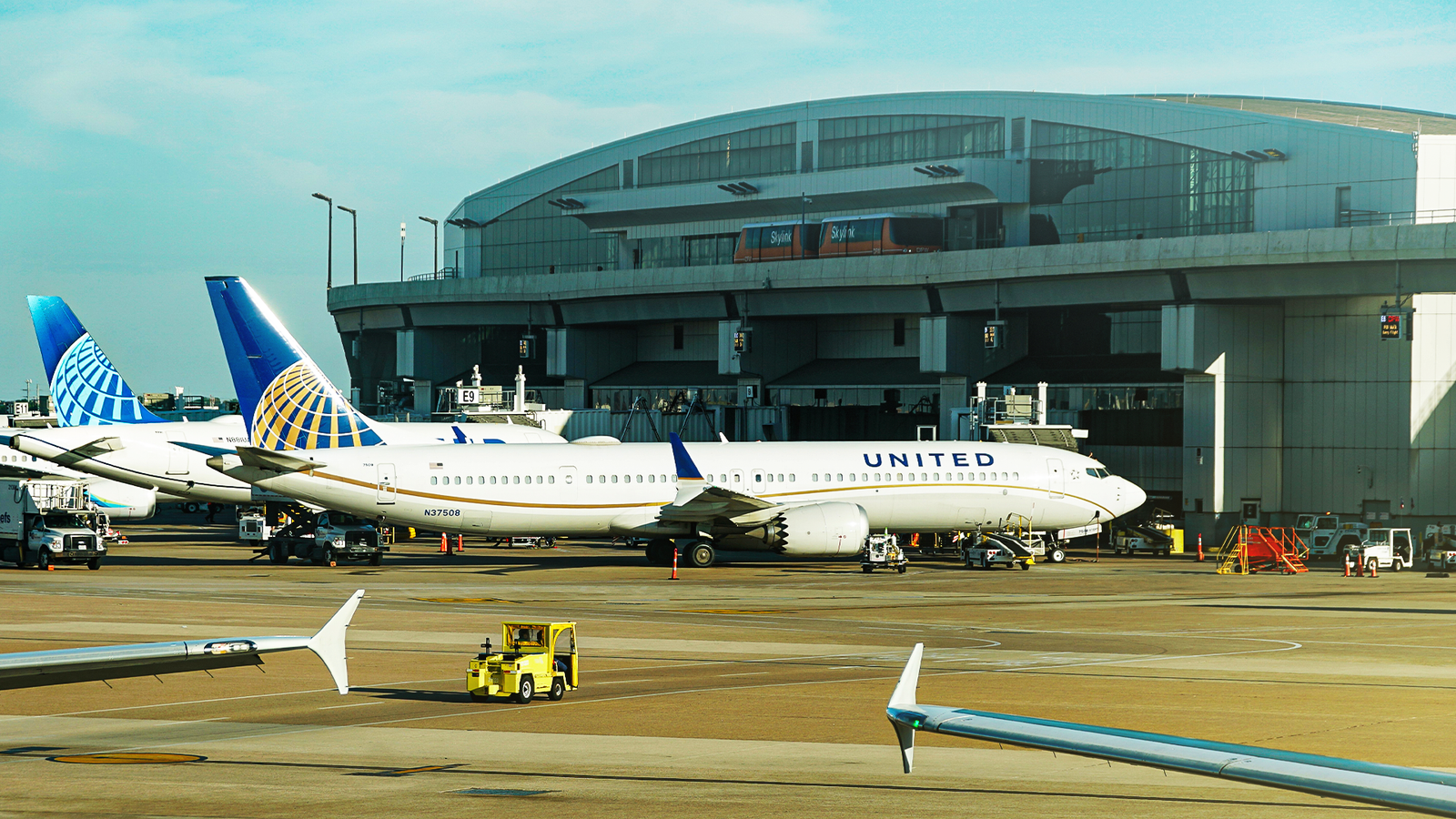
Credit: Khairil Azhar Junos | Shutterstock, Simple Flying Published Oct 31, 2026, 3:00 PM EDT Daniel comes to Simple Flying with a business focused approach to the aviation world. Daniel enjoys analyzing strategy and how companies move against each other to gain a step ahead in the skies. Besides strategy, Daniel also has a passion for aircraft design and the history of aviation. Based in New York Sign in to your Simple Flying account Essentially all airlines have hubs where most routes originate, where planes are based, and where crew members are based. United Airlines has eight hubs, located in Newark, Washington DC, Chicago, Houston, Denver, Los Angeles, San Francisco, and Guam, and in these eight hubs, the airline also has pilot and flight attendant domiciles. Although the hubs are located at specific airports, the crew domiciles cover all airports in the market, meaning that a Newark-based crew member can also operate a trip originating in LaGuardia, for instance. Domiciles usually line up with where an airline has its hubs, but the two are not the same, and this can be seen in the two latest flight attendant domiciles that the airline has recently announced. United will now base flight attendants in Sacramento, a small spoke market, and in Dallas/Fort Worth, which is American Airlines' largest hub. United is not planning to set up hubs in either airport, but there will now be small groups of flight attendants whose trips originate in these cities. Why United Is Basing Flight Attendants Out Of These Cities Credit: Leena Robinson I Shutterstock Fundamentally, airlines place crew domiciles in cities where a high volume of flights originate/terminate, which is why you see domiciles at almost every hub that an airline operates. By relieving pilots and flight attendants from duty, an airline saves money on lodging, per diem, and transportation, since once the trip ends, it's the crew member's responsibility to get home. Similarly, it's the crew member's responsibility to show up to their domicile before the trip officially begins, not the airline's. However, airlines may still have a significant number of crew members living in a non-hub airport, while certain spokes may have a significant number of flights. In these cases, sending crew members to hotels incurs expenses that might not be necessary depending on the scale of the operation. United has not revealed the purpose behind setting up domiciles in these specific cities. However, it's likely that the airline has a high number of layovers in these cities or that a significant number of flight attendants already live in these cities, or a combination of both. In any case, the math worked out that it was more cost-effective to set up domiciles rather than send crews to hotels. Ordinarily, a flight attendant living in Dallas who is based in Houston would first need to commute to Houston to begin their trip. If that trip involved a layover in Dallas, the company would need to pay for per diem, a hotel, as well as transportation to and from the hotel. With the Dallas crew base, United can schedule trips that originate and end in Dallas. Since a large number of crew members already live in the city, this yields significant cost savings. How The New Bases Will Operate Credit: Austin Deppe I Shutterstock These are not standard bases like United's domiciles in its hubs. Instead, these are satellite bases, with the Dallas domicile being a satellite of United's Houston base while Sacramento will be a satellite of the San Francisco domicile. This means that there won't be on-site supervisors, and new hires are not assigned to the satellites as a result. However, schedule bidding for the satellites is done separately from the main bases, while crews bid into these domiciles based on seniority. The Sacramento and Dallas bases are noteworthy because they seem to be very unusual choices at first glance, but United has long operated satellite bases. Including the satellites, the airline has 19 flight attendant bases in total, while Sacramento and Dallas will bump the number up to 21. The carrier's satellite bases are located in Tampa, Orlando, Fort Lauderdale, Austin, Phoenix, and San Diego, while United also maintains full bases in Boston, Cleveland, Las Vegas, Honolulu, and London. All of these bases are relatively small and have limited flying, because they're mainly intended for crew members living in these cities. The airline still schedules layovers in these destinations, and many flights operating out of them will be staffed by crew members from other domiciles. However, it does save United money on layover costs, while it's more convenient for the flight attendants living in these cities. The same also applies to pilots, although on a much smaller scale. Secondary Domiciles For Pilots Credit: Ryken Papy | Shutterstock United maintains pilot bases at its eight hub airports, but just like with flight attendants, this doesn't mean that most of its flight crew members live in these cities. As such, United and other airlines often have to pay for layover costs in cities where a pilot may live, yet isn't based out of. However, there are two main differences in this regard between flight crew and cabin crew: there are far fewer pilots than flight attendants, and pilots are typically only certified to work on one type of aircraft (although common type ratings exist in some cases). This significantly changes the equation when deciding whether to open a new domicile, and it makes it harder for airlines to justify investing in a pilot base not located in a hub. However, this doesn't mean that it never happens, and United Airlines itself operates four domiciles located in non-hub cities: Cleveland, Las Vegas, Orlando, and Tampa. The Cleveland base is a holdover from Continental Airlines, which did use the city as a hub, while the latter three are much more recent additions. All four of these are Boeing 737 bases, and this further indicates United's rationale for these decisions. The airline likely has a substantial number of pilots who live in or near these cities, and they are all major spokes for the carrier. In addition, United's narrowbody fleet is much more dominated by the Boeing 737 than those of its rivals, which makes it easier to schedule a large number of 737 trips that originate and terminate in one of the four new domiciles, especially since the 737 is already operating most flights to these cities. How The Other Airlines Compare Credit: Wenjie Zheng | Shutterstock Among its peers, United is hardly unique in operating flight attendant domiciles outside of its hubs. Delta Air Lines operates 20 flight attendant domiciles, including bases in Austin, Cincinnati, Dallas/Fort Worth, Fort Lauderdale, Honolulu, Las Vegas, Orlando, Phoenix, Portland, Raleigh-Durham, San Francisco, and Tampa, in addition to its eight hub cities. In some cases, the domicile comes with an increased focus on a specific airport, such as with Austin, but it's usually just a method to cut layover costs. Among the three US legacies, American Airlines has the most hubs, operating out of ten airports in nine cities, and it operates flight attendant domiciles in these nine cities. American Airlines' Hub Airports Delta Air Lines' Hub Airports United Airlines' Hub Airports Charlotte Douglas International Airport (CLT) Atlanta Hartsfield-Jackson International Airport (ATL) Chicago O'Hare International Airport (ORD) Chicago O'Hare International Airport (ORD) Boston Logan International Airport (BOS) Denver International Airport (DEN) Dallas/Fort Worth International Airport (DFW) Detroit Metropolitan Wayne County Airport (DTW) Antonio B. Won Pat International Airport (GUM) Los Angeles International Airport (LAX) Los Angeles International Airport (LAX) George Bush Intercontinental Airport (IAH) Miami International Airport (MIA) Minneapolis/St. Paul International Airport (MSP) Los Angeles International Airport (LAX) John F. Kennedy International Airport (JFK) John F. Kennedy International Airport (JFK) Newark Liberty International Airport (EWR) LaGuardia Airport (LGA) LaGuardia Airport (LGA) San Francisco International Airport (SFO) Philadelphia International Airport (PHL) Salt Lake City International Airport (SLC) Washington Dulles International Airport (IAD) Phoenix Sky Harbor International Airport (PHX) Seattle-Tacoma International Airport (SEA) Ronald Reagan Washington National Airport (DCA) In addition, the airline also has a cabin crew base in Boston, while it runs satellites attached to the main crew bases in Atlanta, Austin, Las Vegas, Minneapolis, Orlando, Pittsburgh, Raleigh-Durham, Sacramento, San Diego, and St. Louis. With American, these satellites are generally located in large cities where the airline has a significant presence. New domicile announcements can seem exciting, since they're often thought to signal future growth at the base city, but this isn't often true. The US three have long operated far more domiciles than hubs, and United even maintains a base in London. While the Dallas and Sacramento choices may seem to be out of left field, Delta also maintains a Dallas flight attendant base, while American operates a crew domicile in Sacramento. As such, it's hardly doing anything unique with these additions. Non-Hub Domiciles For Pilots Credit: George Wirt | Shutterstock It's practically standard practice for US airlines to maintain flight attendant bases outside of their hub airports, since this reduces costs with little drawback at this scale. However, the circumstances are different for pilots because flight crew work groups are much smaller and are further fragmented by the fact that crews only work one aircraft type. While plenty of pilots also commute, the numbers are often too small to justify opening a crew base in one particular city that isn't a hub. American Airlines, which operates 10 main flight attendant domiciles and ten additional satellite domiciles, only has pilot bases in its nine hub cities. Delta Air Lines, which has 20 flight attendant bases, also doesn't operate any pilot bases in non-hub airports, and it doesn't even operate a narrowbody flight crew base in Boston, even though the airline officially declared it a hub in 2019. The carrier now operates an Airbus A330 pilot base in Boston, but other domiciles crew all narrowbody flights. United is the only one of its peers to operate pilot domiciles outside of its hubs. The reason for this is not confirmed, but the benefit remains that it saves money on hotels, transit, and per diem in Cleveland, Las Vegas, Orlando, and Tampa. A few reasons why this may have worked better for United, however, are that the airline is growing much faster than its rivals, as well as the fact that it operates substantially more 737s than A320s (more than three times as many), meaning that these bases aren't tiny to the point of being inefficient.
Why United Airlines Is Opening Up Flight Attendant Bases In Cities Almost No One Would Expect
Full Article
Original Source
Read the full article at Simpleflying →KhanList aggregates and links to publicly available news content. We do not host full articles from third-party sources. Always verify important information with original sources.