
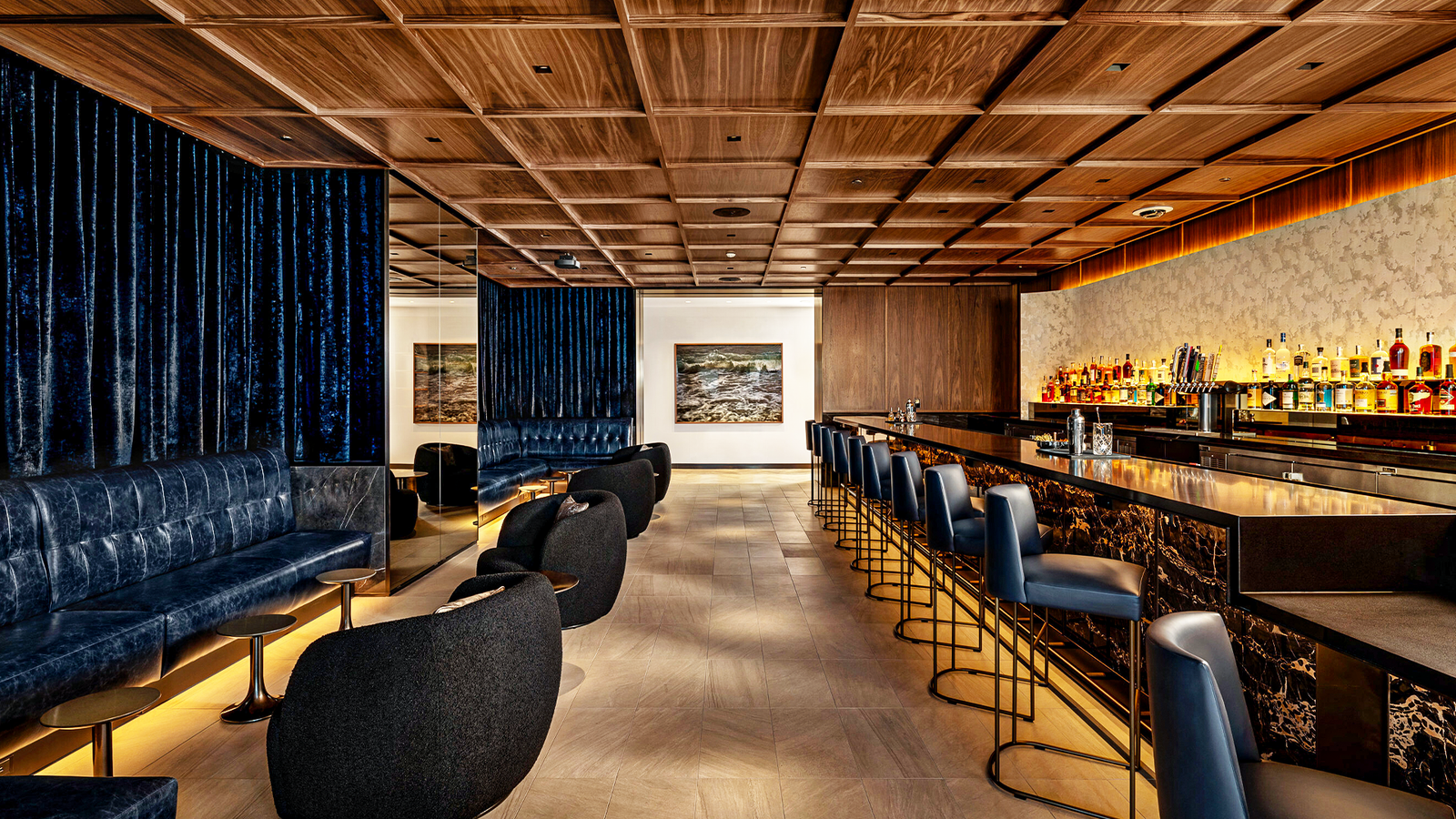
Published Sep 19, 2026, 11:00 PM EDT Jack comes to Simple Flying with a lifelong interest in all things aviation. He holds a degree in Aerospace Engineering from Georgia Tech, and is a certified private and remote pilot. Beyond these experiences, Jack previously worked for a corporate flight department where he gained first-hand experience in the world of business aviation. Currently, Jack works in the professional services industry and continues to build his flight hours outside of work. United Airlines is approaching a problem created by one of its biggest investments in premium international flying. Soon, more Polaris passengers may outnumber what some airport lounges can comfortably handle. The carrier has confirmed it is evaluating expansion in two markets, with Los Angeles International Airport (LAX) and Chicago O'Hare International Airport (ORD) emerging as the leading candidates as United introduces more Boeing 787-9 aircraft with a substantially larger business-class cabin. The pressure comes from United’s Polaris 2.0 rollout. The new 787-9 configuration has 64 business-class seats, compared with 48 on existing aircraft, representing a 33% increase in premium capacity on every newly configured Dreamliner. With roughly 66 aircraft in the delivery pipeline, the cumulative effect could be significant. United can add premium seats much faster than it can add terminal space, creating a potential bottleneck in the airport portion of its premium strategy. New 787-9 Changes United’s Premium Capacity Equation Credit: United Airlines United’s new 787-9 represents a major change in how much premium inventory the airline can sell on one Dreamliner. The aircraft carries 64 business-class passengers, including eight Polaris Studio suites and 56 standard Polaris seats. Existing United 787-9s have 48 business-class seats, so the new arrangement adds 16 premium seats per aircraft. The rest of the cabin has been reshaped around that strategy. The result is a significantly more premium-heavy aircraft, reflecting the carrier’s effort to capture higher-value international demand rather than simply maximize economy capacity. Polaris Studio gives United another way to monetize the most desirable positions in the cabin. The eight suites provide additional space, larger screens, and an ottoman that can accommodate a companion during meals. The product is designed to elevate the highest-priced portion of United’s business-class offering while making the aircraft more attractive to travelers willing to pay for additional privacy and space. United 787–9 Configurations Class Seats on Existing 787-9 Seats on Elevated 787-9 Polaris Studio 8 Polaris 48 46 Premium Plus 21 35 Economy 188 123 The new interior is already in commercial service. United’s second-quarter 2026 results said the new 787-9 had begun flying between San Francisco and Singapore and between San Francisco and London, demonstrating that the higher-density premium configuration is no longer simply a future product concept. For the lounge network, every new aircraft introduces another recurring source of eligible premium travelers. The effect will accumulate as more aircraft arrive and enter international service. Los Angeles Faces The Sharpest Peak-Period Pressure Los Angeles presents the clearest potential bottleneck because United’s Polaris Lounge there is relatively small and several international departures can cluster within a short period. A detailed review of the LAX facility found that four United 787 flights to Sydney, Melbourne, Hong Kong, and Beijing can depart within roughly an hour during the evening bank. With 48 Polaris seats on each aircraft, those flights alone could represent as many as 192 business-class passengers flowing through the lounge, before accounting for connecting passengers or eligible Star Alliance travelers. The same schedule becomes considerably more demanding when those aircraft carry 64 business-class passengers. Four fully occupied Polaris 2.0 787-9s would represent as many as 256 premium passengers, an increase of 64 compared with the previous configuration. That is a theoretical maximum, rather than a forecast of actual lounge attendance, because passengers arrive at different times and not every seat will be occupied. The calculation nevertheless demonstrates why peak periods matter more than the lounge’s average occupancy. International departures create concentrated waves of customers. A facility can have adequate capacity for most of the day and still feel uncomfortable when several widebody flights prepare to depart simultaneously. Los Angeles is also strategically important because United uses it as a gateway for transpacific flying. Premium demand comes from both local Southern California customers and connecting travelers, giving the new 787-9 configuration an opportunity to generate additional high-value traffic through the airport. United has not publicly confirmed that LAX will receive an expansion. The airline has confirmed that it is evaluating two markets, while industry reporting has identified Los Angeles and Chicago as the likely candidates. The locations should therefore be treated as leading possibilities, not announced projects. Chicago Already Received A Major Polaris Expansion Credit: Kenishirotie | Shutterstock Chicago presents a different challenge because United has already invested heavily in additional Polaris capacity. The airline reopened its expanded O’Hare lounge in April 2025 after increasing the facility by 50% to nearly 25,000 square feet (2,323 square meters). The redesigned space now provides more than 350 seats, a 50-seat private dining room, a second bar, six additional restrooms, and private areas for work and relaxation. United created the additional space by incorporating an adjacent United Club, showing the carrier was willing to repurpose existing terminal real estate to support premium demand. The expansion also reflects Chicago’s role in United’s international network. O’Hare supports long-haul service to Europe, Asia, and South America, creating a broad customer base for Polaris rather than relying on a handful of individual routes. The lounge therefore has to accommodate passengers from numerous departure banks throughout the day. The new 787-9 changes the utilization equation again. A 350-plus-seat lounge may appear substantial, but total capacity does not determine whether customers encounter crowding. The more relevant question is how many eligible passengers arrive during the same departure window and how long they remain. A 64-seat business cabin creates one-third more potential Polaris customers than a 48-seat aircraft. If United assigns increasing numbers of the new Dreamliners to Chicago, peak demand could rise even though the lounge itself has not become smaller or less capable. Chicago therefore illustrates why United may need another expansion despite recently completing a major project. The 2025 enlargement addressed the demand generated by the existing network. Future deliveries could create a new demand curve before the airport has another large amount of space available. Lounge Capacity Cannot Grow As Quickly As Aircraft Capacity Credit: United Airlines | Simple Flying United’s premium strategy creates an infrastructure problem because aircraft can add seats much faster than airports can add physical space. A new 787-9 can enter service and immediately provide additional seats, but a lounge expansion requires terminal space, construction, staffing, food-service capacity, and coordination with airport authorities. That difference creates a timing challenge. The corresponding lounge capacity has to be available when those customers arrive at the airport. There is also a service-quality issue. Polaris lounges are designed as premium facilities rather than simple waiting areas. United offers full-service dining, premium beverages, work areas, relaxation spaces, and other amenities. More guests therefore increase demand for operational resources as well as chairs. Dining is particularly sensitive to sudden increases in traffic. Chicago’s expanded dining room contains 50 seats, nearly triple the previous capacity, yet a large departure wave can still create waits even if empty seats exist elsewhere in the lounge. Bars, restrooms, showers, and private spaces can experience similar localized congestion. Adding seats alone, therefore, would not necessarily preserve the Polaris experience. United has invested in premium cabins partly because customers are willing to pay more for a superior end-to-end journey. If the airport portion becomes crowded, the additional aircraft capacity could produce diminishing returns. The airline is not merely identifying airports that need more seats, but determining where premium demand has grown enough to justify another major physical investment. United May Need To Coordinate Aircraft And Lounges More Closely Credit: Markus Mainka I Shutterstock The 787-9 expansion could push United toward a more integrated approach to premium capacity. Instead of treating each Polaris Lounge as a separate amenity, the airline may need to coordinate lounge space with aircraft assignments, departure banks, and premium demand across its network. One answer is straightforward expansion. Chicago demonstrates that United is willing to convert adjacent terminal space when demand warrants the investment. If suitable real estate exists at another hub, enlarging an existing Polaris Lounge could provide the most durable solution. Another approach involves improving utilization. More efficient food service, changes to seating arrangements, or better management of peak-period traffic could help existing facilities handle higher volumes without requiring another major construction project. These measures would not create physical capacity, but they could reduce the severity of temporary surges. United can also influence the problem through aircraft deployment. The airline controls where its new 787-9s operate, allowing it to distribute premium capacity according to route economics and airport infrastructure. The longer-term challenge is that the premium expansion is structural rather than temporary. The new 64-seat 787-9 is part of a broader effort to increase premium inventory, and roughly 66 incoming aircraft would give that strategy considerable scale. If premium seating grows faster than airport facilities, LAX and ORD could become early examples of a problem that eventually reaches other major hubs. United may consequently have to treat lounge capacity as part of fleet planning, rather than as a separate airport-services issue. United’s Lounges Could Become The Next Limit On Premium Growth Credit: Vytautas Kielaitis I Shutterstock United’s Polaris challenge is ultimately a capacity-planning problem created by the success of its premium strategy. The new 787-9 can generate materially more high-value traffic without an additional flight, but every additional premium passenger still needs an airport experience that can support the fare United is trying to command. Los Angeles has the most obvious exposure because several international 787 departures can create a concentrated evening surge. Chicago presents a different test because United has already expanded its Polaris Lounge, yet the arrival of larger business-class cabins could eventually produce another capacity squeeze. The next stage of United’s international growth will therefore require closer coordination between aircraft deliveries and ground infrastructure. If the airline expands lounges before demand overwhelms them, it can preserve the premium experience that supports the new cabins. If terminal capacity falls behind the fleet, the Polaris Lounge could become an unexpected constraint on a strategy designed to make United’s aircraft more valuable, not merely larger.
Why United Airlines' 66 Incoming Boeing 787-9s Are Breaking The Polaris Lounge Network
Full Article
Original Source
Read the full article at Simpleflying →KhanList aggregates and links to publicly available news content. We do not host full articles from third-party sources. Always verify important information with original sources.