
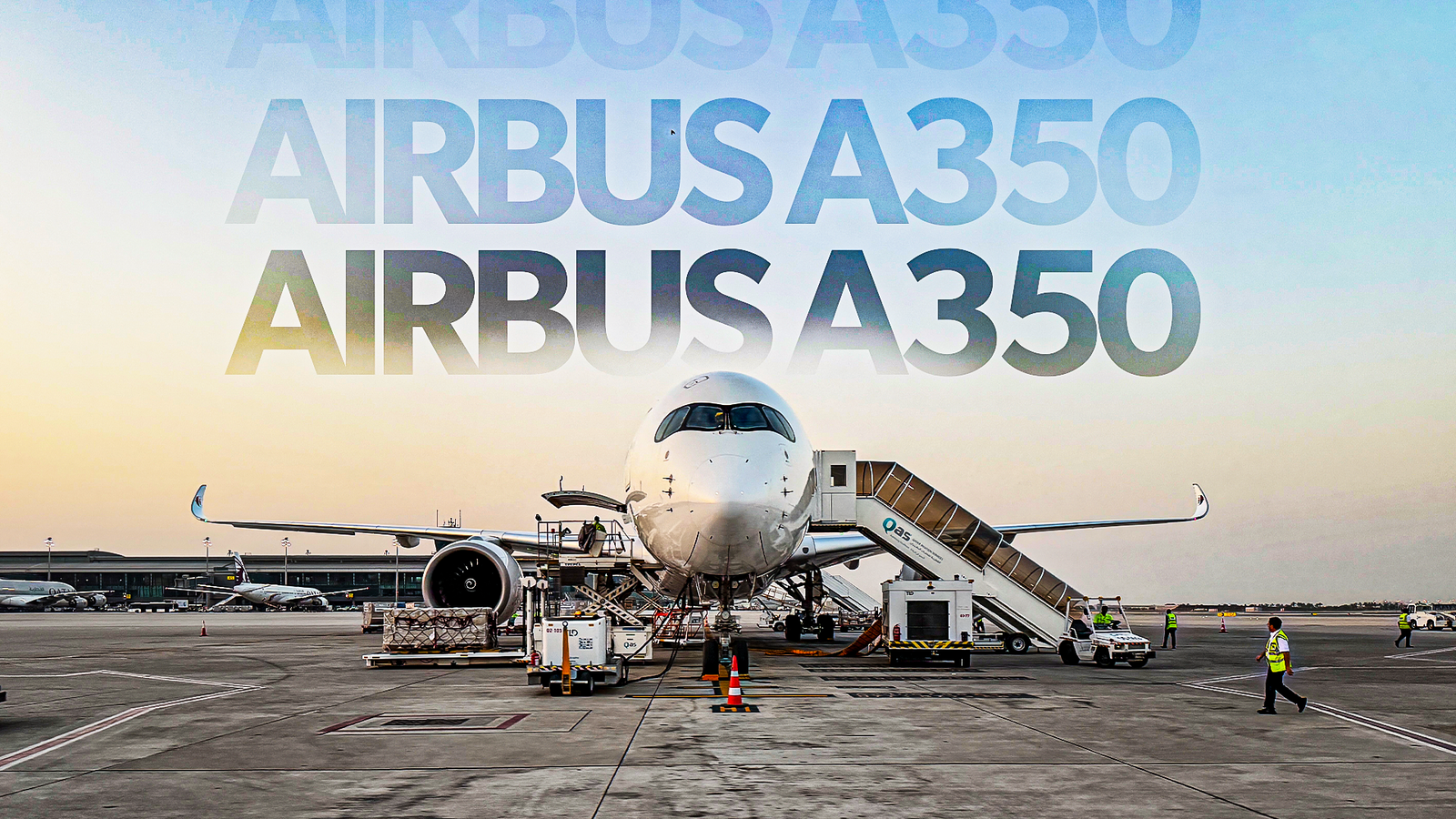
While commercial airlines normally operate widebody jets for two decades to spread acquisition costs over time, Malaysia Airlines is diverging from industry norms. Kuala Lumpur's administration has launched a formal evaluation to replace its flagship Airbus A350-900 fleet starting in 2030, when the present jets will be about twelve years old. This early retirement contradicts traditional airline procedures, which call for operators to keep reliable widebodies for as long as possible. Between 2017 and 2018, Malaysia leased six brand-new A350s from Air Lease Corporation for twelve years. Later, JP Lease Products and Services added a seventh aircraft to accommodate its longest flights. Airline planners prefer to return the keys to the leasing firms as soon as the agreements expire rather than prolonging the leases to keep the aircraft in service beyond the 2030s. Malaysia Airlines can reconsider its seating arrangements, increase its fleet size, and resolve the financial issues associated with its current long-haul system by retiring 12-year-old aircraft on schedule. Stretched Too Thin: The Trap Of A Seven-Jet Flagship Fleet Credit: alphonsusjimos | Shutterstock Malaysia employs a small sub-fleet of seven A350-900 aircraft for its longest intercontinental flights. Each aircraft is powered by two Rolls-Royce Trent XWB-84 engines that generate 84,200 pounds (38,192 kg/374.5 kN) of thrust and has a maximum takeoff weight of 617,294 pounds (280 metric tons). The airline can fly 8,100 nautical miles (15,000 km) nonstop from Kuala Lumpur to key cities in Europe without stopping to refuel, thanks to the jet's combined power and fuel capacity. There is no margin for error when operating an international schedule with just seven aircraft. The airline's long-haul capacity drops by more than 14% when even one of the sub-fleet's seven aircraft is grounded. When aviation authorities mandated fuel line checks for the Trent XWB engines, that math became a serious issue. Pulling one A350 into the hangar creates a huge gap in the schedule that the airline finds difficult to fill. "So, for us, we want to keep growing our fleet, and as you know, we've got a total order of 40 aircraft that will be in by 2030," a Malaysia Airlines representative told Simple Flying. "So that will complete our mid- to semi-long-range fleet, right, by 330 meters, and then we'll now move on to what we do with the 350s. So we're going through an exercise right now to do a selection of the aircraft." Performance is also impacted by the aircraft's interior design. To give passengers more room, Malaysia only installed 286 seats on its A350s, comprising four business suites, 35 business class seats, and 247 economy seats. Malaysia Airlines sells over 40 fewer tickets per flight while paying the same fuel and landing fees, since other airlines can fit about 325 seats on the same aircraft. Thin Margins, Cabin Comfort & The Race For Factory Slots Credit: Allora Empire Art | Shutterstock Malaysia Aviation Group's bottom line is disproportionately impacted by its A350 widebodies. The company cannot afford to squander money on ineffective overhead after reporting a net profit of RM766 million ($162 million) in 2023, its first successful year in 10. These hard-earned earnings are gradually eroded by the cost of separate pilot simulator training, extra engines, and specialist maintenance equipment for just seven aircraft. Passenger comfort is also a major factor in the replacement search, especially cabin pressure. Because the Airbus A350 is built out of carbon-fiber composites, it can safely pressurize the cabin to feel like 6,000 feet (1,829 meters) while cruising at 43,000 feet (13,106 meters), whereas older metal-bodied designs like the A330neo sit closer to 8,000 feet (2,438 meters) to prevent metal fatigue. That lower cabin altitude reduces jet lag and dry air, so downgrading passengers to a less comfortable plane would hurt Malaysia Airlines against fierce regional competitors like Singapore Airlines. Getting new airplanes by 2030 requires overcoming enormous production backlogs at both main aircraft manufacturers. Airbus has already sold out most of its widebody production slots through the end of the decade due to part and engine delays, but Boeing is grappling with tight federal safety oversight and supply chain bottlenecks that have hampered twin-aisle deliveries. If Malaysia Airlines takes too long to place an order, it may miss the 2030 deadline and be forced to renew its current A350 leases at significantly higher market prices. Caught In The Middle: Solving The A330neo Range Gap Credit: Jeang Herng | Shutterstock The carrier's investment in 40 A330-900neos is directly responsible for the urgency of the present-day fleet reorganization. The 297-seat aircraft is powered by Trent 7000 engines that generate 72,834 pounds (33,037 kg) of power (324 kN) and a takeoff weight of 553,360 pounds (251 metric tons). Winter headwinds reduce its range to 7,200 nautical miles (13,334 km), but nonstop flights to London are still feasible. This performance disparity places the seven A350-900s in a unique operational scenario. When an ultra-long-range jet designed for fourteen-hour oceanic crossings is flown on medium-haul trips to Australia, money is lost in landing fees and structural bulk. However, because the A330-900neo cannot consistently reach Europe, the airline must rely on a limited, expensive sub-fleet until current leases expire. Malaysia intends to remove network friction by implementing a single platform capable of flying nonstop to Europe while carrying a high seat count to Australia. Offering identical cabin products along the Kangaroo Route creates a unified passenger experience. Balancing long-haul structural capability with low regional operating costs remains the carrier's core engineering challenge. Superjumbo Shadows: Why Kuala Lumpur Refuses To Overbuy Again Credit: Jeang Herng | Shutterstock Executive leadership in Kuala Lumpur is approaching its long-haul strategy with fresh and unpleasant memories of the airline's experience with the Airbus A380-800. The airline previously operated six of the double-decker superjumbos, which were powered by four Rolls-Royce Trent 970 turbofans and weighed up to 1,234,588 pounds (560 metric tons). For nearly a decade, that aircraft weighed heavily on the company's balance sheet because of exorbitant fuel consumption, high landing fees, and devastating depreciation costs. Ultimately, the airline took massive write-offs, retired all six superjumbos early, and sent them into long-term desert storage. The airline struggled due to the superjumbos' sheer size, according to Bryan Foong, Chief Executive Officer of Malaysia Aviation Group. As a result, managers are reluctant to purchase any aircraft that cannot operate successfully year-round. "We used to fly the 380s," a spokesperson explained. "That was an aircraft that was too large for us, and we struggled. We were honestly struggling, and because of that, we don't want to repeat that. So we're very careful, especially with this, because it's a very expensive aircraft to buy." "Our main priority is profitability and whether we can sustain that level of growth. Because we don't want to invest in something that's too large that we regret later or we struggle to fill. So that balance of analysis is where we try and find a very good sweet spot where the aircraft has the range, but also it makes sense economically for us to acquire that aircraft. Sure, that's why it's taken us so long." Guidelines were set by Chief Commercial Officer Dersenish Aresandiran and former Group Managing Director Datuk Captain Izham Ismail. The replacement platform must deliver more revenue payload than the incoming A330-900neo fleet without flooding the market with empty seats. Matching that payload balance against actual demand remains the unresolved dilemma. Airbus Versus Boeing: Weighing The Technical Trade-Offs Credit: Jeang Herng | Shutterstock With seven A350-900s leaving the flightline in 2030, Malaysia is expected to order at least 10 new widebodies. Since it already operates Airbus jets, the stretched A350-1000 offers easy pilot transitions and 80 extra seats, though factory backlogs past 2030 and expensive Rolls-Royce maintenance contracts remain major hurdles. "Well, the role today we have seven A350s in the system, and they play a very, I suppose, a very specific role," the spokesperson said. "Serve London, serve Paris, because that range of the aircraft is what we need, right? And in between, we serve it. We send it to Doha, we send it to Narita, we sometimes send it to Sydney because we have that capacity availability of the aircraft to do so." Aircraft Average Seating Capacity Maximum Range Boeing 787-9 Dreamliner 296 passengers 7,565 nautical miles (14,010 km) Airbus A350-900 332 to 352 passengers 8,500 nautical miles (15,750 km) Airbus A350-1000 375 to 400 passengers 9,000 nautical miles (16,700 km) Boeing 777-9 426 passengers 7,285 nautical miles (13,500 km) Airbus A380 545 passengers 8,000 nautical miles (15,000 km) Turning to the Boeing 787 Dreamliner unlocks faster 2031 delivery slots and competitive General Electric engine deals. Its lightweight composite build lowers fuel burn on regional Asian and Australian routes while still reaching London. However, reintroducing Boeing twin-aisle aircraft forces the airline to spend heavily on separate pilot simulators, spare parts inventories, and new maintenance tooling. At the top end of the market, the 777-9 carries over 400 passengers with massive cargo space to dominate peak travel seasons on trunk routes to London and Tokyo. Still, flying such a large aircraft risks costly empty seats during travel downturns, while Boeing's ongoing certification delays create uncertainty around firm delivery dates. The 2030 Deadline: Inside Malaysia Airlines' Flightline Evolution Credit: Jeang Herng | Shutterstock As Malaysia fights for passengers between Asia and Europe, its C-suite is still pondering an order for up to 16 long-haul widebodies. Selecting the right jets requires carefully weighing and factoring in the cost of empty seats during periods. Whatever executives choose will lock in the airline's fuel, maintenance, and operating expenses for the next 20 years. "We are looking at an aircraft with the range to London, but also the additional seats, more than the 330 neos, are useful for thick routes, for example, to Sydney and Melbourne for us," the spokesperson said. "So the end-to-end consistent experience, you can fly from London all the way to Sydney and Melbourne on a 350 or 350 replacement type of product is so attractive for us." "The short answer to me is: watch this space. We will have an imminent announcement before the year ends, so just keep an eye on what we're going to announce on that front, and yeah, we'll make all the necessary confirmations." Airports such as London Heathrow are tightening noise limitations and carbon emissions rules, and many global hubs are charging higher landing fees for older, louder widebodies. With its current A350 leases expiring in early 2030, Kuala Lumpur's administration cannot afford to delay. Getting the balance of seat count, range, and delivery timing right will ultimately decide whether Malaysia Airlines thrives across its core long-haul network.
Why This Airline Wants To Replace Its Airbus A350s From 2030
Full Article
Original Source
Read the full article at Simpleflying →KhanList aggregates and links to publicly available news content. We do not host full articles from third-party sources. Always verify important information with original sources.