
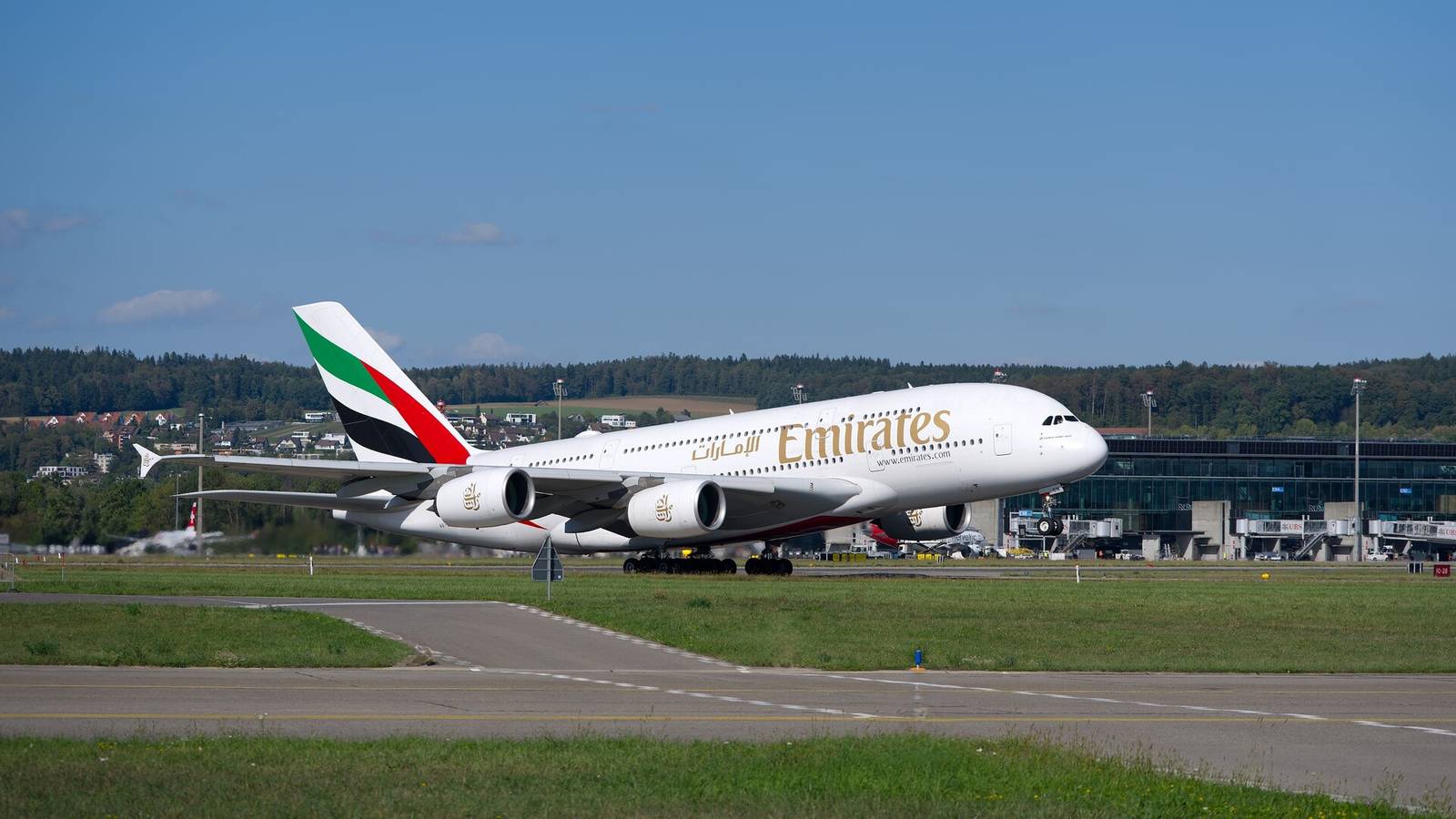
Published Sep 27, 2026, 4:00 PM EDT Aaron is an aviation enthusiast and world traveler with a deep interest in aerospace history and technology. He has traveled around the world numerous times, often incorporating visits to aviation museums and historic aircraft collections into his journeys. A native of New Zealand, he is an expert in aviation and maintains a broad interest in a variety of other subjects. When Airbus launched the Airbus A380, it projected that the global aviation market would require roughly 1,200 to 1,600 ultra-large aircraft over 20 years, of which at least half would be A380s. Airbus intended to produce standard and stretched passenger variants of the aircraft, a freighter variant, and VIP private jet variants. It thought the program would go through midlife 'A380neo-like' upgrades. However Airbus failed to sell a single A380F cargo jet, with all orders canceled before the superjumbo had even entered passenger service. For Airbus, the A380 was a financial disaster, and it never recovered the type's massive development costs. During COVID-19, hundreds of A380s were grounded, and dozens were mothballed and scrapped, but none were converted to freighters, even though Lufthansa considered cargo conversions. Let's examine why the Airbus A380F failed and why the airline industry turned to smaller twin-engined widebody freighters. Airbus' Lineup of Freighters Credit: MH.Chuang l Shutterstock Airbus says that clients can "benefit from Airbus' extensive expertise in the Freighter industry spanning decades. Our diverse fleet caters to various cargo markets and meets the needs of cargo operators with a comprehensive selection of freighter aircraft and Passenger-to-Freighter conversion options." It then lists its upcoming flagship, purpose-built A350F cargo airplane with an impressive 4,700 nautical mile range and a max payload of 245,000 lbs (111 tonnes). It also lists the A330ceo series purpose-built and converted passenger-to-cargo freighters, including the A330-300P2F, the A330-200P2F, and the A330-200F with ranges of between 3,200 and 4,200 nautical miles. Narrowbody freighters are converted variants of its popular A320 series of aircraft, including the A320P2F and the stretched A321P2F. These come with ranges of 1,850 nautical miles and 2,020 nautical miles respectively. However, what is missing from the list is the Airbus A380F, which Airbus once planned to make and was briefly ordered by airlines. Airbus had also developed the A380-800 with the intention of producing the stretched A380-900. This explains why the A380-800's wings are designed the way they are. But none of these variants (including the proposed A380neo and A380plus) were ever built. Airbus' Proposed A380F Credit: Soos Jozsef l Shutterstock Airbus unveiled the A380F in the 2000s in an effort to challenge the dominant cargo capabilities of the Boeing 747-400F and later Boeing 747-8F. Today, hundreds of Boeing 747-400s and 747-8s remain flying with airlines around the world, the bulk of which are cargo freighters. Airbus initially offered the A380F alongside the passenger variant, and it attracted some modest orders. The aircraft was to be based on the A380-800 variant and come with a maximum payload of 330,000 lbs (150 tonnes) and was designed to utilize three loadable decks. Airbus marketed it as offering around 30% more volume capacity and around 15% lower tonne-mile costs than the competing Boeing 747-400ERF. The aircraft was designed with a maximum payload range of around 5,600 NM (10,371 km)/ It would have had a maximum takeoff gross weight of around 1.3 million lbs (around 590 tonnes). To handle its heavy load, Airbus heavily reinforced the main deck floor structure, upgraded the main landing gear system, and introduced a modified upper deck floor layout. However, Airbus soon experienced multi-year production delays on its core A380 passenger program, leading Airbus to prioritize its passenger assembly lines over the freighters. Cancellation Of The A380F Freighter Credit: Bjoern Wylezich l Shutterstock By around 2005, Airbus was citing firm orders for around 27 A380Fs. These included ten firm orders (plus options) from FedEx, another ten (plus options) from UPS, five orders (plus options) from International Lease and Finance Corp, and two firm orders (plus options) from Emirates. Atlas Air and other cargo airlines expressed interest early on, but that interest did not develop into firm orders. In August 2006, FedEx canceled its order for ten A380 freighters and instead announced it would purchase 15 Boeing 777F freighters. At the time, FedEx's CEO said that "the availability and delivery timing of this aircraft, coupled with its attractive payload range and economics, make this choice the best decision for FedEx." Airbus A380F Specifications (per Airbus) Peak firm orders Approximately 27 Final order cancelation 2007 Fate Note built Maximum payload 330,000 lbs (150 tonnes) Range (at maximum payload) 5,600 nautical miles Total A380s delivered 251 Planned variants A380-800, A380-900, A380F, A380-800 VIP, possibly A380-1000 Produced variants A380-800 In March 2007, CNBC reported that UPS had cut its orders for ten A380Fs, leaving Airbus with an empty A380F order book. UPS said that it "now understands Airbus is diverting employees from the A380 freighter program to work on the passenger version of the plane." It added that "we are no longer confident that Airbus can adhere to that schedule." The passenger variant entered service in October 2007 with all freighter orders canceled. Issues With The A380F's Design Credit: Deniz F l Shutterstock In the end, the long delays of the A380 program played a significant role in the A380F program eventually failing. However, while the maximum takeoff weight and massive volume of the A380F were attractive on paper, there were other design factors limiting its usefulness. The planned A380F retained the double-deck design, and this would have limited the size of the freighter it could have carried. It would have been the world's largest serial-production freighter, but wouldn't have been particularly useful in carrying outsized cargo. The double-deck design did have the benefit of creating exceptional cubic capacity. However, it also had a poor weight-to-volume ratio and could easily have reached its takeoff weight long before the aircraft's available space had actually been filled with cargo. Many operations often earn more revenue by carrying dense, heavy cargo. Another issue was that the aircraft lacked a nose-loading capability, unlike the Boeing 747 and military Antonov An-124, both of which have hinged nose doors. Without a hinged nose, the A380F was unable to load exceptionally long items like aircraft fuselage sections and industrial machinery. Airport compatibility was yet another drawback of the aircraft, including Code F regulations. It needed specialized ground equipment, larger parking stands, and more. Many passenger hubs were upgraded for the passenger A380, but far fewer cargo airports had the needed freight handling facilities for the A380F. A Weakening Ultra-Large Freighter Market Credit: Markus Mainka l Shutterstock It's worth noting that not only the passenger market, but also the freighter market was weakening for ultra-large widebody freighters. Boeing was forced to upgrade the Boeing 747 to the final 747-8 variant to compete with the A380. The A380 often overshadows the 747-8, but that program was also something of a disappointment, although almost the inverse. With the 747-8, the bulk of the sales (107) were cargo 747-8Fs, with the remainder of the 155 units being passenger and VIP aircraft. Boeing may have broken even or turned a small profit on the 747-8 due mostly to the freighter sales, but even 107 sales were likely disappointing for Boeing. It was perhaps ok, but far from stellar. One issue in this period was an abundance of converted 747-400BCFs, and later 777 freighters, and these offered much lower capital outlays. Both Boeing and Airbus had assessed that the demand for new-build ultra-large freighters would be much more than 107 aircraft. In 2005, Boeing wrote that "compared to the A380, the 747-8F will offer 20 percent lower trip costs. In addition, the 747-8F will maintain the operational flexibility of today's 747 freighters, with good profit potential at less-than-full loads." In the end, the A380 attracted most of the passenger sales and the 747-8F attracted all the freighter sales. Turning To The A350F & 777-8F Credit: Airbus As of the time of writing, Airbus has taken around 107 orders for its flagship A350F based on the A350-1000. The first units are in production, and the first test examples are flying. With the Boeing 747 now out of production and almost all available passenger 747s converted to passenger aircraft, many of the 747-400 freighters are soon to be in need of replacement. While marginal fuel efficiency gains are not as important in the cargo industry as they are in the passenger industry, the efficiency gains from the 747-400 to the A350F are now huge. Airbus claims that it offers "up to 40% lower fuel burn and CO₂ emissions compared to older in-service freighters." Today, the context has changed: the world's 747-400s are in need of replacement, as are other older freighters like the MD-11. At the same time, the Boeing 767-300F is set to no longer meet environmental regulations. Both the 767-300F and the 777F will go out of production in 2027. As of September 2026, Boeing only has ten unfilled orders for the 767-300F and 38 orders for the 777F remaining. Among new-build widebody freighters, this means that the A350F will only be competing with the Boeing 777-8F. Atlas Air, the world's largest operator of the 747, is now the largest customer for the A350F after it placed an order for 20 in March 2026. Meanwhile, the rival Boeing 777-8F has booked 80 to 90 orders. Compared with the A380F, the A350F is a much safer and more conventional freighter, and one that is designed to meet regulations well into the future.
Why The World's Largest Passenger Aircraft Failed As A Freighter Even Though Airbus Plotted Its Success
Full Article
Original Source
Read the full article at Simpleflying →KhanList aggregates and links to publicly available news content. We do not host full articles from third-party sources. Always verify important information with original sources.