
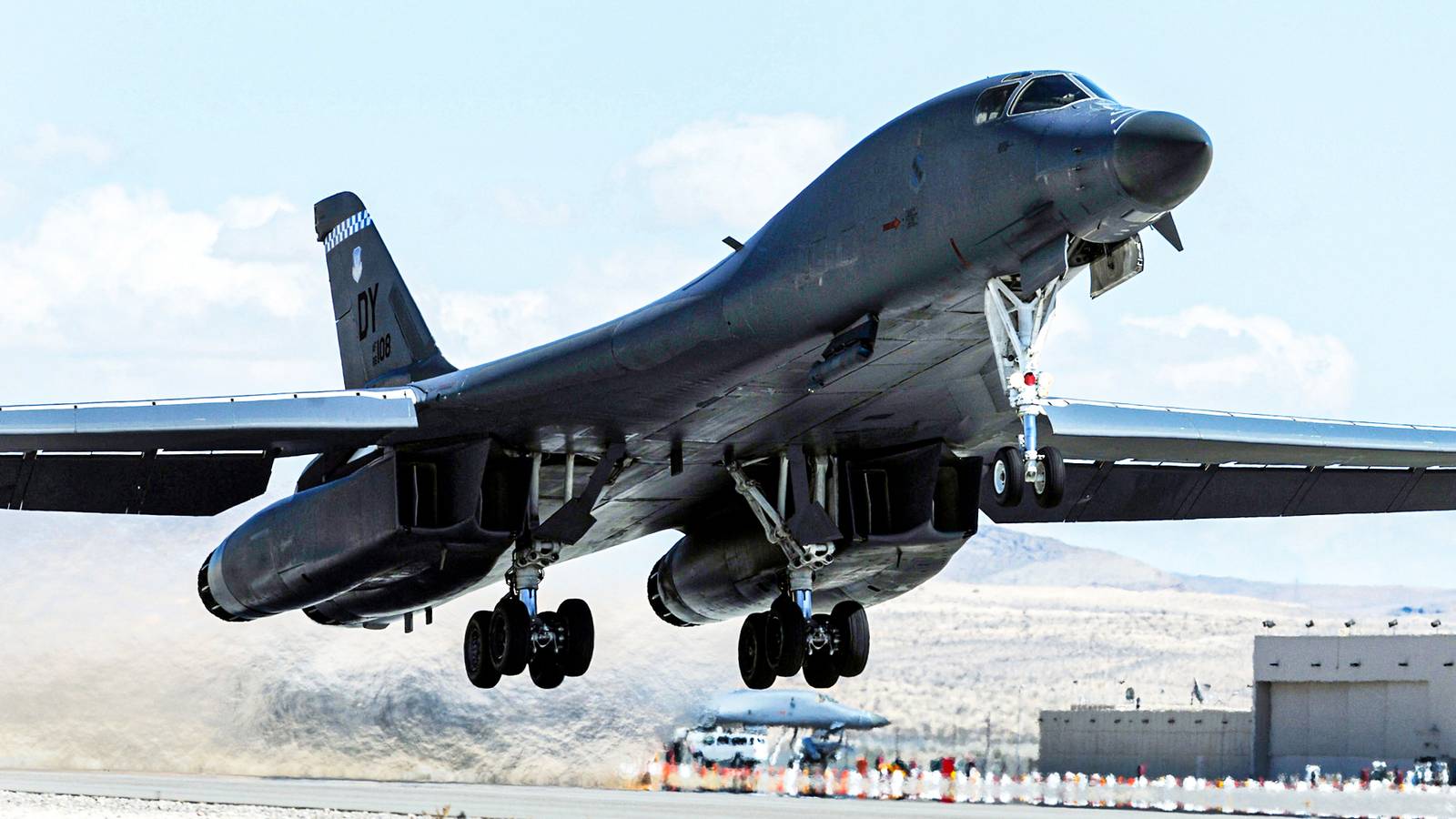
Published Oct 11, 2026, 11:00 PM EDT Luke Diaz is a freelance military writer with experience with active duty experience in the US Navy as well as defense and industrial engineering. He is a former Naval Flight Officer who performed tactical air control on the carrier-based E-2 Hawkeye. The US Air Force (USAF recently awarded $23.5 million to continue sustaining its fleet of aging Cold War supersonic bombers. On September 25, Thomas Instrument of Brookshire, Texas, secured a contract to overhaul critical control surface sensors for the aging Rockwell B-1B Lancer fleet through September 2031. This is the latest in a series of investments to modernize and overhaul the big swing-wing jets that should be preparing for the Boneyard instead of combat missions. The latest contract arrives alongside a massive fiscal 2027 budget request of $146.9 million solely for in-service B-1B modifications, effectively doubling the $73.9 million allocation requested just a year prior. The USAF has 'doubled down' on extending the operational life of its B-1s until at least 2037. There are many reasons for this, but the immediate and most critical issue the BONE solves, as the B-1 is called, is simply providing available airframes. The USAF has recently dipped under 5,000 total aircraft, which is the lowest it has been since WWII. As the modernization effort for the Boeing B-52 Stratofortress is now delayed and Operation Epic Fury revealed shortcomings in the current inventory, the B-1 is being called upon to bridge the gap until its successor arrives in large numbers: the Northrop Grumman B-21 Raider. A Bomber Fleet Bottlenecked By Spare Parts Credit: US Air Force Thomas Instrument will overhaul a small but critical flight-control safety system. The sensors are responsible for regulating the Lancer’s flap brakes. The Air Force Sustainment Center at Tinker Air Force Base, Oklahoma, oversees the logistics of this program, while Thomas Instrument will execute the component manufacturing at its Texas facility. The contract value represents a maximum spending ceiling as opposed to an upfront financial commitment. Currently, zero defense dollars are legally obligated at the time of the announcement. However, past awards show a trend of scaling costs. These sensors could still max out the budget or even raise it. Thomas Instrument has a past track record of working on the same systems with projects valued at a fraction of the cost, around $700,000 to $900,000. The firm also secured a separate contract worth just over $25 million to overhaul B-1B hydraulic heat exchangers. Thomas Instrument was the only bidder on the flap sensor contract, whereas in this case, it was one of just two companies that competed for the award. Similarly, for the aircraft's largest component awards, the supplier base remains stubbornly restricted to one or two bidders. This vendor lock is one of the key problems with sustaining legacy aircraft, which the B-21 aims to improve within open systems architecture and modular design to 'future-proof' the airframe and ease these kinds of retrofit programs in terms of both cost and complexity. It is necessary for the USAF to keep the planes flying to ensure it can accomplish all the missions asked of Air Force Global Strike Command. However, the continuous 'bolt-on' upgrades to the aging platform do not eliminate much of the risk that comes with flying a bomber jet nearing obsolescence. How The Retirement Date Slid To 2037 Credit: US Air Force The Air Force originally planned to retire both the B-1B and the B-2 Spirit in the early 2030s as the B-21 Raider reached the fleet. However, fiscal 2027 budget documents reverse that strategy, proposing $342 million for B-1 modernization between 2027 and 2031 and nearly $1.7 billion for the B-1 and B-2 combined. The B-2 takes $1.35 billion of that total, while the budget allocates the remaining funds to keep the B-1 airworthy and combat-ready through 2037. Rising operational demand drove the change to the bomber fleet recapitalization plan. The Mitchell Institute for Aerospace Studies noted that requests for bombers keep rising for routine task force rotations and operations like last year's Midnight Hammer. Following the June 2025 strike on Iranian nuclear sites, the USAF made a record budget request for over $1.5 trillion, with much of the funding planned for the struggling bomber fleet. The expensive issue the USAF has been grappling with is simply age. The active fleet of B-1s stands at just 44 aircraft from an original production run of 100. The planes that remain, their airframes and avionics, are not only suffering from wear and tear, but they are also falling well behind current technology. Still, to prevent flightline strength from dropping further, the fiscal 2026 defense authorization bill extended a strict ban on further B-1B retirements through 2030. Since then, lawmakers have required the Air Force to retain the same number through 2037. To keep these planes flying and make them safe and relevant on the 21st-century battlefield, the USAF is best positioned to invest heavily in modernization programs from nose to tail. What The Air Force's New Budget Buys Credit: US Air Force The largest known structural effort underway to sustain the fleet is the BackBONE Project. The Air Force announced that a B-1B Lancer returned to active service after a complete replacement of its forward intermediate fuselage. This complex repair involved swapping out a 33-foot (10.1 meter) structural section of the upper spine located directly ahead of the variable-sweep wings. The engineering work was executed alongside Wichita State University's National Institute for Aviation Research, using advanced digital sequencing and a physical prototype before maintenance crews began cutting into the operational aircraft. Program planners originally scheduled a 12-month turnaround for the overhaul but completed the project well ahead of schedule. These two efforts illustrate the massive difference in scale within the bomber's sustainment pipeline. At one end is a contract ceiling for a sensor; at the other is a major, prototype structural rebuild of the aircraft's central spine. Both projects are designed to solve the exact same underlying vulnerabilities. The ultimate goal is to keep an airframe manufactured in the 1980s structurally sound and flight-worthy. However, neither the component overhaul nor the advanced spinal repair explains why this aging, maintenance-intensive bomber is worth such a massive financial and engineering effort. The aircraft’s defining feature is its 75,000-pound (34,019 kg) weapons capacity, the largest conventional payload in the USAF inventory. While the B-1B was stripped of its nuclear mission in legacy treaties, its immense capacity for guided and unguided munitions drives continuous combat demand, even as congressional lawmakers consider ordering feasibility reports to restore its nuclear status. The Unique Capability Of A Cold War Bomber In 2026 Credit: US Air Force Its payload capacity makes the Lancer indispensable for high-intensity operations, yet its operational availability remains severely strained. During the Operation Epic Fury campaign against Iran, the Air Force demonstrated the bomber's enduring long-range lethality by launching nonstop strike missions directly from Ellsworth AFB in South Dakota. At the peak of the regional conflict, the military forwardly deployed roughly two dozen bombers to RAF Fairford in England. This staging force included 18 B-1Bs, representing a staggering 41% of the entire 44-aircraft active fleet. These forward-deployed assets were abruptly ordered back to the continental United States after an Iranian security threat to the British installation. The intense operational deployment pace exposes deep structural vulnerabilities within a fleet manufactured in the 1980s. The B-1B's mission-capable rate plummeted from 55% in fiscal 2022 to 43%, leaving only about 19 aircraft available for combat operations on a typical day. In response, AFGSC launched the North Star Readiness Campaign to stabilize overstretched supply chains and streamline heavy depot maintenance. The Lancer embodies a profound strategic contradiction. It is an unmatched tactical asset capable of leveling targets with massive munitions loads, which will soon expand to even more outsized ordnance on external pylons. Yet it relies on an aging architecture that is broken down more than half the time, leaving its survival dependent on a dangerously thin supplier base. What The Raider Cannot Yet Replicate Credit: US Air Force The upcoming introduction of the sixth-generation B-21 Raider is designed to permanently resolve the supply chain and technical shortfalls of the Legacy bomber fleet while also introducing a new era of Lethality thanks to its all-aspect stealth. The first Raiders are scheduled to arrive at Ellsworth AFB in 2027. The Pentagon is pushing to keep the program on schedule with a major $4.5 billion funding injection that successfully boosted initial production capacity by 25%. As the manufacturing pipeline is still projected to stabilize at an entry rate of approximately seven aircraft per year, discussions have begun to raise the original fleet size from 100 to 145 or possibly as high as 185. Replacing just the remaining 44 B-1B Lancers one-for-one will require more than six years of dedicated factory output before the military can even begin addressing the 19 stealth bombers in the B-2 fleet. Consequently, AFGSC must simultaneously train aircrews on the incoming B-21 while executing active operational missions with legacy platforms. This overlapping strategy lowers the operational risk of early retirements, allowing the military to rebuild depot capacity, secure replacement parts, and train maintenance personnel. This overextended timeline explains why the Air Force is doubling its near-term modification budgets. The funding surge buys time to build the baseline sustainment infrastructure needed to keep the legacy fleet safe. Moving forward, two critical milestones will determine whether this bridge strategy succeeds: whether lawmakers fully fund the B-1 modernization programs and whether the first B-21s arrive on schedule next year.
Why The US Air Force Is Doubling B-1B Modification Spending As It Prepares The B-21 Raider
Full Article
Original Source
Read the full article at Simpleflying →KhanList aggregates and links to publicly available news content. We do not host full articles from third-party sources. Always verify important information with original sources.