
The Airbus A321XLR is revolutionizing transatlantic travel, but there is a painful catch to its revolutionary range. It must be trapped at low altitudes for the first few hours of a trip. Since an aircraft's most fuel-efficient altitude varies dynamically as it burns off fuel weight, the long-range narrowbody and many other long-haul aircraft spend a large percentage of their flight time actively rising. An airplane cannot just take off and soar to its final cruising altitude on a long-range flight. When an airliner first takes off, its fuselage is heavily laden with thousands of gallons of jet fuel required to cross an ocean or reach a distant continent. Step climbing is a dynamic operational technique designed to maximize fuel efficiency by matching an aircraft’s altitude to its changing weight over the course of a long-haul journey. As the flight progresses, the engines consume fuel at a rate of several tons per hour, causing the aircraft's overall mass to drop steadily. Once the onboard flight computers calculate that the aircraft has shed enough weight to make a higher altitude aerodynamically advantageous, the crew requests permission from air controllers to climb. The flight crew will repeat this entire sequence multiple times during an eight-to-eleven-hour trip, burning off fuel, and stepping up to the next flight level. The Heavy Cost Of Extreme Range In A Narrowbody Credit: Airbus The A321XLR pushes the physical limits of a narrowbody platform, necessitating a performance trade-off between total range and early-flight efficiency and speed. Airbus had to design a jet that could carry payloads in order to convert a domestic workhorse into a single-aisle transatlantic endurance aircraft. The end product is a narrowbody with a maximum takeoff weight (MTOW) of 223,000 lb (101,000 kg), far more than any A321 variant before it. The A321XLR cannot effectively climb to higher altitudes at maximum MTOW because it needs a lot of lift to stay airborne until it sheds weight. In the thin, less dense air at cruising flight levels around 37,000 feet (11,200 m), the A321XLR’s wing simply cannot generate enough lift. If the aircraft tries to force its way to these higher altitudes too early, it would have to fly at a high angle of attack. Not only would it result in significant drag and fuel waste, but it would also increase the risk of a stall. Pilots of the A321XLR are specifically warned in official training that early cruising levels will be severely restricted when the aircraft lifts off beyond 85% MTOW, frequently topping out at just 32,000 feet (9,700 meters). Unlike the rocket-like ascent typical of an empty or smaller single-aisle jet, the last stages of reaching those early altitudes are infamously slow, with the climb rate dropping to a taxing 500 feet per minute. The A321XLR's Rear Center Tank Burden Credit: Airbus The huge fuel tank built right into the cargo bay of the A321XLR is responsible for its enormous range. Depending on the mission, airlines could install or delete optional auxiliary center tanks in the belly hold of earlier long-range models, such as the A321LR. Airbus abandoned this modular strategy for the XLR and completely reworked the bottom fuselage. The airplane has an enormous overall capacity of almost 10,500 gallons (39,747 liters) when the conventional wing and center tanks are added. Behind the main landing gear compartment is the jet's conformal Rear Center Tank. By making the tank walls an integral part of the airplane's structural shell, Airbus maximized fuel volume without eating up all the underfloor baggage space. This specialized tank design allows the narrowbody to carry an extra 3,408 gallons (12,900 liters) of fuel. While this engineering feat unlocks an 11-hour, 4,700-nautical-mile range, it creates a severe weight-and-balance headache the moment those tanks are topped off. Because the RCT is physically welded into the aft fuselage, the aircraft carries a permanent structural weight penalty even when flying empty. If an airline flies the XLR on a short 2-hour domestic hop with the rear tank empty, it must burn extra fuel just to carry the dead weight. The Slow Burn Of Step Climbing Credit: Airbus To overcome the weight of its massive fuel load, the A321XLR must perform a calculated, multi-hour sequence with air traffic control known as step climbing. The flight crew must climb to a lower, temporary altitude, level off, and wait. Airbus flight manuals explicitly dictate this step-climbing technique for the XLR to keep the aircraft flying as close to its dynamically shifting optimum altitude as possible throughout a long-range mission. This process is a slow-motion game dictated by the jet's fuel burn rate. The A321XLR consumes fuel rapidly early in the flight, about 5,000 lb (2,250 kg) of fuel every hour. As this weight burns off, the aircraft's total mass drops, the wings require less lift to maintain level flight, and the optimum cruising altitude rises. For every few tons of fuel burned, the pilots request a step-up in increments of 2,000 feet (600 m) on average. On a typical ten-hour transatlantic crossing, an A321XLR crew will execute one or two of these step climbs before reaching their final, most efficient cruising altitude. Managing these steps requires constant coordination with air traffic controllers, who must find an open slot in the North Atlantic tracks. Shaking In The Coffin Corner Credit: Airbus Forcing a heavy A321XLR to its optimum altitude too early can trap pilots in a high-altitude aerodynamic bottleneck known as the 'coffin corner,' where the margin between flying and stalling virtually disappears. Officially called the 'q-corner,' this phenomenon occurs when an aircraft is flying at high altitudes where the air is thin. There, the wings require a higher speed to produce enough lift, and the aircraft's minimum safe speed, or stall speed, rises. At the same time, the speed of sound decreases in the cold, high-altitude air, lowering the aircraft's maximum safe speed. That is the critical Mach number, where air flowing over the wing goes supersonic and causes violent structural buffeting. For a heavily loaded narrowbody like the A321XLR climbing up in altitude, these two speeds begin to draw together, creating a dangerously narrow operational envelope. If a pilot flies too slowly, the heavy jet will experience a low-speed stall and fall out of the sky. If they fly too fast, shockwaves forming on the wings will cause high-speed buffeting and a loss of control. When the XLR takes off near its MTOW limit, trying to push past 32,000 feet (9,750 m) early in the flight shrinks this buffer down to a razor-thin margin of just a few knots. To avoid risk, training notes and standard operating procedures heavily caution crews against chasing the theoretical optimum altitude too aggressively. This aerodynamic trap becomes much more acute when the aircraft encounters high-altitude turbulence or mountain waves. A sudden updraft or downdraft can instantaneously shift the angle of airflow over the wings, instantly pushing the aircraft outside its narrow safe-speed envelope. Thus, pilots will deliberately choose to fly 2,000 feet below the aircraft's technical capability, trading fuel efficiency for a safety buffer. Credit: Airbus Operating thousands of feet below optimal cruise levels forces the A321XLR to plow through significantly denser air, increasing aerodynamic drag and hiking fuel consumption by an estimated 2.5% per hour. For airline accountants managing razor-thin margins on a 4,700-nautical-mile route, these initial hours of flight represent a concentrated period of fuel inefficiency. However, it is an unavoidable 'cost of doing business.' While lingering in the thicker air of the lower flight levels levies a performance penalty on the plane, it inadvertently creates a widebody-style comfort upgrade that complements the A321XLR passenger experience. When an aircraft cannot climb to its optimal altitude, it pays for that safety buffer in fuel. However, this inefficiency unlocks a human benefit inside the cabin. Typical narrowbody aircraft cruising at high altitudes maintain an internal cabin pressure equivalent to being on top of an 8,000-foot (2,400 m) mountain. This thin cabin air is the primary culprit behind the deep physical exhaustion, pounding headaches, and severe dehydration associated with jet lag. As the A321XLR spends its heaviest initial cruise hours lower down, the pressure inside the fuselage is much lower, closer to 6,000 feet (1,800 m). Airbus capitalized on this inevitable flight profile by integrating a new cabin pressure control standard in the Airspace Cabin. As the structural pressure differential between the inside and outside the plane doesn't have to be stretched to its absolute breaking point, the system can safely schedule a lower cabin altitude. This dense, humid air matches the comfortable profile of an advanced widebody like Airbus' own A350 series. Passengers stepping off a transoceanic or intercontinental flight arrive feeling more refreshed than they would on an older Boeing 757, turning a performance compromise into a major traveler advantage that has helped shape how airlines market and deploy the jet worldwide.
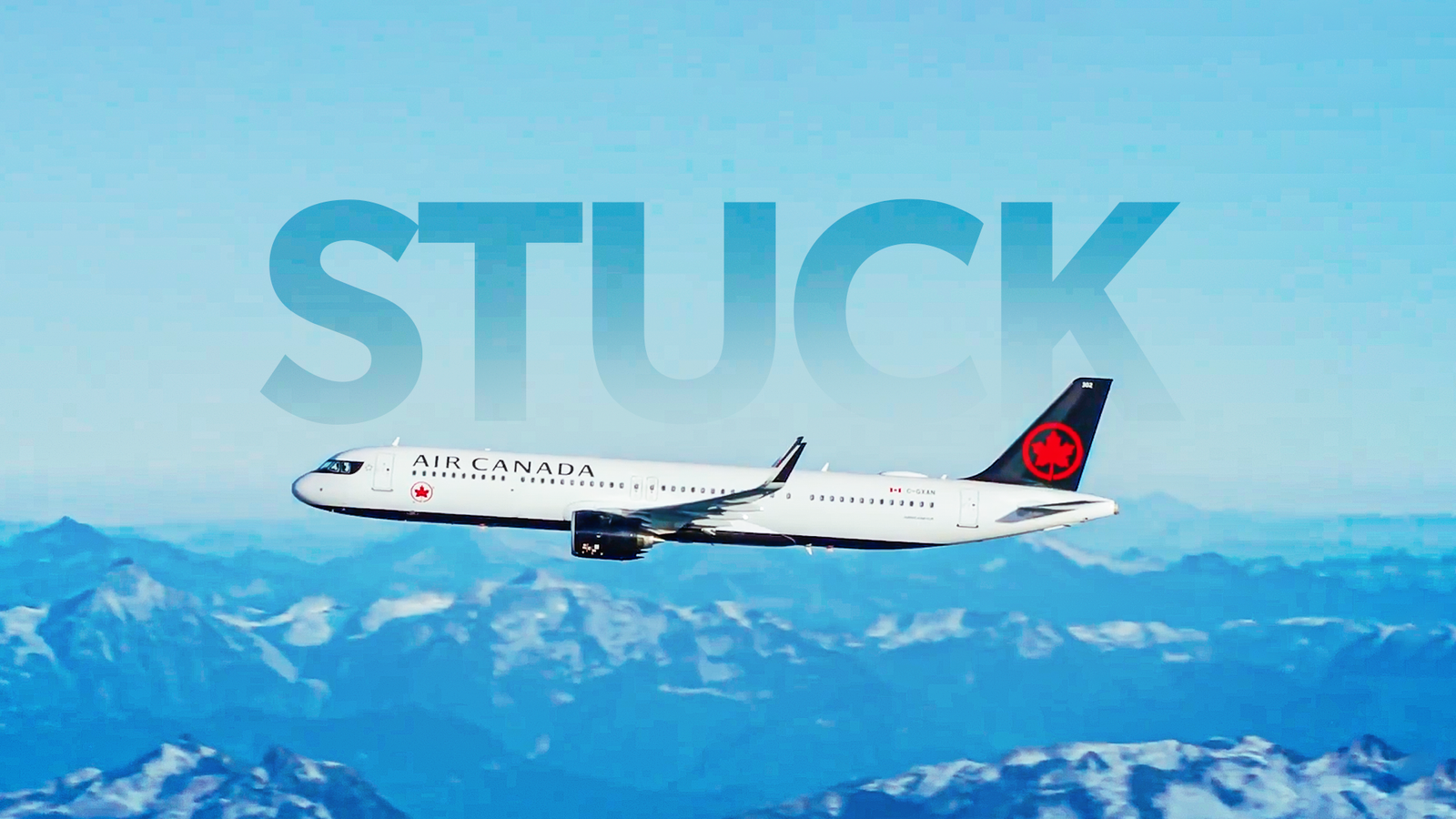
Why The Airbus A321XLR Often Gets Stuck Climbing For The 1st Few Hours Of Flight
Full Article
Original Source
Read the full article at Simpleflying →KhanList aggregates and links to publicly available news content. We do not host full articles from third-party sources. Always verify important information with original sources.