
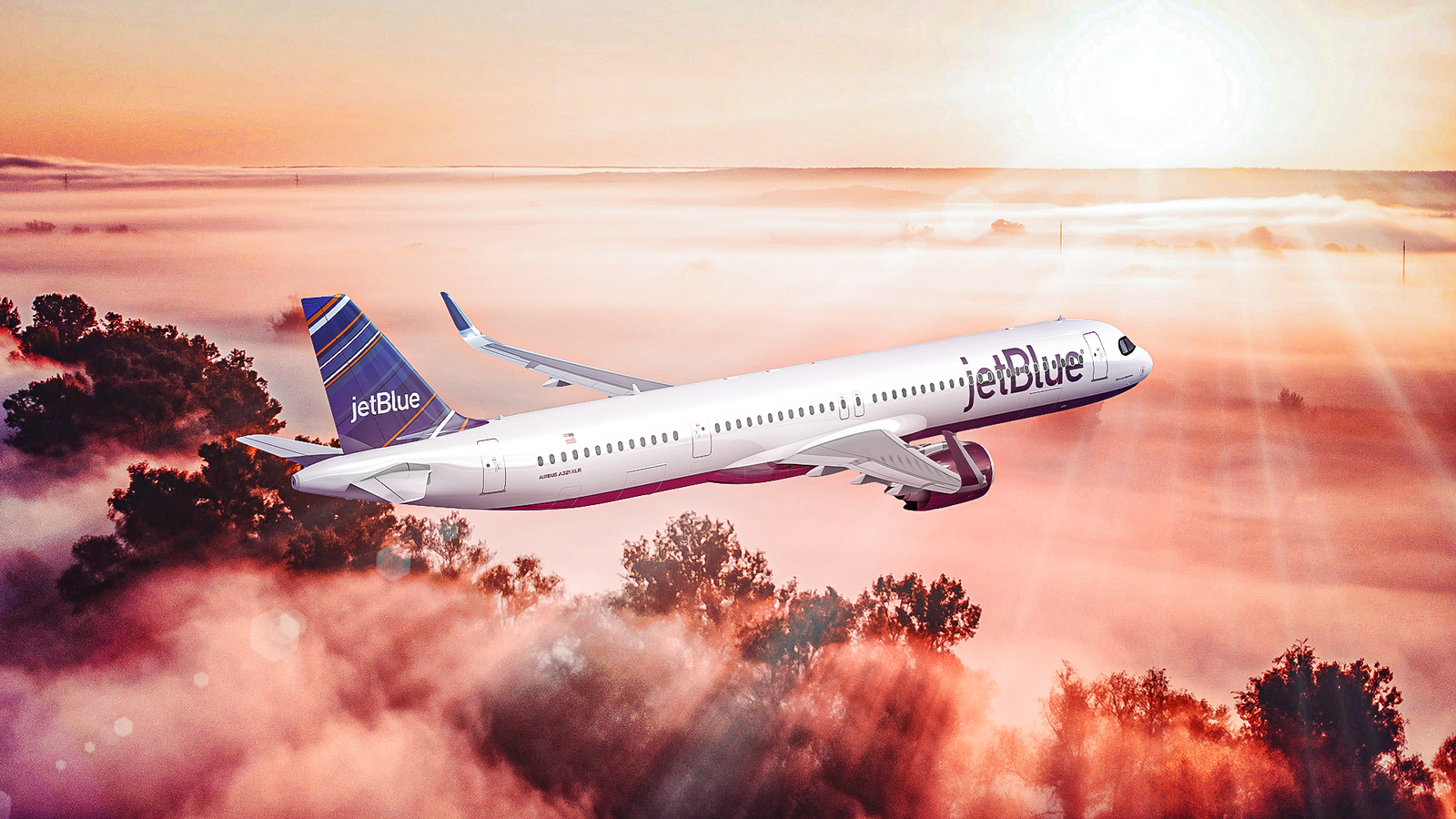
Credit: Airbus, Simple Flying Published Oct 30, 2026, 8:00 PM EDT Daniel comes to Simple Flying with a business focused approach to the aviation world. Daniel enjoys analyzing strategy and how companies move against each other to gain a step ahead in the skies. Besides strategy, Daniel also has a passion for aircraft design and the history of aviation. Based in New York Sign in to your Simple Flying account The Airbus A321XLR was one of the most highly anticipated aircraft types to come out in recent years, given its small size, low operating costs, and excellent range. Airbus had already made a long-range narrowbody with the A321LR, but the A321XLR is essentially an improved version of the same aircraft, with even more range than the famed Boeing 757. It's been in service for almost two years now, and the type's operations during this time, as well as its general market reception, have been interesting. Iberia and Qantas have been positive about the plane. Wizz Air, on the other hand, has canceled most of its A321XLR orders and is parking the examples that have already arrived. JetBlue, which planned to operate the A321XLR transatlantic in a premium-heavy layout, has deferred most of its order and sold its first two production slots to Aegean Airlines, which then canceled the orders. Meanwhile, Air Canada and United Airlines have expressed concerns about its performance and capabilities. Where The A321XLR Is Succeeding Credit: Airbus Iberia, which is owned by IAG, was the launch operator for the A321XLR, flying its first commercial service on November 6, 2024. Aer Lingus, also an IAG carrier, soon followed, and the A321XLR is now also operated by Air Canada, American Airlines, IndiGo, Qanot Sharq, Qantas, Saudia, United Airlines, and Wizz Air, as per Cirium. So far, Iberia has praised the A321XLR, stating that the type burns up to 40% less fuel than widebody models, and it's also operating what was, until recently, the world's longest A321XLR flight from Madrid to Santo Domingo. Iberia, like most A321XLR customers, configured the type with lie-flat seats to operate long-distance flights, but Qantas has not. Instead, the Australian flag carrier installs 197-200 seats (depending on the layout), recliner seats, and uses the aircraft mainly for domestic flights. For Qantas, it's the payload that's appealing rather than just the range, although it will also operate longer routes with the A321XLR. As it stands, Qantas will be expanding the type's use, including using it on international flights and creating a subfleet with lie-flats. Origin Destination Distance (NM) Distance (km) Madrid-Barajas Airport (MAD) Santo Domingo Las Américas International Airport (SDQ) 3,617 nautical miles 6,698 km Mumbai Chhatrapati Shivaji Maharaj International Airport (BOM) Amsterdam Schiphol Airport (AMS) 3,707 nautical miles 6,866 km Aer Lingus has positively commented on the A321XLR, while Qantas has publicly commented that customer reception to the aircraft has been excellent. The plane is proving to be fuel-efficient, with Iberia stating that it burns less fuel than expected. Iberia and Aer Lingus have deployed the A321XLR extensively throughout their networks, while Qantas plans to use the aircraft in a variety of roles. Meanwhile, IndiGo has recently begun operating the world's longest A321XLR flight, from Mumbai to Amsterdam. Struggles With The A321XLR Credit: Sr. R I Shutterstock Wizz Air and JetBlue's experience with the A321XLR seems to contradict the positive experiences being reported by IAG and Qantas. Wizz Air converted 36 A321XLR orders to the standard A321neo model, leaving it with just 11 examples total, and five of the planes it's already taken are currently stored. Meanwhile, JetBlue deferred 11 of its 13 A321XLRs, while the first two were sold to Aegean, then were subsequently rejected. However, there were unique circumstances surrounding each of these events. Wizz Air mainly acquired 47 A321XLRs for its Abu Dhabi subsidiary, but it ended up shutting down the Abu Dhabi operations in September 2025. With these, the carrier had no use for most of these planes, since a long-range narrowbody generally doesn't fit with its business model of operating all-economy budget flights within Europe. The airline is operating these planes well below their range limit, while it's stored five examples to strip them of their engines due to the current shortage of Pratt & Whitney GTF engines. The deferment of the A321XLRs came as part of a larger deferment in which 44 A321neos (including the XLRs) were pushed back to 2030 and beyond. The delivery dates for the airline's first two XLRs were too close to be deferred, and JetBlue therefore sold them to avoid operating a two-aircraft orphan fleet for five years. Aegean acquired the planes to gain short-term capacity, but seat delivery delays meant that they wouldn't be ready until after the lucrative summer season, and the airline rejected them to avoid an orphan fleet. Where The A321XLR Is Actually Having Issues Credit: RTX United Airlines ordered 50 A321XLRs to replace its Boeing 757-200 fleet and expand its network of thin long-haul routes. However, the carrier has expressed disappointment with the plane's true range, stating that it cannot reliably operate routes such as from Newark to Italy despite being marketed with this capability. Meanwhile, Air Canada has expressed concern about how the plane's range and payload are impacted by hot weather conditions and challenging airfields. The A321XLR has gained weight compared to its original promises, due to extra fire protection in the plane's Rear Centre Tank (RCT) mandated by regulators. Airbus has bumped the plane's Maximum Takeoff Weight (MTOW) to 101.5 tons to offset this, but it's still heavy for its size, especially considering how heavy modern lie-flat business class seats are. In addition, the aircraft's brochure range of 4,700 NM (8,700 km) is calculated using favorable wind conditions, a light configuration, and an optional auxiliary center tank (ACT). Brochure ranges for every aircraft are calculated using favorable conditions, and any plane will be impacted by challenging field conditions. However, the A321XLR's range is good for a narrowbody, but it can prove restrictive for airlines looking to operate longer transatlantic services, whereas modern widebodies have substantially more 'margin'. Essentially all modern long-haul planes also have heavy lie-flat seats, but the A321XLR is more heavily impacted by these because it's smaller and lighter overall. In United's case specifically, the airline did not option the forward ACT, which may explain why United could struggle with some of the routes it had planned. In comparison, American Airlines is reported to have selected the ACT, allowing it to plan routes like Philadelphia-Vienna that are longer than Newark-Italy. With Air Canada, meanwhile, the A321XLR operates close to its maximum capabilities more often than widebodies, which means that flights are more heavily impacted by challenging airfields. The Reality Of A321XLR Operations Credit: Kevin Piechota I Shutterstock The A321XLR is ultimately an A321neo that has a higher MTOW and added fuel capacity to give it transatlantic range. It'll be operating much closer to its weight and range limits than widebodies, which means that its ability to serve transatlantic routes is more heavily impacted by strong headwinds, short runways, or hot temperatures that reduce the plane's TOW. In addition, premium layouts with heavy lie-flat seats have a greater impact on the A321XLR's weight and fuel burn due to its small size. Beyond the technical limitations of the plane itself, there are difficulties with flying small planes over oceans. While the A321XLR burns substantially less fuel than an A330 or 787, some operating costs remain fixed or semi-fixed, such as crew costs and overflight fees. Meanwhile, the A321XLR has substantially fewer seats to spread these costs and has limited revenue potential, especially considering that the plane has limited cargo space. Airlines won't spend much to fly A321XLRs, but they won't earn much either. Although some airlines have voiced concerns about the type, the A321XLR seems to be ideally suited for full-service carriers installing two- or three-cabin interiors overall. Meanwhile, the economics become more challenging for budget airlines operating planes with all-economy layouts, as the plane itself generates even less revenue while operating costs will remain high. Although the A321XLR is less expensive to fly than a widebody, costs remain higher than with short-haul flights. Where The A321XLR Excels Credit: Kevin Hackert | Shutterstock The A321neo is the most popular commercial aircraft variant of all time due to its range, low operating costs, and large size for a narrowbody. The A321XLR takes these economics and applies them to long-haul transatlantic flying. It's not a revolutionary aircraft, since a widebody earns substantially more revenue and can therefore earn more money if it goes out full, but many city pairs have difficulty even supporting an A330 or 787, let alone an A350 or 777. To operate long-haul routes with lower demand, the A321XLR is the best aircraft yet, as it has more range than a 757 and carries more payload than an A321LR. The IAG airlines and Qantas have found success with it, while American and United have ordered 90 examples between the two of them. Routes like United's upcoming Newark-Luxembourg service or Aer Lingus's Dublin-Indianapolis flight cannot support a widebody, so using the XLR keeps costs low while preserving yield integrity. Arguably the most interesting operator to watch is IndiGo. It is a true budget airline that has generally been successful, and it also holds 69 orders for the A321XLR. Therefore, it will be this carrier that demonstrates just how well the A321XLR works with the budget airline business model.
Why The Airbus A321XLR Is Being Parked At JetBlue & Wizz Air, But Kept By Iberia & Qantas
Full Article
Original Source
Read the full article at Simpleflying →KhanList aggregates and links to publicly available news content. We do not host full articles from third-party sources. Always verify important information with original sources.