
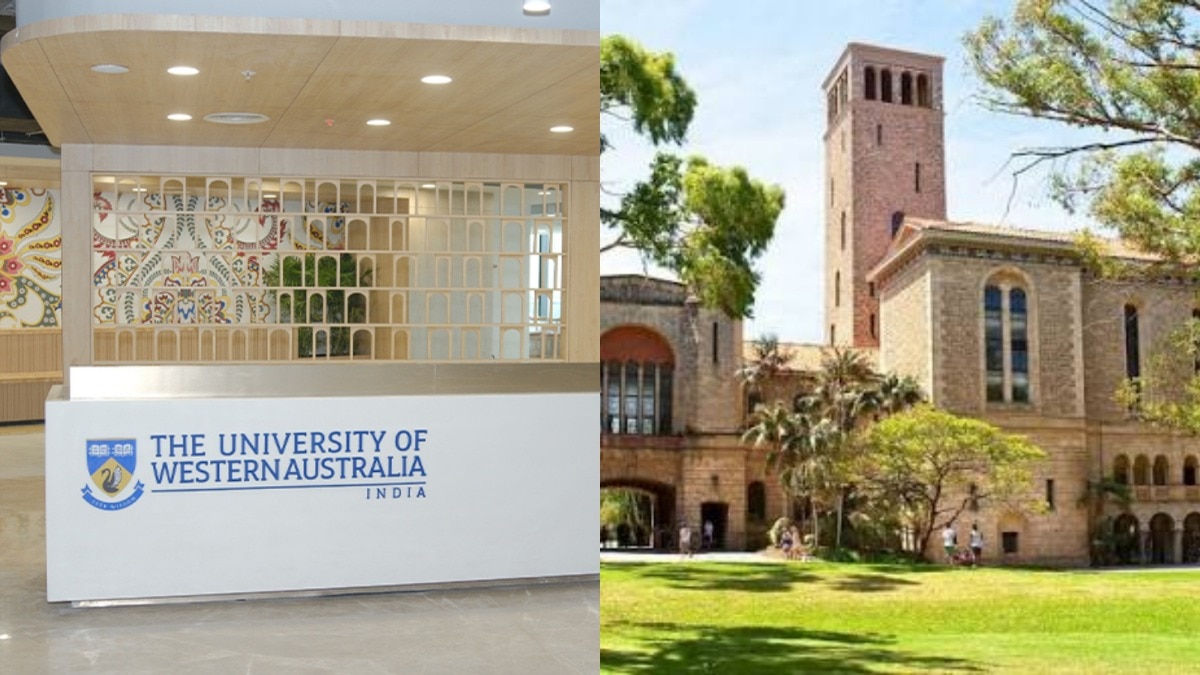
The University of Western Australia (UWA) is set to open its first campus in Tamil Nadu after receiving final approval from the University Grants Commission. The Chennai campus in Velachery is expected to begin classes this month, with programmes in areas including computer science, data science, artificial intelligence, business and information technology.But the approval has also triggered strong opposition in Tamil Nadu.The Tamil Nadu Government Collegiate Teachers’ Association (TNGCTA) has criticised the move, while the Communist Party of India (Marxist) has demanded that the approval be withdrawn. At the centre of their objections is a basic question: why bring in a high-fee foreign university when government universities and colleges are struggling with vacant teaching posts? Meeting between UWA team and Tamil Nadu officials (Photo: X/DR TRB Raja) THE APPROVAL THAT SET OFF THE PROTESTFor UWA, the Chennai campus is part of its expansion in India and is being presented as a way to give students access to an internationally recognised Australian education without leaving the country. UWA says its Indian campuses will follow the same academic standards and quality assurance frameworks as its Perth campus. The Tamil Nadu government has also backed the move, describing UWA’s presence as an opportunity to strengthen the state’s education, technology and industry ecosystem.Teachers, however, see the decision differently.THE FIRST PROBLEM: WHO CAN AFFORD IT? One of their biggest concerns is the fee.The TNGCTA said UWA’s proposed fees, ranging from around Rs 14 lakh to Rs 23 lakh, would put the university beyond the reach of a large section of students.The CPI(M) pointed to first-year fees of around Rs 23.10 lakh for the MBA, Rs 17.93 lakh for artificial intelligence, and Rs 14.52 lakh each for business management and data science, apart from other charges.That, the critics argue, makes the question of access unavoidable.WHILE GOVERNMENT COLLEGES WAIT FOR TEACHERSThe fee issue leads directly to their second concern: the condition of public higher education.The TNGCTA said state universities and government colleges are already facing a severe shortage of teachers. It cited the University of Madras, where 180 full-time faculty members are working against a sanctioned strength of 550. Madurai Kamaraj University has 202 against 405, while Bharathidasan University has 119 against 230.The CPI(M) put the wider figure at 7,198 vacant faculty posts in government arts colleges, while claiming that 30 to 50 per cent of teaching posts remain vacant across 21 state universities.FROM VACANCIES TO PRIVATISATIONThis is why the opposition is not limited to UWA itself.The teachers’ association has linked the decision to the larger expansion of private and foreign universities under the National Education Policy, 2020. The CPI(M) has similarly argued that foreign universities could commercialise higher education and create institutions accessible mainly to affluent students.The party has also objected to recent changes to Tamil Nadu’s private universities law, saying the state is making it easier for private institutions to enter higher education while public universities continue to face staff shortages.AND THEN COMES THE SOCIAL JUSTICE QUESTIONFor the protesters, this finally comes down to the kind of higher education Tamil Nadu wants to build.The CPI(M) has argued that high-fee foreign universities could affect access for lower- and middle-income students and raised concerns over reservation and social justice.So, while UWA sees Chennai as a gateway to global education, its critics see a different priority: strengthen the public system first, fill vacant posts and ensure affordable higher education before opening the door wider to expensive foreign institutions.- Ends
Why Tamil Nadu teachers and CPI(M) are opposing an Australian university in Chennai
Full Article
Original Source
Read the full article at Indiatoday →KhanList aggregates and links to publicly available news content. We do not host full articles from third-party sources. Always verify important information with original sources.