
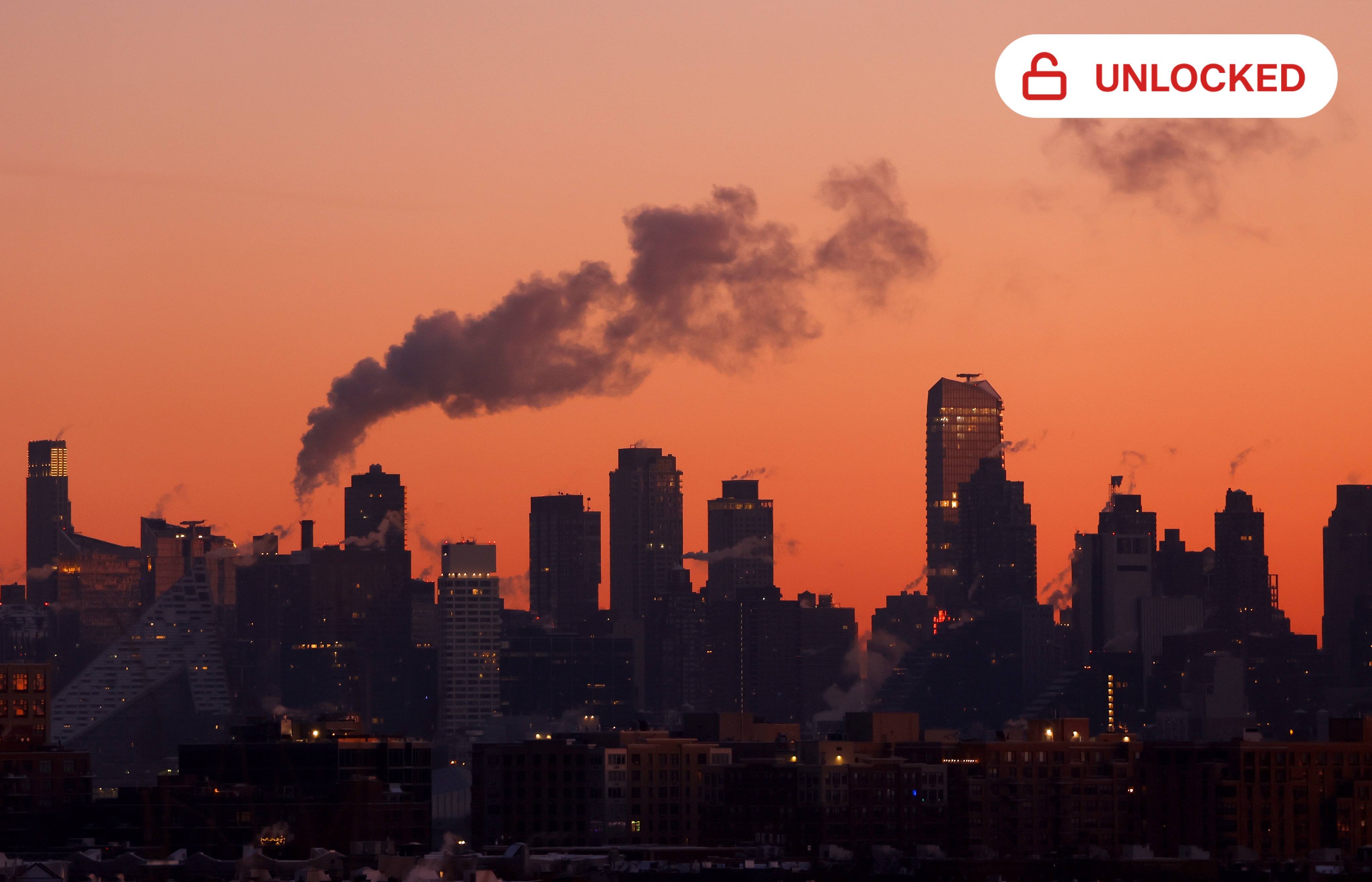
Turn any article into a podcast. Upgrade now to start listening. Members can share articles with friends & family to bypass the paywall. You’re reading Dispatch Energy, a regular dive into the politics, policy, and innovation shaping America’s energy future, featuring a roster of subject-matter experts including Alex Trembath, Philip Rossetti, Lynne Kiesling, Rory Johnston, and Roger Pielke Jr. Welcome to Dispatch Energy! As summer wildfires bring smoke to communities across the country, now is a good time to consider what the United States can do to combat air pollution more generally. Spoiler alert: It’s not as simple as just expanding regulation. I happen to live in a county that ranks among the worst in the nation for air quality. This means that unlike most Americans, I need to monitor air quality reports regularly to determine whether my child should be playing inside or on the playground. One would think that given how air pollution affects my life, I should be a fanatical crusader against all sources of air pollution. Indeed, one could say I—like nearly everyone—am quite opposed to polluted air, which the World Bank estimates has a global economic cost of between 4.7 and 6.5 percent of global GDP. But the analyst in me must concede that while air pollution is a problem, it is not one that is easily reckoned with, particularly given that the nation has already significantly cut air pollution emissions. Beyond the Smokestack A smoke stack in New York City. (Photo by Gary Hershorn/Getty Images) When the air quality index spikes, indicating a high concentration of pollutants in the air, it’s important to understand that there are really two potential causes: emissions and variable environmental conditions. It’s this latter factor that often goes unappreciated. These variable weather conditions are a big part of why air quality can be great one day and terrible the next. Hot summer days can worsen air quality as heat and sunlight react with pollution to form smog and particulate matter, while very cold days can create temperature inversions that trap pollutants near the ground. For some areas, windy days bring the pollution of neighboring cities to mix with local sources. Plainly, there are simply some days when air quality is mostly out of our control. But what about the factors we can control, namely the pollution sources? For as long as air pollution has been debated, we have been inundated with imagery of smokestacks billowing soot into the atmosphere. This persistent framing gives the impression that little has changed in our efforts to fight air pollution, but the truth is that today’s issues are much different than those of decades past. For the six primary, or “criteria,” air pollutants—carbon monoxide, lead, particulate matter, sulfur dioxide, nitrogen dioxide, and ozone—emissions have fallen by 79 percent since 1970. Air pollution was a staple issue in the United States not that long ago; many readers will likely remember the scourge of acid rain in the 1990s. But the pollution sources contributing to those issues, namely coal plants, have declined considerably in number. A big part of this is thanks to regulations like the National Ambient Air Quality Standards and the Acid Rain Program, but economic shifts have also favored energy sources that lessen pollution. These sources include not just renewables, but also natural gas, which causes much lower particulate matter emissions (the fine dust and smoke we breathe that affects our lungs) than coal. Today, human-caused combustion emissions represent a shrinking share of air pollutants. The chart below demonstrates these shifts, comparing conventional pollution sources like vehicles or fuel use to what the Environmental Protection Agency (EPA) calls “miscellaneous” pollution sources, which include things like wildfires, agricultural emissions, and road dust. (Chart via Amanda Swinghamer Henderson) What we see is that much of the pollution in the air is not, in fact, coming from billowing smokestacks that can easily be regulated. The most impactful air pollutant is particulate matter smaller than 2.5 micrometers (PM2.5), which the World Bank estimates accounts for more than 90 percent of the potential economic cost of air pollution. In the United States, less than a third of PM2.5 emissions come from easily regulated combustion sources. More important than PM2.5 emissions are its atmospheric concentrations, but a major driver of that is the secondary effects of other pollutants, like ammonia from faraway farms. So while I dislike air pollution and want it reduced, I must also concede that we may be in an era of diminishing returns, where increasingly aggressive efforts to mitigate air pollution yield comparatively fewer benefits. This dynamic opens a big environmental economics debate on the so-called marginal benefits of additional pollution abatement. Much of the air quality conversation focuses on whether the quantifiable benefits of reducing air pollution (e.g., reduced healthcare costs, lost labor from illness, etc.) increase even after achieving low levels—what economists call “supralinearity.” Much of the economic literature supports supralinearity and the idea that benefits per ton of avoided pollution increase over time, though there are arguments against it. A related question is whether any potential increase in marginal benefits from pollution abatement outweighs the potentially increased cost of abatement, since we assume low-cost abatement opportunities are captured first. The tighter our regulations get, the more it costs to lessen pollution, which can reduce the net benefit of each additional regulation. Paired with the supralinearity debate, this dynamic creates tension between the rising cost of new regulation and whether the potential increase in benefits outweighs those higher costs. Put simply, there is an ever-shifting economically optimal level of air pollution abatement, and it’s not always clear whether more regulation offers benefits that outweigh the cost. The complexities of regulatory benefit accounting make for poor policy discourse, though, and the EPA tends to prefer simpler methods to weigh regulatory costs and benefits. Regulators like to assume simple cost-efficient frameworks as regulated markets shift, even if those assumptions are unrealistic. While it’s understandable that the EPA would prefer simpler cost-benefit methodology, the effect is that regulators can lean on secondary effects to justify extraordinarily burdensome regulation. The most notable example was the Mercury and Air Toxics Standards (MATS), which was ostensibly regulation to reduce mercury emissions. That regulation was estimated to have a price tag of $9.6 billion and a benefit of $36 billion to $89 billion in avoided air pollution—but 99.9 percent of that benefit came from abating particulate matter as a cobenefit, not reducing mercury, which accounted for only $4 million to $6 million of annual benefit. Even though other regulations aimed at controlling particulate matter had been very effective, regulators still claimed that additional regulations would provide further benefit. The Supreme Court rejected the EPA’s MATS rule, with the majority ruling critiquing the EPA’s disproportionate costs relative to mercury benefits and arguing that regulators should not drum up sufficient cobenefits to justify burdens. Cynics argued that the MATS rule was thinly veiled political cover for the Obama administration to arbitrarily target coal-fired power plants, and indeed, by the time the MATS rule lost in court, the industry had already been forced to comply with it. This is why the Supreme Court stayed the later Clean Power Plan (CPP) so early into its life, knowing that a protracted legal battle unduly rewards executive overreach. The executive branch’s extraordinary role in managing air quality policy also creates some opportunities for policy shenanigans. Counties in the United States that have not met federal air quality standards face a different set of regulations than those that have, and they may be subject to more stringent requirements limiting the modification or market entry of polluting sources. Federal funding for infrastructure projects can also be limited for counties that are out of compliance. But as noted above, many factors governing air quality are impossible for a local government to reasonably control. This is particularly true for parts of California that can’t avoid pollution settling within a valley, or areas that are downwind of polluting sources like farmland or cities. When it comes to getting my child more outdoor time, I’m not convinced that ever more stringent regulation is going to make much of a difference. Current air quality issues are not the same as they were decades ago, when there were large emissions of easily controllable pollutants. Ultimately, the politically salient issue is that the objective good of reduced air pollution is often used as a fig leaf to shield poorly crafted policies from scrutiny. When the CPP was withdrawn, there was no shortage of articles asserting that the replacement rule would result in higher mortality—and a convenient shortage of articles retrospectively pointing out just how wrong the CPP’s baseline assumptions were. The fact that regulators can contort analysis to find a sufficient benefit to justify almost any regulatory burden has ultimately led to a decline in institutional credibility, negatively affecting the very policies that are supposed to safeguard our air quality. It is unfortunate, then, that the political economy often rewards more extreme supportive or antagonistic positions on regulation regardless of how good regulators are at crafting them. One would hope that whether someone wants big government or small government, all Americans could at least agree that policymakers should rely on the best available information and methodology when they unaccountably impose costs on the public. (And these costs are not insignificant: The Biden administration imposed $1.8 trillion in new regulatory burdens, nearly four times the Obama administration’s previous record.) As a father and an analyst, I want better air quality. But I also want regulators to be truthful and beholden to a high standard where regulations truly deliver additional social net benefits, not just window dressing. Fortunately, Americans appear increasingly aware that regulatory creep is yielding more burdens than benefits; it is no accident that appliance efficiency regulations are a frequent gripe of consumers nationwide. With that, I can at least be optimistic that policymakers realize there is a limit to the social license granted to regulators, and that rules aimed at improving air quality need to be more than just a politician’s talking point. Policy Watch Senate negotiations on permitting reform legislation are ongoing, but progress is slow. However, Politico reports that lawmakers are hoping to agree on a deal sometime in September, which may result in the Senate producing new legislation that would need to be considered by the House of Representatives. Permitting reform has been a consistently important issue for both Republicans and Democrats this Congress, though neither side agrees on what policy changes are appropriate. Substantive permitting reform will likely require changes to how the federal government conducts environmental reviews, and could potentially reduce the ease with which nongovernmental groups can litigate federally issued permits. Data centers have become a key electoral issue, with the National Republican Senatorial Committee issuing a memo warning that support for data centers can be politically perilous. President Donald Trump has, for his part, leveraged his executive authority to expedite the permitting of data centers, while some Democrats are positioning themselves in opposition to data centers by claiming that they may cause environmental harm or make energy less affordable. Democratic governors, including Josh Shapiro of Pennsylvania and Abigail Spanberger of Virginia, have leveraged their offices to set new rules for data center growth and offset potential impacts on customer energy prices. Innovation Spotlight In a previous edition of Dispatch Energy, I outlined a major impediment to electric vehicle adoption in the United States: convenience. But a recent report by Axios highlighted improvements on this front. Moves by auto manufacturers to adopt Tesla’s standard system for electric vehicle charging ports have enabled nascent EV producers to benefit from Tesla’s more mature and widespread “supercharger” network. This development may make electric vehicles more convenient for consumers who frequently travel long distances, leading to increased adoption. Further Reading Writing for By the Numbers, Hannah Ritchie took a deep dive into the rates of vehicle electrification around the world. The key takeaway is significant heterogeneity in vehicle electrification, with the United States showing notably slower growth than some European and Asian nations. Policy may drive some of this dynamic, but it also reflects the large range of consumer needs and preferences. Whether electric vehicles are the future likely depends on where a consumer lives and how suitable electrified transportation is to their needs. Philip Rossetti is a contributor to Dispatch Energy and a Senior Fellow for Energy and Environment at the R Street Institute.
Why Sweeping Regulations Won’t End Air Pollution
Full Article
Original Source
Read the full article at Thedispatch →KhanList aggregates and links to publicly available news content. We do not host full articles from third-party sources. Always verify important information with original sources.