
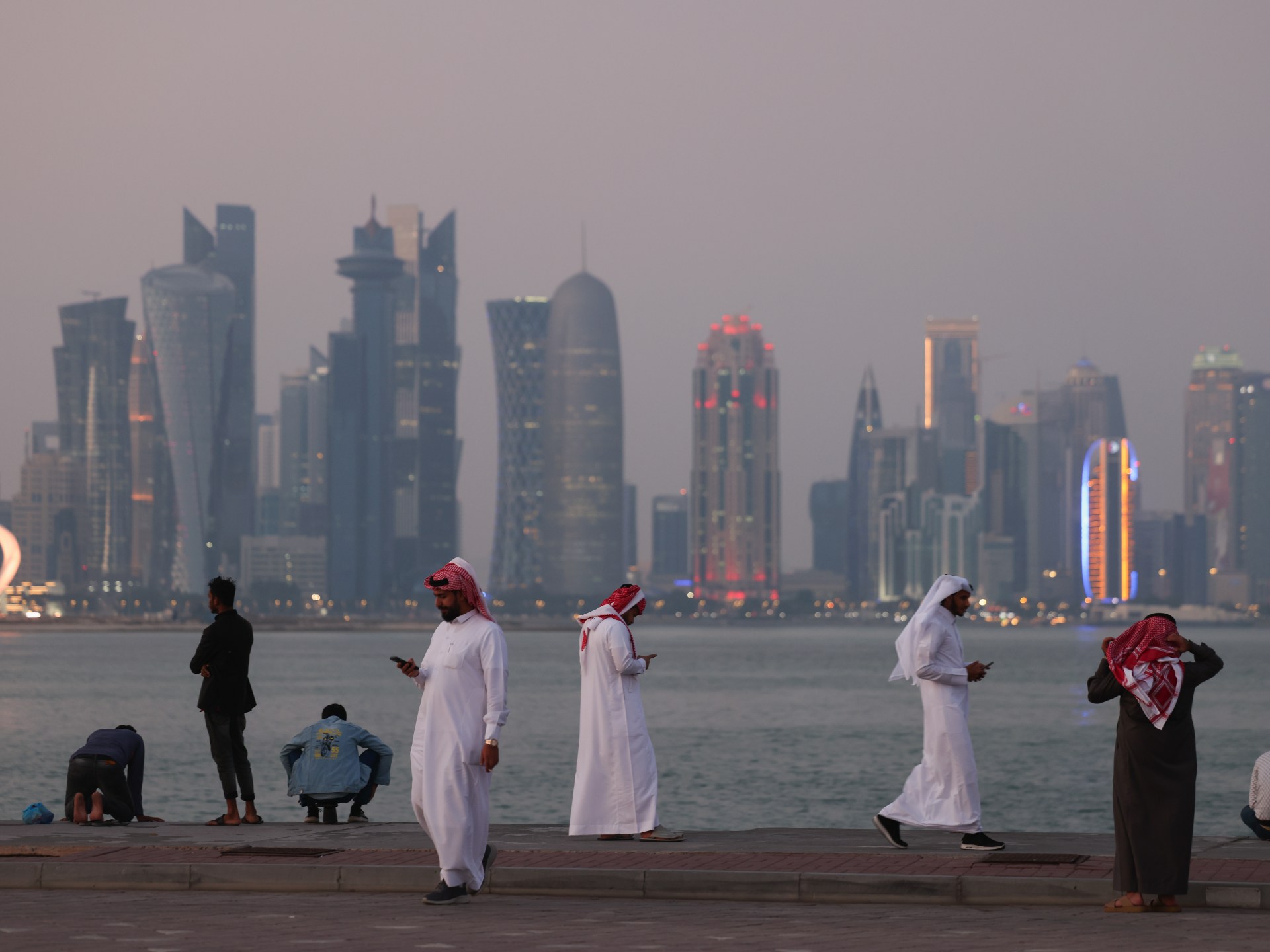
The fundamental inquiry of political economy is why some nations achieve enduring prosperity while others are trapped in cycles of poverty and collapse. The answer lies not in geography or culture, but in the systems and rules that govern societies.When we evaluate the economic success or failure of a nation, we are ultimately evaluating its institutions. Economic outcomes are inextricably linked to the frameworks societies devise to shape incentives and opportunities. Nations fail when they are captured by “extractive institutions” — structures purposefully designed to siphon wealth and power from the majority to serve the narrow interests of a small elite.The development dilemma in AfricaThis institutional paradigm offers a clarifying lens through which to understand the enduring developmental crisis in Africa. The continent’s historical economic stagnation — often debated in terms of colonial legacy or democratic transition — is rooted in a long, devastating history of extractive institutions. From the ravages of the slave trade and formal colonialism to the modern struggle for accountable governance, this legacy looms large. While it is historically inaccurate to claim Africa was always bound by extractive rule, its politically decentralised precolonial societies were rendered structurally vulnerable to predatory European mercantilism and colonial exploitation.Consequently, African states became ensnared in an institutional web from which they still struggle to escape. Today, the paramount challenge of the postcolonial African state is to forge national institutions that are accountable, democratic and oriented towards the public good rather than elite capture. In this context, international financial organisations like the World Bank often misdiagnose the problem. Relying on orthodox macroeconomic models, they fail to grasp the profound institutional nature of Africa’s dilemma. While populated by well-intentioned technocrats, these organisations lack the political-economy framework required for genuine structural transformation; thus, they are neither the root of the problem nor its ultimate solution.Africa and the impasse of the political projectThe paradox of immense natural wealth coexisting with developmental failure is starkly evident in Nigeria, making the country a textbook case of an absent social contract. Africa’s economic crisis is not a mere accounting failure; it is the direct manifestation of a profound political crisis — the absence of a viable state-building project. Despite possessing staggering human capital and a population well above 200 million, Nigeria lacks a legitimate, cohesive system of authority capable of delivering public goods.Since independence, this institutional vacuum has remained unresolved. At the local level, functioning, legitimate institutions exist — structures in which people actually believe and place their trust. The enduring challenge is translating this localised legitimacy into a cohesive national framework. To date, that effort has failed. Instead, national politics is consumed by an “our turn to eat” mentality, in which state resources are aggressively extracted through rampant clientelism and corruption.While there are serious figures in the current administration — such as Bola Tinubu, who demonstrated state capacity in the 1990s by improving infrastructure and security as governor of Lagos — governing Nigeria’s complex political landscape as a whole is a vastly different endeavour. Currently, there is no discernible political or economic strategy capable of disrupting this extractive equilibrium nationwide.Perhaps the most profound tragedy of the current era is the poverty of political vision compared to the early postcolonial period. In the 1950s and 60s, leaders across the developing world championed robust ideological frameworks for nation-building. Figures like Julius Nyerere, Kwame Nkrumah, and Leopold Senghor articulated clear visions, such as “African socialism”, to forge national identities.In Indonesia, Sukarno utilised the philosophy of Pancasila to unify a highly heterogeneous society; Jawaharlal Nehru pursued a similar unifying project in India. What Africa desperately requires today are ideas of this magnitude — comprehensive political projects that articulate a national vision, establish communication strategies, and build mechanisms for implementation. Instead, political discourse has devolved into a transactional, zero-sum game: “What is in it for me?” A functional state cannot be constructed on the foundation of patronage.Institutional disparity in the Middle East and North AfricaWhen this institutional framework is applied to the Middle East and North Africa, a landscape of profound divergence emerges. The region is divided between states paralysed by extractive autocracies and those that have leveraged traditional structures to engineer remarkable institutional capacity.On the one hand, nations like Syria and Iraq closely mirror the postcolonial African experience. For decades, dictatorships under the Assad family and Saddam Hussein hijacked the state apparatus to serve narrow elite interests. The inevitable consequences — economic degradation, political collapse, and violent repression — precipitated the uprisings of the Arab Spring, which was fundamentally a rebellion against these deeply extractive orders.Conversely, the Gulf monarchies present an entirely different institutional trajectory. The modernisation witnessed in nations like the United Arab Emirates and Qatar offers a fascinating contrast. In these cases, postcolonial elites successfully harnessed traditional structures of power and legitimacy to build highly functioning, capable institutions. This model of state-led modernisation via traditional legitimacy is unparalleled in sub-Saharan Africa, rendering the regional picture vastly disparate.Understanding these institutional dynamics is imperative today as the global order undergoes a profound geopolitical restructuring. The decline of unipolarity and the ascendance of major technological and economic powers like China are redrawing the map of influence in Africa and the Middle East. As new pragmatic alignments and vested interests take shape, the ultimate trajectory of these nations will not be dictated merely by external powers, but by the fundamental nature of the institutions they choose to build.The views expressed in this article are the author’s own and do not necessarily reflect Al Jazeera’s editorial stance.
Why some countries fail while others prosper in the Middle East and Africa
Full Article
Original Source
Read the full article at Aljazeera →KhanList aggregates and links to publicly available news content. We do not host full articles from third-party sources. Always verify important information with original sources.