
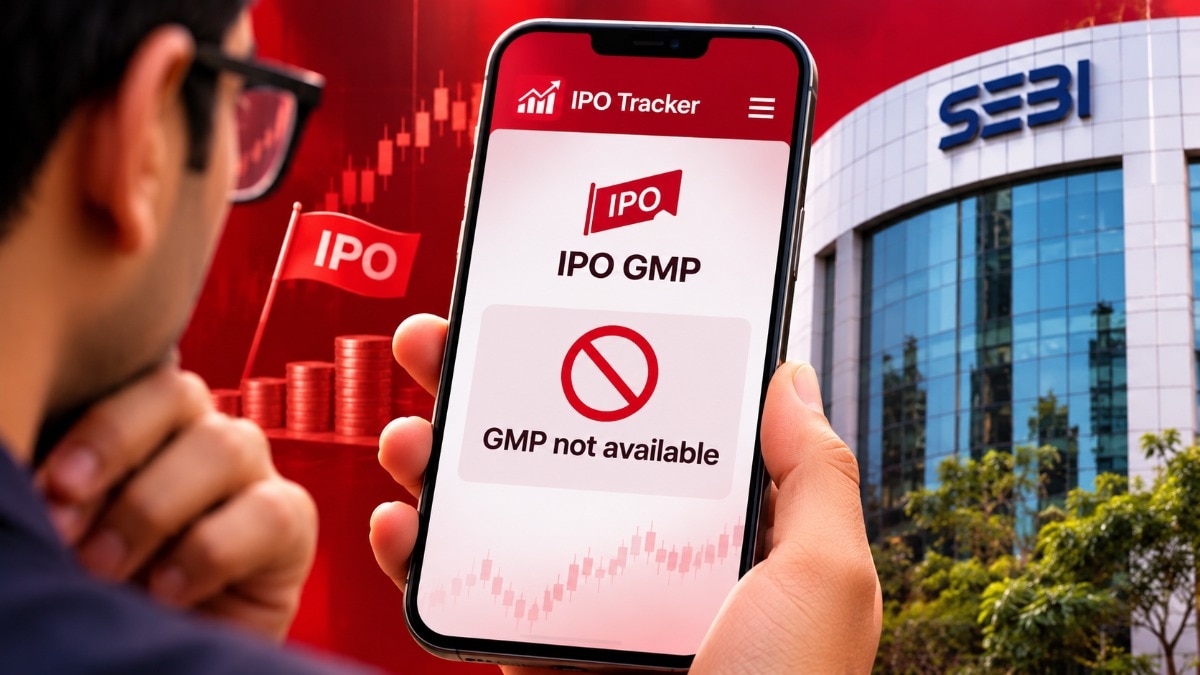
For many retail investors, tracking an upcoming initial public offering (IPO) means keeping a tab on the grey market premium (GMP), and the figure has become an important number to watch. A high GMP is often seen as a sign that an IPO could list at a premium, while a weak or negative one can make investors cautious.But the Securities and Exchange Board of India (Sebi) wants investors to look beyond this unofficial number. The market regulator has raised concerns over the widespread publication of IPO grey market premiums, warning that these figures are unverified and unregulated and may mislead investors about the likely listing price or returns.In an advisory dated November 23, Sebi said GMP figures are being widely published across websites, digital platforms, newspapers and even by some registered intermediaries and market participants. It said such figures are often portrayed as indicators of the likely listing price or anticipated returns after listing.The regulator has advised all Sebi-registered intermediaries and market participants to refrain from publishing, displaying or broadcasting GMP figures through websites, platforms and other communication channels, including email, SMS and social media. But why is Sebi concerned about a number that investors have increasingly come to rely on? And what risks do investors face when they participate in or base investment decisions on the IPO grey market?WHAT IS AN IPO's GMP? The grey market is an unofficial market where IPO-related shares are reportedly traded before they are formally listed on a recognised stock exchange. GMP refers to the premium at which these shares are reportedly traded over their IPO issue price. For example, if an IPO is priced at Rs 100 per share and its reported GMP is Rs 30, the implied expectation is that the stock could list at about Rs 130.This is only an indication based on reported grey market activity. It is not an official price, a guaranteed listing value or a promise of returns.GMP has gained visibility because it appears to give investors a simple way to assess demand for an IPO before its shares begin trading on the stock exchange. Investors often track these figures during the subscription period and use them to form expectations about listing-day gains.However, GMP does not emerge from the formal stock exchange trading mechanism, which is at the heart of Sebi's concern.WHY DOES SEBI WANT GMP BANNED?Sebi's main concern is that GMP figures are being presented as indicators of likely listing prices or expected returns even though they are not generated through a regulated price-discovery process.The regulator said such figures are widely published across websites, digital platforms and newspapers, including by some Sebi-registered intermediaries and market participants.In its advisory, it said the transactions are executed “outside the exchange framework” and are “not subject to regulatory oversight”. It added that they “carry no settlement guarantee or investor protection, and follow no formal price-discovery process”.This creates a gap between how investors may interpret GMP and what the figure represents. A reported premium can give the impression that there is strong demand for an IPO or that a listing gain is likely.However, because the underlying transactions take place outside the regulated exchange framework, investors do not have the transparency, verification or oversight available for exchange-traded securities.Sebi cautioned that “the publication of such pre-listing premium figures may be detrimental to the interests of investors and contrary to the core principles of transparency and accountability in the securities market”.The regulator said its move was intended to “safeguard the interest of the investors and maintain transparency and integrity in the securities market”. It wants investors to distinguish between an unofficial premium circulated in the market and a price discovered through a recognised exchange mechanism.WHAT ARE THE RISKS OF GREY MARKET TRADING?The main risk highlighted by Sebi is the absence of regulatory protection if a dispute arises from a GMP-linked transaction. Unlike transactions conducted through recognised stock exchanges and authorised platforms, grey market trades take place outside the formal regulatory framework.Sebi has cautioned that investors involved in such disputes will not be able to access “investor protection benefits under SEBI or Stock Exchange jurisdiction”.They will also be unable to use “investor grievance redressal mechanisms administered by Stock Exchanges, or the Online Dispute Resolution (ODR) portal administered by Exchanges/Depositories”.Investors participating in such transactions, therefore, cannot assume that the securities market's usual complaint and dispute resolution channels will be available to them.1. No assurance that the reported premium is genuineGMP figures are unofficial and unverified. Investors may see a premium circulated online, but the advisory does not establish that it reflects verified transactions or broad market demand.2. No formal price discoveryStock exchange prices emerge through a regulated trading mechanism, while GMP does not. Sebi has specifically flagged the absence of a “formal price-discovery process” in grey market transactions.3. No settlement guaranteeSebi has warned that grey market transactions “carry no settlement guarantee”. Investors cannot assume that such transactions will be completed with the safeguards associated with trading on recognised exchanges.4. No access to formal investor grievance mechanismsIf a dispute arises, investors cannot use the usual Sebi or stock exchange investor protection and grievance redressal mechanisms for a GMP-linked transaction. The exchanges' ODR portal will also not be available for such disputes.5. Risk of misleading investment decisionsWhen GMP is presented as an indication of likely listing gains, investors may give it more weight than it warrants. Sebi is concerned that unverified figures could shape expectations and influence investment decisions despite having no formal regulatory backing.CAN GMP PREDICT AN IPO's LISTING PRICE?GMP is not a reliable or guaranteed predictor of an IPO's listing price. It is an unofficial indication based on reported activity outside the recognised stock exchange framework and does not represent an assured price at which shares will list or trade once admitted to the exchange.Sebi has explicitly advised investors not to “treat GMP as an indicator of listing price or expected returns”.A high reported premium should not be seen as a guarantee of listing gains. Similarly, a low or negative premium does not by itself establish how an IPO will perform after listing. Investors need to distinguish between an unofficial market signal and the actual price at which a stock begins trading on the exchange.WHAT HAS SEBI ASKED INVESTORS TO DO?Sebi's advisory sets out three instructions for investors. First, they should not treat GMP as an indicator of the listing price or expected returns.Second, investors should “refrain from engaging in any GMP-linked transactions” because these fall entirely outside the regulatory framework.Third, they should “transact in IPOs exclusively through SEBI-registered intermediaries and authorized platforms”.The regulator has also advised all Sebi-registered intermediaries and market participants to refrain from publishing, displaying or broadcasting GMP figures on websites, platforms and other communication channels, including email, SMS and social media.The advisory said the publication, display, circulation or dissemination of unregulated pre-listing premiums “may be discontinued across the securities market”.Sebi's advisory is aimed at curbing the publication and dissemination of GMP figures across the securities market, particularly by registered intermediaries and market participants.However, it does not establish that all private grey market transactions will automatically cease. It makes clear that investors should refrain from participating in GMP-linked transactions because they fall outside the regulatory framework. Whether the move reduces grey market activity or shifts it to less visible channels remains to be seen.Sebi's message is that investors should not mistake an unofficial premium for a reliable measure of an IPO's prospects or treat a grey market transaction as equivalent to a regulated securities market trade. It has asked investors to avoid GMP-linked transactions and use only Sebi-registered intermediaries and authorised platforms for IPO investments.- Ends
Why Sebi wants to end IPO GMP and the risks investors should know
Full Article
Original Source
Read the full article at Indiatoday →KhanList aggregates and links to publicly available news content. We do not host full articles from third-party sources. Always verify important information with original sources.