
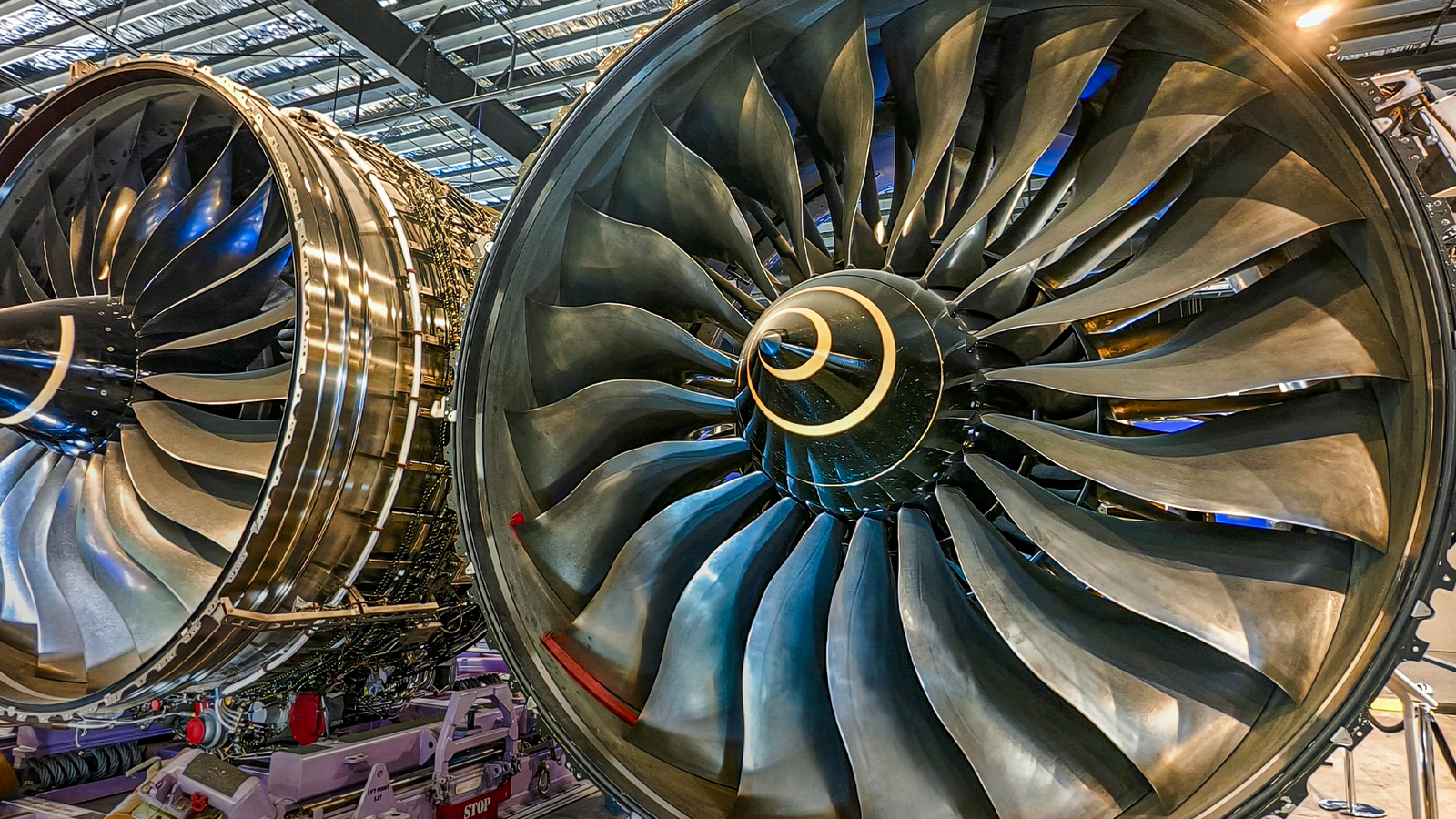
Published Sep 14, 2026, 6:00 AM EDT Luke Diaz is a freelance military writer with experience with active duty experience in the US Navy as well as defense and industrial engineering. He is a former Naval Flight Officer who performed tactical air control on the carrier-based E-2 Hawkeye. The narrative following Rolls-Royce's once troubled Trent 1000 engine that left many Boeing 787 Dreamliners grounded has evolved into a comeback story. There is no longer a global reliability crisis but rather a fleetwide upgrade rollout to future-proof every existing engine on-wing. The 20% increase in shop visits from 430 in 2024 to 517 in 2025 is the evidence that tells the tale. The iconic engine-maker reported a significant increase in Trent 1000 visits in the second half of last year, which some may misread as a wave of reliability issues when it is, in fact, the opposite. It shows the company is finally overhauling the last of its once colossal backlog of faulty Trent 1000 engines. Clearing that final wave of powerplants will give the historic company a clean slate and restore its otherwise pristine 120-year-old reputation. Moreover, it will help propel Rolls-Royce into the next chapter: more advanced widebody turbofans, major defense projects, and even a reentry into the narrowbody engine market. A Surge That Looks Like Trouble But Reads Like Cleanup The surge happened at the exact same time Rolls-Royce began sending its first Durability Enhancement Package to repair shops around the world, following its official approval in June 2025. This timing is no accident. Every Trent 1000 built with the defective fan blades must go into a maintenance shop (MRO) before it can be rebuilt with the new, improved components. Pushing engines through repair shops is a company's sole option for upgrading a fleet of aircraft that still use outdated parts despite having an approved remedy ready. Rolls-Royce reported 517 large-engine shop visits as part of a larger total of 1,440 visits. This total was a 10% increase from the 1,313 visits recorded in 2024. The package's first phase focuses on completely re-engineering the blade's cooling system. Rolls-Royce's technical specs say the new design improves cooling airflow by 40%. The modification lowers the blade's peak temperature by distributing cool air more evenly across the blade's surface in what the company dubbed the Trent 1000 XE package. The Blade At The Center Of It Rolls-Royce did not create this new design from scratch. The XE variant resolves the issue that has plagued the Trent 1000 since All Nippon Airways (ANA) first saw early breaking due to heat and wear in 2016. This same blade design flew in 2022 on the Trent 7000 engine, which powers the Airbus A330neo, which provided the mature data set that enabled the maker to salvage its engines equipped on 787s around the world. After more than three years of real-world flight data, RR says the results are even better than expected. Some airlines are reportedly seeing engines last nearly three times longer before needing deep maintenance intervals. This proven success on a legacy airframe is why Rolls-Royce confidently applied the same configuration to all new engines made after January 2025. This second phase also includes improved cooling holes on the guiding vanes, new protective coatings, and a lighter turbine blade cover. It also uses improved coatings on the burner components and a modified burner-to-turbine connection inspired by the successful Trent XWB-84 engine on the Airbus A350-900. Phase Two Closes The Gap Rolls-Royce Has Targeted The latest batch of refined turbine components in Phase One and Two aim to make both Trent 1000 and 7000 engines last 30% longer 'on wing' before needing repair. While Phase One focused on moving cooling air through the blade, Phase 2 includes additional internal parts that face extreme heat, as well as other considerations for fan blades, such as eliminating resonant frequencies that weaken metal over time. According to Aviation Week, Rolls-Royce has been stockpiling parts ahead of the formal clearance date in order to prevent the supply chain delays that bogged down previous upgrade programs. Company leaders said they had built a well-stocked inventory in advance to process every jet that passes through MRO doors. RR started putting these parts into new engines in February of this year, with the upgrade to existing engines kicking off in April. The company officially aims to upgrade its entire active fleet from the old grade to the more durable standard by the end of 2027. To that end, more than a third of the flying fleet had already received the upgrade before summer came to a close. The pace shows the changes are happening on time, unlike previous fixes that suffered delays between 2016 and 2021. Looking ahead, the new improvement packages are intended to cut down on shop visits globally to about 1,300 or 1,400 annually by 2028. The Number That Actually Matters For years, early versions of the Trent 1000 engine suffered from rapid wear and tear, forcing planes to stay on the ground and costing RR billions of dollars in overhauls and customer penalties. The new enhancements flip the script, turning a financial drain into a profitable asset. Fewer shop visits mean fewer expenses. The company now expects more than a 100% increase in the durability of its new Trent engines by the end of 2027, up from its previous goal of an 80% improvement. Previously, it had to pay out of its own pocket to fix broken engines under warranty. Because the new turbine blades can endure three times longer before needing maintenance, Rolls-Royce avoids millions in repair bills per engine. If a plane is broken on the tarmac, known as Aircraft on Ground (AOG), Rolls-Royce cannot bill the airline for flying hours. The company has officially declared that XE upgrades have effectively eliminated AOG events across the fleet, meaning engines stay in the sky earning money. To manage the current influx of engines, Rolls-Royce has been expanding its physical repair facilities in parallel. At its Derby site, the maker increased its repair capacity by almost 25%. Additionally, it reached an agreement with Turkish Technic to establish a new autonomous repair facility in Istanbul. Built to accommodate 200 engine visits annually, it is slated to open at the end of next year. What This Actually Means On The Ramp For Operators By closing this reliability gap, Rolls-Royce is rebuilding customer confidence and positioning itself to win highly lucrative future aircraft orders. For the airlines and leasing companies that use Trent 1000 engines, the real-world results matter most in two areas. First is daily flight reliability. The second is the aircraft's final value when it is returned after a lease. Under aircraft rental agreements, airlines typically must pay maintenance costs or penalties based on an engine's remaining life when the aircraft is returned. The airline saves money on maintenance costs when an engine has more time remaining in its mechanical service life at the end of its lease. Longer-lasting engines alter the financial calculations when a lease expires. At the peak of the crisis, 44 Dreamliners were grounded at the same time because they were waiting for spare parts or open spots in repair shops. The Trent 1000 fell to about a third of all 787 engine selections, compared with its rival, the GE GEnx. The shift is starting to show up in sales, not just company announcements. In a recent update, Rolls-Royce boasted a new order for upgraded engines on eight 787s, showing that its durability upgrades have made the engine competitive again and able to win new sales. FlightGlobal also reported that company leaders believe they can win even larger orders as their engines catch up to the GEnx in reliability. However, other industry experts warn that the entire engine program only has until 2030 before it phases out, and GE has already won such a massive share of the Dreamliner market. The Forward Marker Credit: US Air Force It may be true that the manufacturer has limited opportunity to recoup its share of the 787 global fleet, but Rolls-Royce is leveraging the technical progress of its recovery campaign to fuel an aggressive expansion strategy across both commercial and military aviation. Under CEO Tufan Erginbilgic, the company is pivoting toward opportunities in both the high-performance military realm and even single-aisle airliners. RR's Defense Aerospace division is leading the program to swap out the US Air Force B-52H fleet's archaic 1960s Pratt & Whitney TF33 engines for its F130 engines. This single program secures active, high-volume production and long-term maintenance revenue until at least 2050. It is also a leading tier-1 partner alongside Japan's IHI Corporation and Italy's Avio Aero to build the power plant for the sixth-generation Global Combat Air Program. RR famously exited the narrowbody market in 2012 by selling its stake in the IAE consortium to Pratt & Whitney. That move forced them to miss a decade of booming sales from planes like the Airbus A320neo. Its vehicle for a massive reentry is the UltraFan. Supported by a €64 million European Union Clean Aviation grant under the UNIFIED project, the program explicitly targets the 30,000 lbs thrust class needed for next-gen single-aisle jets. The company has said it is in discussions with multiple international partners to develop a new engine for the next era of Airbus and Boeing narrowbodies arriving in the mid-2030s.
Why Rolls-Royce's Trent 1000 Shop Visits Jumping 20% In 2025 Is Actually The Bullish Signal
Full Article
Original Source
Read the full article at Simpleflying →KhanList aggregates and links to publicly available news content. We do not host full articles from third-party sources. Always verify important information with original sources.