
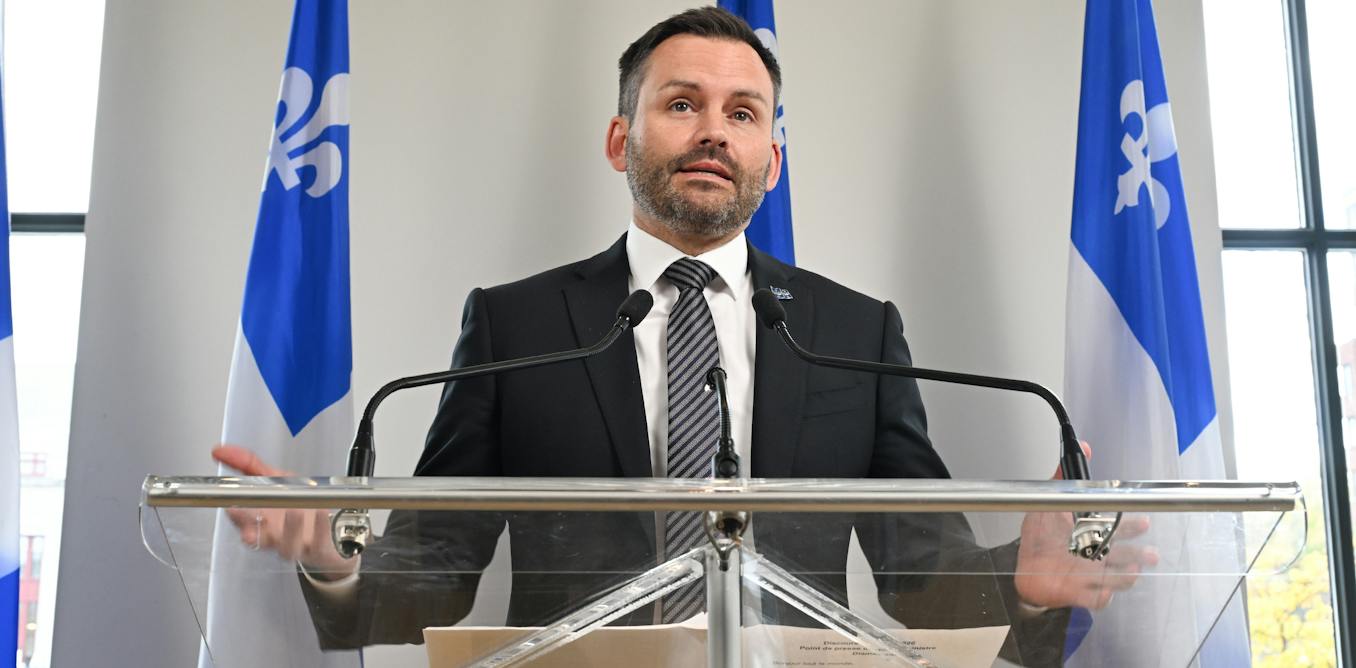
Québec’s flagship sovereignist party, the Parti Québecois (PQ), formed a minority government in the recent provincial election. The party essentially rose from the dead after a 12-year absence, dethroning the right-wing nationalist — but not separatist — Coalition Avenir Québec (CAQ). For Canadians, the PQ is typically associated with sovereignty referendums. Yet, despite the PQ victory, estimates place Québecois support for sovereignty at between 27 and 31 per cent, a far cry from the 49.42 per cent who voted to separate in the 1995 referendum. This figure aligns somewhat with the popular vote received by the PQ, which, at 28 per cent, is the lowest popular vote share of a sitting government in the history of the province. The PQ’s victory therefore should be understood in light of three factors: low public support for the PQ and for separatism, Indigenous resistance to Québec independence and a global context where statehood doesn’t necessarily shield against interference or expand diplomatic leverage. Lukewarm mood on independence The combination of Québec’s multi-party system and its “first-past-the-post” electoral system means governments are often formed on less than a majority of the popular vote. In six elections between 2007–2022, an average of 53.9 per cent of votes failed to translate into seats, according to electoral expert Mercédez Roberge. This explains how the separatist PQ was able to form government despite the measured lack of enthusiasm for separatism in the province. In fact, even leaving room for the possibility that leftist Québec Solidaire supporters also support independence (though the party does not necessarily prioritize it), a combination of the popular votes earned by parties that explicitly do not support independence suggests that 58.24 per cent of the electorate don’t want to separate from Canada. PQ leader Paul St-Pierre Plamondon’s statements following his party’s victory reflects a generally lukewarm mood towards independence in the province. During his campaign, Plamondon mitigated his promise to hold a referendum during his first term by stating it wouldn’t be held while Donald Trump remained president of the United States. Paul St-Pierre Plamondon in September 2026 while on the campaign trail. THE CANADIAN PRESS/Jacques Boissinot In the meantime, Plamondon has prioritized housing and cost of living issues, and has signalled to the English-speaking community that “we’re all in the same boat.” Plamondon’s prudence is paired with various assertions of Québec autonomy. In his first month as premier, he’s antagonized the federal government by skipping the recent Canada-European Union summit. Under the CAQ, antagonism was more often directed at Québec’s increasingly ethnically and religiously diverse population. Without dropping this inward-facing orientation to nation-building, the PQ’s swipes at Ottawa suggests it will return to stoking more familiar Québec-Ottawa tensions. But in a country with longstanding debates about provincial autonomy, none of this is new or indicative of separatist sentiments. The recent PQ victory is more akin to detecting a faint pulse in a terminally ill patient than a spectacular jolt back to life. Read more: Unruly provinces? That’s what the Fathers of Confederation expected — and planned for Changed scene from 1995 The PQ has formed a government in a situation different from 1995. Domestically, First Nations have increasingly affirmed their place in Canada’s tapestry. In 1996, the Royal Commission on Aboriginal Peoples published its five-volume, 4,000-page report making 440 recommendations. Among them were recognizing Indigenous Peoples as self-governing nations and creating Indigenous institutions, including an Indigenous parliament. Montréal riot police watch a fire burn underneath a Oui sign after the No side won the Québec referendum in October 1995. THE CANADIAN PRESS/Tom Hansen In 2015, the Truth and Reconciliation Commission published its final report, which included 94 calls to action to address the harms of the residential school system and advance reconciliation across areas that include child welfare, education, health, justice and culture. The following year, Canada officially adopted the United Nations Declaration for the Rights of Indigenous Peoples. The document became federal law in 2021. Finally, since 1995, at least 19 modern treaties have been concluded or come into effect. It would be misleading to claim, however, that the relationship between Canadian governments and Indigenous nations has radically changed in the last 30 years. Plamondon’s absence from the First Nations-First Ministers meeting recently held in Ottawa is an example. Québec’s minister responsible for relations with First Nations and Inuit wrote that the premier’s absence was aimed at prioritizing direct nation-to-nation meetings with Indigenous nations on “notre territoire (‘our territory.’)” This phrasing takes Québec’s territorial sovereignty as a given, treating it as a non-negotiable precondition that other nations must accept before dialogue can even begin. By prioritizing provincial self-determination, it implicitly subordinates Indigenous sovereignty. Claiming these talks are “nation-to-nation” rings hollow when one party unilaterally dictates the terms of engagement. The premier’s decision to skip the meeting was criticized by the Assembly of First Nations of Québec and Labrador (AFNQL) and the Native Women’s Shelter of Montréal, who wanted Québec to be at the table in Ottawa. Plamondon would do well to remember that in 1995, multiple First Nations within Québec’s boundaries refused forcible inclusion into a new independent state, notably those whose rivers provide the bulk of the province’s hydroelectricity. Prince Albert Grand Council Grand Chief Brian Hardlotte, left, and Cumberland House Cree Nation Chief Rene Chaboyer look on as former national chief Matthew Coon Come speaks during a break at the First Nations and First Ministers’ meeting in Ottawa on Oct. 26, 2026. THE CANADIAN PRESS/Adrian Wyld Modern risks of independent statehood Internationally, separatist sentiments today have more to do with populism than with the decolonization efforts that played out in the second half of the 20th century. In a climate of survival-of-the-fittest foreign policy, sovereignty in the form of an independent state does not guarantee the same freedoms or capacities it might have in 1980 and 1995. As U.K. political scientist Michael Keating suggests, self-determination is no longer fixed to a single people or territory. Nations today are largely regarded as contested constructs, and territories are multi-layered with various cultural and ethnic populations. Additionally, sovereignty doesn’t shield a state from the decisions of another, as recent American tariff policies are showing Canadians all too well. Read more: 3 ways Canada can navigate an increasingly erratic and belligerent United States Keating’s argument aligns with Indigenous political theories of relational autonomy: today sovereignty is experienced less as something a nation possesses and more as a continuously negotiated relationship. American threats to Canadian sovereignty and Greenland’s self-determination suggests that secession would not necessarily improve upon Québec’s ability to negotiate its position within the broader international order. In short, in a world where even the U.S., a superpower for decades, is experiencing the costs of fractured relationships, a convincing pitch for Québec separatism would have to take into account similar costs. The pulse of Québec separatism persists, though the body sustaining it is weighed down by internal fractures and a punishing political landscape.
Why Québec separatism is unlikely despite the Parti Québecois election win
Full Article
Original Source
Read the full article at Theconversation →KhanList aggregates and links to publicly available news content. We do not host full articles from third-party sources. Always verify important information with original sources.