
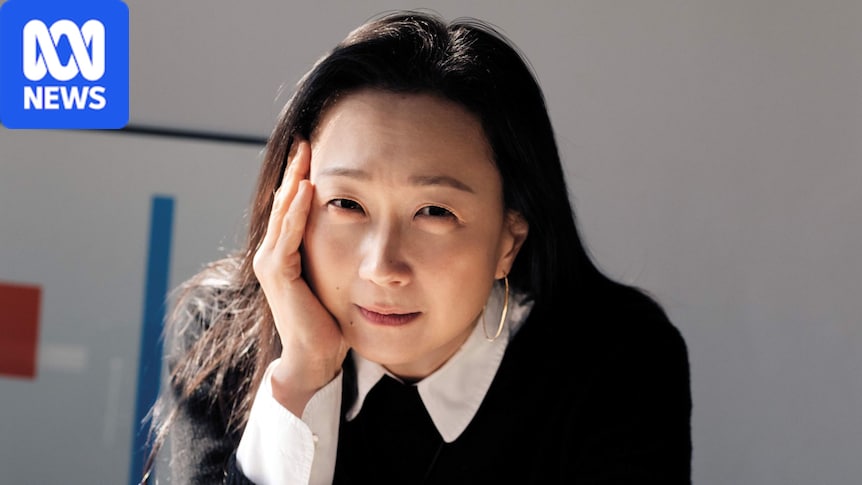
In 1997, a financial crisis swept across Asia, swiftly ending the region's postwar period of rapid economic growth.It was a dramatic reversal in fortune for the four "Asian Tigers" — Hong Kong, Singapore, South Korea and Taiwan — which had not long before been celebrated as the Asian Miracle."Several Asian countries had a terrible time in which they over-borrowed, and they couldn't pay back their loans," Min Jin Lee, the author of bestselling novel Pachinko, tells ABC Radio National's The Book Show.As the crisis gripped the region, the International Monetary Fund (IMF) intervened with a $US40 billion ($58 million) bailout for the worst-affected countries, Thailand, Indonesia and South Korea.The effect on South Koreans was profound."Korea was eventually allowed to pay back its loan, but that period was so devastating for so many people who didn't have generational wealth," Lee says."If you had money … you walked away great. But the average person, they lost their education, they lost their homes, they lost their jobs."Education was already important to South Koreans, seen as one of the few avenues to higher social status.After the financial crisis, South Koreans went to more extreme lengths to educate their children, making many sacrifices to send their kids to elite schools in Korea and abroad.But the emphasis on education came at a cost, further entrenching the hagwon system, which sees South Korean students spending most of their time studying.Lee explores hagwon culture among the Korean diaspora in her latest book, American Hagwon, a sweeping social novel which follows the Koh family from South Korea to Australia and the US.What is a hagwon?A hagwon, also known colloquially as a cram school, is a for-profit tutoring business that operates outside the state school system."The hagwon is a very central part of being a Korean person," Lee says.In South Korea, education is seen as fundamental to career success."A middle school can affect a high school, high school could affect a university, and a university can affect your job," Lee says."People tend to think that if you don't make those right moves, then your life will be more difficult."Most students, four out of five, attend hagwons, many commencing when they are five years old.By the time Korean students reach high school, they typically study 14 hours a day.Min Jin Lee moved to the US in 1976, when she was seven years old. (Supplied: Elena Seibert)After school finishes at 4 or 5pm, students head straight to their hagwon, where they study subjects like English, maths and science until 10pm or later.Many hagwons specifically prepare children for the highly competitive university entrance exam, the College Scholastic Ability Test, also known as the Suneung.Relatively few who sit the gruelling eight-hour exam gain entry into the country's most prestigious universities, which, in turn, can lead to successful careers in top-tier companies.Failing the test is common. In American Hagwon, Bo, the eldest Koh child and a bright, diligent student, sits the test numerous times, a huge investment of time and money.But hagwons are not just for exam preparation."In Korea, if you get married and you want to learn how to cook dinner, you go to a hagwon," Lee says."If you want to learn how to tap dance in Korea, you go to a hagwon. If you want to become a police officer or a postal worker and you have to take a civil service exam, you go to a hagwon."A polarising topicIn American Hagwon, Helen Koh conscientiously sets aside money from the commissions she receives in her job at a luxury department store to pay for her children's extracurricular expenses.But after the financial crisis, referred to in shorthand as "IMF", money becomes scarce."Min Jin Lee is a master of building rich, character-led stories," ABC critic Rosie Ofori Ward said in her review of American Hagwon. (Supplied: HarperCollins Australia)Although both Koh parents went to top Korean universities, educating their three children is beyond their means. Helen must scrimp to pay her children's hagwon fees.Hagwons in South Korea are big business, with Koreans spending $29 billion on private education in 2022.In a country where 70 per cent of students go to university, it's an almost unavoidable cost that many families, like the Kohs, find difficult to bear.It's no coincidence South Korea's fertility rate is in sharp decline, with the country reporting the lowest birth rate in the world."It's probably the central reason that people are not having children in Korea," Lee says."The cost of raising a child and the cost of her education is so extraordinary and forbidding that a lot of people are saying, 'I don't want to do it.' It's that important."Hagwon culture contributes to other social problems. South Korea has a high incidence of depression among young people and one of the world's highest suicide rates.The government has made efforts to reform the sector, introducing measures such as a curfew, but hagwons remain an integral part of the Korean education system."It's a very polarising topic," Lee says."If you ask the average Korean person, 'What do you think about hagwons?' they'll give you the eye roll, like they're so frustrated by it."And yet, almost all parents send their kids to hagwons; almost all Koreans that you'll meet have experienced some hagwon in their lives, especially if they're living on the peninsula."How Australia comparesIt's a tension Lee seeks to capture in her novel.One character, Lion, runs a hagwon in California that puts student welfare above profit and results.But his example is the exception.As Lee's novel shows, Korean families invest huge resources in educating children, paying thousands for extra tutoring and specialised exam application services.Faced with a rigid and inaccessible education system in South Korea, many families opt to educate their children abroad, in countries like Australia and the US.But Lee acknowledges the American system isn't perfect, despite its prestige.American Hagwon also highlights problems with the US system: its entrenched inequality, spiralling costs and transactional philosophy that treats students as commodities.For Lee, the Australian education system provides an intriguing alternative to those in Korea and the US."I was so amazed by HECS and TAFE," she says."In America, we don't have anything like that. When you talk to the average Australian person who went to a very fine university … they don't freak out about the cost of it because they're like, eventually you pay it back."In the US, where higher education is much more expensive, the stakes are much higher."If you had the cost of a house hanging over your head, which is what the average American thinks, then you would be very upset about how much your college tuition is, and you would think carefully about what kind of jobs you get."Lee was also impressed by universal health care and the protective effect it has on society."[The US] is a cruel place," she says."The reality of every American [is] you have to pay for your own health care. If you get cancer and you don't have a job, you can't get treatment. If you have a house, you have to sell the house to pay for it."Stories of diasporaAmerican Hagwon is the third novel in Lee's Diaspora Quartet charting the movement of Koreans across the globe.Her writing is an attempt to understand the role of migration and borders in a world that is constantly changing."I believe that diaspora is a permanent condition now," she says, pointing to the increased displacement of people, both voluntary and forced, due to economic, environmental and educational factors around the world today.Her first novel, Free Food for Millionaires (2007), follows a young Korean American woman and Ivy League graduate as she navigates the tension between her family's heritage and her life in the US.Next was Pachinko, a story of Korean migration to Japan spanning the 20th century. A finalist for the 2017 National Book Award for Fiction, the novel was adapted for television in 2022.Lee is currently working on the quartet's final instalment, The Marshall Plan, which examines the Korean diaspora in Europe after World War II."I focus on Koreans, but what I really focus on is the movement of bodies and how our movement is changing us and how our environment is also being affected by our presence," she says."Because once you go somewhere, not only are you changed, but we change others."American Hagwon is published by Fourth Estate.
Why Pachinko author Min Jin Lee loves Australia's TAFE system
Full Article
Original Source
Read the full article at Abc →KhanList aggregates and links to publicly available news content. We do not host full articles from third-party sources. Always verify important information with original sources.