
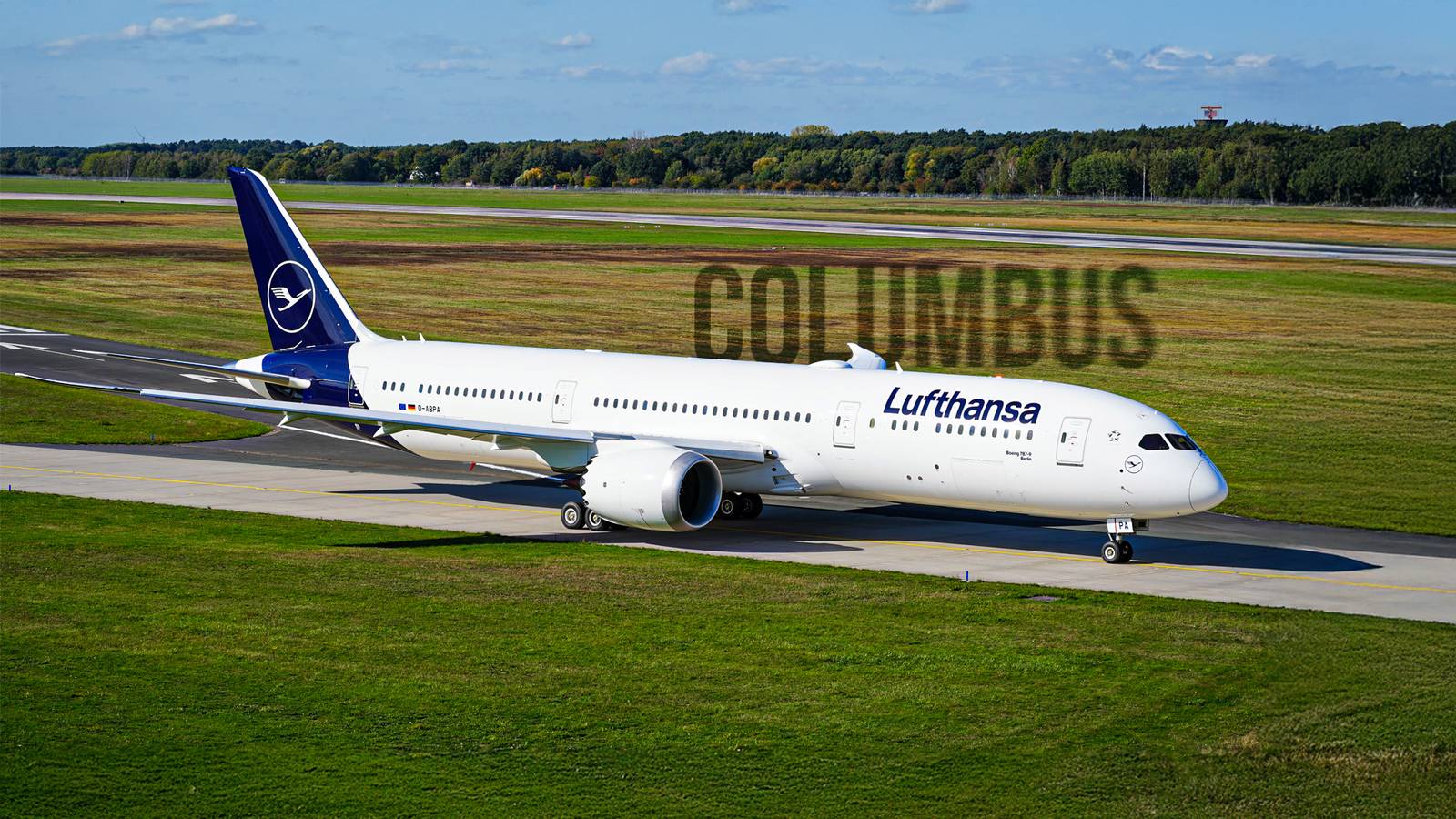
Published Oct 30, 2026, 7:00 AM EDT Jack comes to Simple Flying with a lifelong interest in all things aviation. He holds a degree in Aerospace Engineering from Georgia Tech, and is a certified private and remote pilot. Beyond these experiences, Jack previously worked for a corporate flight department where he gained first-hand experience in the world of business aviation. Currently, Jack works in the professional services industry and continues to build his flight hours outside of work. Lufthansa will launch the first-ever nonstop flight between John Glenn Columbus International Airport (CMH) and Europe on May 5, 2027, connecting Ohio’s capital with Frankfurt Airport (FRA) in Germany, three times weekly. The airline plans to operate a 287-seat Boeing 787-9 Dreamliner featuring its Allegris cabin, introducing a significant new international connection for a market that has never had scheduled nonstop service to Europe. The announcement marks a milestone for Columbus, but it also represents a calculated commercial bet on whether the region can sustain a long-haul route. The service is not simply a response to growing leisure travel. Ohio’s extensive German business connections, major industrial investments, and state-backed revenue guarantees have helped make the route viable. Lufthansa also gains an opportunity to feed passengers into its Frankfurt hub, where connections extend across Europe and beyond. Yet three weekly flights carrying hundreds of passengers each way will require demand from multiple customer groups. The route’s long-term prospects will depend on how effectively corporate travel, visiting friends and relatives, connecting passengers, and premium-cabin sales combine to support the operation. Columbus Gets Its First Nonstop Link To Europe The new service will operate on Wednesdays, Fridays, and Sundays, with flight LH407 originating in Columbus. The return flight is slated as LH406. Tickets recently became available on October 20, according to the Columbus Regional Airport Authority. New Lufthansa Route Frequency Flight Number Departure Airport Departure Time (Local) Arrival Airport Arrival Time (Local) Weekly Frequency LH407 CMH 4:20 PM FRA 6:15 AM +1 3x LH406 FRA 11:15 AM CMH 2:00 PM 3x For Columbus, the significance extends beyond Germany. Frankfurt is one of Europe’s major aviation hubs, allowing passengers to connect onward without first traveling through another US airport. Lufthansa says the route will provide access to its broader international network, potentially making destinations across continental Europe, the Middle East, Africa, and Asia easier to reach from central Ohio. While Ohio already has international connections through other airports, Columbus has not previously offered a nonstop link to Europe. Passengers traveling across the Atlantic generally need to connect through another US gateway or travel to a different airport to begin their journey. Lufthansa’s arrival gives businesses and leisure travelers a direct option from the state capital. Three weekly frequencies represent a measured introduction into the central Ohio travel economy. That schedule gives Lufthansa a foothold in the market while limiting the number of flights it must fill as local travelers become familiar with the service. It also gives the airline a chance to assess seasonal patterns before considering any expansion. German Corporate Investment Gives Lufthansa A Demand Base The strongest argument for Columbus is its business relationship with Germany. The region has attracted German companies across manufacturing, pharmaceuticals, and other industrial sectors, creating travel needs that extend beyond occasional vacations. According to reporting by The Columbus Dispatch, the Columbus area is home to 38 German-based companies, and Germany ranks among Ohio’s leading sources of international investment. Bayer’s pharmaceutical investment in nearby New Albany illustrates the scale of the commercial relationship, as the company has committed billions of dollars to its Ohio operations, reinforcing connections between local facilities and German headquarters. Such investments can generate travel for executives, engineers, technical specialists, suppliers, and project teams. A nonstop flight reduces the time and inconvenience associated with those trips, particularly when schedules require travelers to arrive for meetings early in the business day. German-owned businesses employ tens of thousands of people in Ohio, and the state exports substantial quantities of goods to Germany. Those links do not guarantee that every company will use Lufthansa, but they provide a plausible foundation for repeat business travel. Corporate contracts, negotiated fares, and loyalty-program participation could help the airline build a stable base of passengers beyond the leisure market. However, the route cannot rely on corporate demand alone. Business travelers often value schedule flexibility, but Lufthansa will also need to attract passengers traveling for personal reasons, international visitors coming to Ohio, and customers connecting through Frankfurt. The corporate sector makes the route more credible, but its continued success will depend on combining that demand with other traffic. Why Lufthansa Is Using A 287-Seat Dreamliner Credit: Lufthansa Lufthansa plans to deploy a 787-9 configured with its new Allegris business class cabin. The 287-seat layout gives the airline three distinct revenue categories, allowing it to serve corporate travelers willing to pay for premium accommodation as well as price-sensitive passengers visiting Europe. The Allegris cabin is central to the aircraft’s positioning. Business Class includes lie-flat seating, while Premium Economy offers more space than standard economy. Lufthansa has also introduced new seat designs and upgraded personal-space options in its Allegris long-haul product. Details of the aircraft’s layout are available in the airline’s official seat map. Lufthansa 787-9 Allegris Cabin Configuration Cabin Seat Count Allegris Business Class 28 Premium Economy 28 Economy 231 Revenue per seat varies substantially by cabin, and a relatively small number of premium bookings can contribute meaningfully to a flight’s economics. Corporate demand from Columbus and the surrounding business region could support the 28-seat Business Class cabin, while Premium Economy offers a middle option for travelers who want more comfort without paying for a lie-flat seat. Nevertheless, putting a modern aircraft on a new route does not guarantee profitability. The Dreamliner’s efficiency helps make long-distance operations more economical, but Lufthansa still assumes the opportunity cost of assigning the aircraft to Columbus instead of another more established market. JobsOhio’s Revenue Guarantee Helps Reduce The Risk Credit: John Glenn Columbus International Airport A central factor behind the launch is JobsOhio’s Air Service Restoration program. The initiative uses short-term revenue guarantees to encourage airlines to establish or restore routes that public and private partners believe can strengthen regional economic development. The arrangement does not mean the state simply purchases every seat; instead, it shares a defined portion of the financial risk if eligible revenue falls below an agreed threshold. JobsOhio created the program after Ohio businesses identified limited air connectivity as a barrier to investment and competitiveness. According to the organization’s official program overview, the initiative has supported new routes and expanded services at airports statewide through partnerships with airports and other local stakeholders. For Lufthansa, a revenue guarantee can make a route more attractive during its vulnerable early stages. A new nonstop service must build awareness, establish corporate travel patterns, and persuade passengers to change their usual itineraries. Even a market with strong economic credentials can take time to generate sufficient bookings. Sharing some initial downside risk gives an airline more confidence to test demand that might otherwise appear too uncertain. A guarantee can help launch the service, but it cannot indefinitely replace passenger revenue. The long-term objective is for the route to become self-sustaining as travelers adopt the connection and businesses incorporate it into their travel plans. JobsOhio says its broader program has supported dozens of new routes and route expansions across Ohio. The Lufthansa announcement therefore fits an established state strategy, rather than representing an isolated incentive designed solely for Columbus. Its eventual value will depend on whether the new connection generates sufficient ongoing demand to justify continued service after the initial support period. Columbus Joins A Wider Shift Toward Mid-Sized US Markets Credit: InsectWorld | Shutterstock Lufthansa’s decision reflects a broader airline strategy of finding profitable international markets beyond the biggest US gateways. European carriers have increasingly targeted cities with expanding economies, corporate investment, and growing populations, where a nonstop connection can beat itineraries that require a domestic transfer. Austin, Texas offers a good example. Lufthansa launched nonstop service between Austin and Frankfurt in 2019, giving the Texas capital direct access to its European hub. The airline’s Austin route history demonstrates that a city outside the traditional largest gateways can support transatlantic service when the surrounding economy and travel market justify it. A further example is St. Louis, which provides a useful comparison. Lufthansa launched its Frankfurt route in 2022 with three weekly flights, connecting the region directly with continental Europe. The service later expanded to five weekly flights in summer 2026, with the airport citing strong reported passenger loads. The St. Louis airport authority said the increase reflected the route’s performance and regional support. While those examples are encouraging, they don't guarantee similar results in Columbus. It remains to be seen whether Columbus can provide enough new passengers for Lufthansa’s network to make the operation financially viable. In the meantime, the airline will offer a connection that local businesses have long lacked. The Real Test Begins Once The Flying Begins Lufthansa’s Columbus service combines several advantages: a substantial regional economy, close German business ties, a state-backed mechanism for reducing launch risk, and access to a major European hub. The updated 787-9 cabin gives the airline enough capacity to serve different types of travelers, but also makes sustained demand essential. The route’s significance will ultimately be measured by its commercial performance, not simply by the milestone of becoming Columbus’s first nonstop connection to Europe. The next indicators to watch will be booking strength across all three cabins, corporate travel commitments, and whether the initial three-times-weekly schedule attracts enough year-round demand. If Lufthansa can demonstrate consistent performance, Columbus could eventually become a stronger candidate for additional frequencies. If demand proves more seasonal than expected, the airline may need to adjust capacity or schedules before expanding. For now, the route is a calculated experiment in connecting a growing Midwestern business market to a global hub. JobsOhio’s guarantee helps Lufthansa take that first step, but sustained passenger demand will determine whether the nonstop becomes a permanent part of Columbus’s international network.
Why Lufthansa Is Risking A 287-Seat Boeing 787-9 On Columbus' 1st-Ever Nonstop To Europe
Full Article
Original Source
Read the full article at Simpleflying →KhanList aggregates and links to publicly available news content. We do not host full articles from third-party sources. Always verify important information with original sources.