
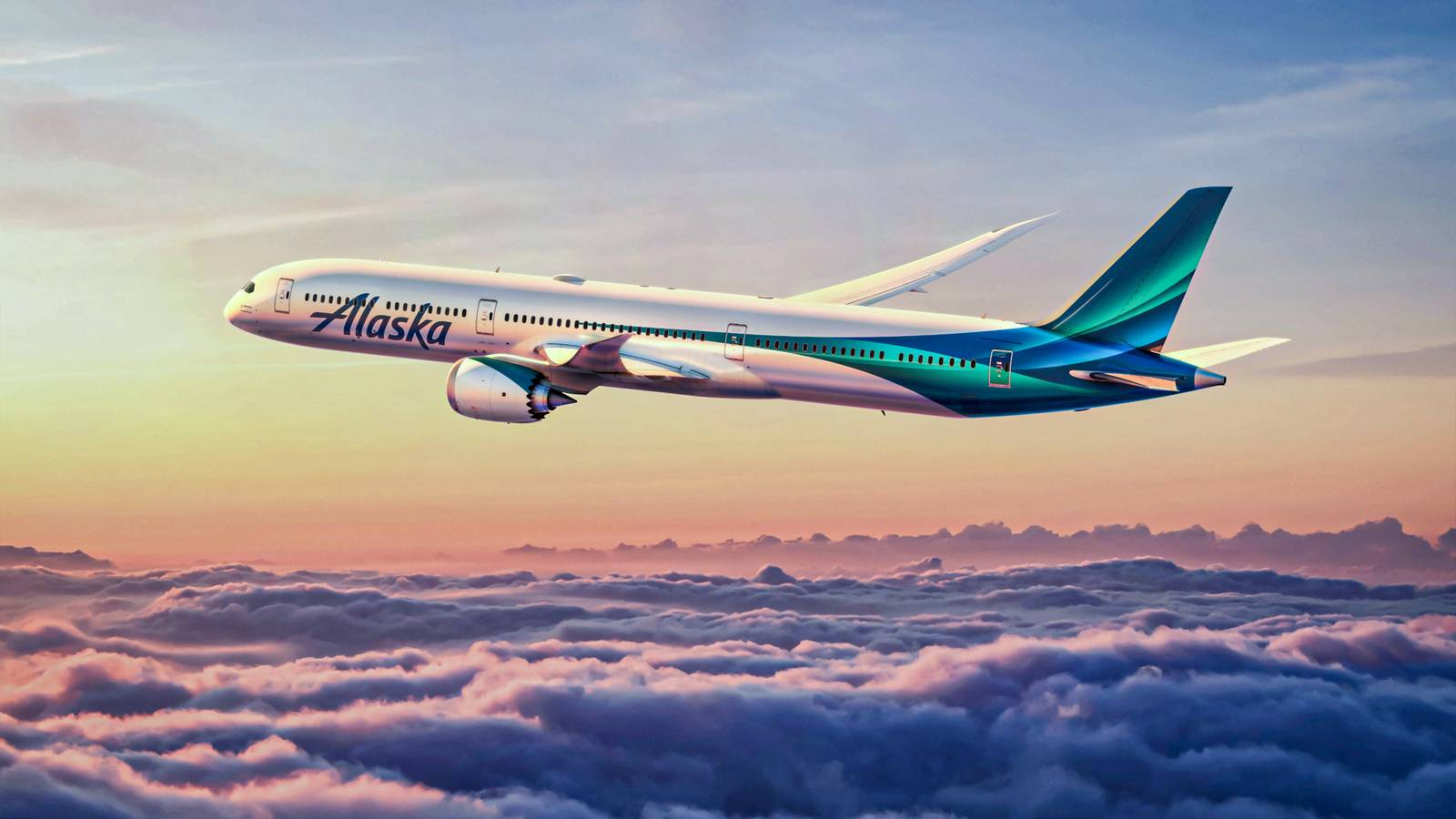
Published Nov 4, 2026, 3:30 AM EST Luke Diaz is a freelance military writer with experience with active duty experience in the US Navy as well as defense and industrial engineering. He is a former Naval Flight Officer who performed tactical air control on the carrier-based E-2 Hawkeye. Although the Boeing 787 Dreamliner made history by becoming the best-selling widebody jet of all time, the largest variant in the lineup has only recently begun to hit the sales figures its maker hoped for over a decade ago. Boeing launched its largest Dreamliner variant at the 2013 Paris Air Show, but by mid-2025, the 787-10 accounted for just 433 gross orders. That is in comparison to the 1,557 orders for the 787-9. This slow start mirrored an industry consensus that the aircraft lacked the necessary range to compete effectively on highly demanding transoceanic routes, leaving the variant relegated to high-density regional or shorter transatlantic corridors. The sales trajectory of the platform shifted dramatically between late 2025 and early 2026 amid a wave of high-profile commitments. Major international network operators, including Qatar Airways, British Airways, Korean Air, and Turkish Airlines, all placed substantial firm orders for the largest Dreamliner variant. Delta Air Lines even broke a decade of exclusive Airbus widebody loyalty by announcing a landmark firm order for 30 of the aircraft in January 2026. Concurrently, United Airlines executed a major strategic pivot, converting 56 of its outstanding 787-9 orders to the larger 787-10 model. This sudden surge raises a fundamental question regarding whether commercial airlines shifted their underlying network range requirements, or if Boeing introduced critical hardware enhancements to alter the aircraft's physical capabilities. A Stretch Designed To Be Cheap Credit: aviationisa | Shutterstock The 787-10 stretches the 787-9 to a fuselage length of 224 feet (68.3 meters), which equals an increase of 8.71%. Yet, Boeing certified it at the same maximum takeoff weight as the 787-9. FlightGlobal's 2018 technical analysis of the 787-10 described a trade that Boeing made on purpose. That figure is a key selling point, not a shortcoming, because the lower MTOW reduces airport charges and operating costs. The wing of the -10 is shared with the -9 as well for economics.Boeing reinforced it in a few places, but it remained largely unchanged to keep production common. The result was a range of 6,330 nautical miles (11,730 km) for the -10, against 7,565 nautical miles (14,010 km) for the -9. FlightGlobal highlighted the shortfall against the Airbus A350-900, the -10's nearest rival in size, at roughly 2,000 nautical miles. The Airbus A350 offered comparable capacity to the 787-10 but with vastly superior range, making it the preferred choice for premier global carriers. The larger seat capacity and lower range of the -10 is pitched as delivering the lowest cost per seat on routes where its siblings' extra reach would go unused. Yet, for airlines that only needed medium-haul capacity, Airbus also offered the cheaper A330neo, which kept Boeing fighting aggressively on pricing. A Narrow Niche Between The 787-9 And Airbus Credit: Sergey Kustov | Shutterstock Today, the 787-10 sits in one of the most fiercely contested, complex 'sweet spots' in commercial aviation history. In terms of performance, its place on the flightline falls in a narrow niche that is wedged between the smaller 787-9, the longer-range A350-900, and the cheaper alternative, the A330neo. The -10 gives an airline roughly 40 more seats and 26% more cargo space than the -9. However, the range sacrifice is the clear trade-off. The Airbus comparisons are slightly more complex for prospective operators. While they carry a similar passenger load, the A350-900 is structurally a much heavier and more capable machine. The A350-900 has a much larger wing and a significantly higher MTOW to carry more fuel, also out-flying the -10 but without cutting on seating capacity. The big Dreamliner has the cost advantage on shorter, medium-haul routes, but the moment a route hits 10+ hours, the -10 falls off the map, leaving the A350-900 dominant. The A330-900neo represents Airbus's price-undercutting strategy against the 787 family. Rather than building an expensive all-composite jet from scratch, Airbus took the older aluminum A330 framework and slapped ultra-modern wings and engines on it. As a result, the A330neo is significantly cheaper to buy or lease, or around $35 to $40 million less than a -10. While the 787-10 is lighter and more fuel-efficient per seat on paper, its high acquisition price means an airline has to fly it constantly to make the math work. 2025 Becomes The Year Capacity Beats Range Credit: Sr. R | Shutterstock For years, the Boeing 787-10 was a slow seller, but 2025 became a massive turning point. Boeing counted 150 orders for the -10 from just six airlines, an unprecedented year for the type. Key buyers included Qatar Airways, British Airways, Korean Air and Turkish Airlines. A full count showed 243 new Dreamliner orders by mid 2025, all for the -9 or -10 and none for the -8, which has drawn only eight orders since 2020. BA led the way in May. Its parent, IAG, ordered 32 examples of the -10 powered by General Electric engines, with delivery between 2028 and 2033 and options on up to 10 more Dreamliners, according to MarketWatch. Korean followed in August with a commitment for 103 Boeing jets that included 25 of the largest Dreamliners. Turkish announced in September 2025 a firm order for 50 Dreamliners with options on 25 more. By 2025, Airbus had effectively become a victim of its own success. The popular A350-900 and A350-1000 order books were completely packed, with delivery slots sold out deep into the 2030s. Airlines that wanted to expand their networks or replace aging planes last year faced a harsh reality: ordering from Airbus meant waiting nearly a decade for delivery. Last year's buying streak also shattered the historical norm of airlines staggering major widebody orders so they wouldn't all compete for factory slots at once. Delta And United Bring The Congestion Argument Credit: Vytautas Kielaitis | Shutterstock Recent orders from Delta Air Lines and United Airlines illustrate the 787-10 buying frenzy as definitive proof that the -10 went from a slow-selling niche airframe to a twin-aisle workhorse for future fleets. On January 13, Delta placed its first order for any variant in the Dreamliner family. After months of speculation that the deal was coming. DAL bought 30 examples of the -10, with options on 30 more, expected to fly transatlantic and South American routes when they arrive. Delta has famously received all its new widebodies from Airbus for the past several years as it retires veteran Boeing jets like the 777 and 767. It had even famously canceled a legacy Northwest order for 787s back in 2016 after the merger. That made the order for Boeing's largest Dreamliner a notable break. Days later, United confirmed it had converted 56 of its -9 orders to the larger -10, with deliveries beginning in 2028, according to The Air Current. United already operates all three Dreamliner variants, on the other hand, and has over 100 airframes in backlog. United's change was driven by takeoff and landing constraints at airports. US airlines face increasingly scarce gates and air traffic control capacity for departures across the nation. So the remedy for thinner schedules, without losing capacity, is to have each departure carry more people. The extra seats per departure with a -10 directly equals revenue. When the world's most profitable legacy carriers make moves like this, it signals a paradigm shift. United is giving up range to squeeze more seats into its existing slots, while Delta is giving up the all-Airbus fleet model, ending a decade-long manufacturer boycott just to secure widebody delivery slots before the decade ends. Together, they prove that the -10's unique combination of high capacity and manufacturing agility is what the modern aviation industry demands. A Backlog Above 400 And What It Leaves Open Credit: kamilpetran | Shutterstock While Boeing's reputation and cash flow have been heavily battered by crises with the 737 MAX and 777X, the 787 program has quietly kept the company's commercial division from collapse. With Boeing's massive flagship twin-jet, the 777X, crippled by rolling certification delays, the 787 family has become the default compromise plane. Meanwhile, the 737 MAX crashes, ensuing quality-control fallout, and regulatory delivery caps have severely limited cash flow from what was once the best-selling jetliner series in history. The 787 program has consistently generated the revenue required to keep Boeing's books afloat. The sheer scale of the 787's success is best illustrated by looking at how its massive backlog shapes up. With between 1,000 and 1,200 unfulfilled backorders, the Dreamliner series fills 20% of Boeing's commercial aircraft order book. In response, the manufacturing program isn't just holding steady; it's ramping up capacity. Following the consolidation of all 787 assembly line work away from Everett, Washington, the Boeing South Carolina plant in North Charleston became the exclusive home of the Dreamliner. To chip away at the massive backlog, Boeing has broken ground on a massive $1 billion factory expansion. It will add a 1.2-million-square-foot final assembly building, introducing a third line to the factory. The growth is actively paving the way to transition to a rate of 10 per month very soon.
Why It Took Years For Boeing To Finally Get The Orders For The 787-10 It Always Wanted
Full Article
Original Source
Read the full article at Simpleflying →KhanList aggregates and links to publicly available news content. We do not host full articles from third-party sources. Always verify important information with original sources.