
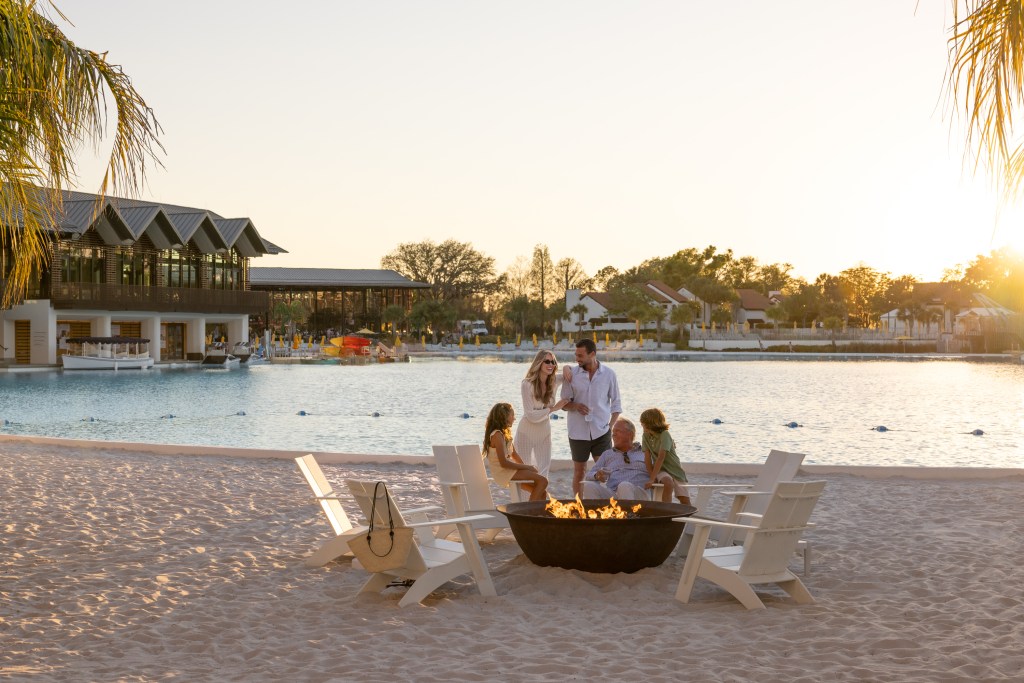
Skift Take As loneliness rises and travelers seek more meaningful time together, hospitality may have a new role to play in wellness. Evermore Orlando Resort is testing whether social connection can be intentionally designed into the guest experience and measured as an outcome of the stay. This sponsored content was created in collaboration with a Skift partner. Wellness travel is booming at the same time loneliness is becoming a global health concern. Skift Research found that 36% of travelers plan to spend on health and wellness activities during trips in 2026, while the World Health Organization estimates that one in six people worldwide experience loneliness. For hospitality, that combination raises a bigger question about what wellness should actually help people achieve. The category has traditionally centered on individual health and restoration, from spa treatments and fitness to sleep, nutrition, and longevity. But as social connection becomes a more urgent part of the wellbeing conversation, hospitality has an opportunity to consider how travel can strengthen relationships, too. That thinking is at the center of Evermore Orlando Resort’s new relational wellness strategy, which was discussed in a recent episode of Skift’s Good Morning Hospitality podcast. The resort has partnered with social scientist Kasley Killam, author of “The Art and Science of Connection,” to bring social health principles into guest experiences, employee culture, programming, and measurement. Skift Studio sat down with Evermore Hospitality President Elizabeth Mullins and Killam to discuss how the strategy is taking shape and whether hospitality can become a measurable force for improving human connection. This interview has been edited for length and clarity. Skift Studio: Wellness travel has traditionally focused on the individual, from spa treatments and relaxation to fitness, nutrition, and longevity. Why should human connection be part of that conversation? Elizabeth Mullins, president, Evermore Hospitality Elizabeth Mullins: The introspective part of wellness and longevity is important. But there’s another piece: the more we connect solely to AI and devices, the less we connect with each other. Travel gives people dedicated time with those they care about. And as more people travel with groups and multigenerational families, hospitality has an opportunity to help them make that time together more meaningful. Kasley Killam, social scientist Kasley Killam: We’re also at a moment when a lot of people feel disconnected. Seventy-two percent of Americans spend time in person with people they care about no more than twice a month — many only once or not at all. At the same time, people are craving more in-person experiences and looking for ways to spend less time on their phones. That’s where travel and hospitality can play a really important role. Kasley, what does the research tell us about how our relationships affect our health and wellbeing? Killam: Decades of research show that human connection is as important as exercise and nutrition. People with strong relationships are happier, but also have better mental health, physical health, and longevity. My work has been about recognizing social health as a distinct pillar. The question is: How do we create the conditions for people to be more socially healthy and meaningfully connected? Coming from public health, I believe every sector has a role to play. Relational wellness is one way hospitality can apply that science. Evermore was designed for groups before “relational wellness” became a formal strategy. Elizabeth, what was already there that made this a natural fit? Mullins: I describe it as a home, a magnet, a slide, and a long table. Our homes are built for family and friends to travel together. They range from four to 11 bedrooms and can sleep 32 people. Every area is designed for gameplay or togetherness, so they’re naturally suited to relational wellness. Then there’s the magnet. We put this huge bay in the middle of the resort that draws people together: “Let’s meet around the bay. Let’s walk around the bay. Let’s go boating in the bay. Let’s get a cabana by the bay.” Then there’s the slide. It’s created for four people, so instead of going down alone, you go with your friends and family and make that memory together. And finally, there’s the long table. If a home sleeps 32, you can seat 32 around the table. I don’t know that there’s any better place to capture a moment with those you love than around a table breaking bread. Put all of that together — a home, a magnet, a slide, and a table — and Evermore is uniquely positioned because we built it that way. Killam: Part of my graduate research looked at design features in the built environment that support social connection. Walkability, green space, and places to gather make it easier for people to connect. When I arrived at Evermore, it felt like a neighborhood, a community. I could see the science already coming to life in the physical space. If the resort was already designed to bring people together, how did the partnership with Kasley begin changing the way Evermore actually operates? Mullins: Kasley asked me, “What are you really doing to provide relational wellness to your employees?” I had to pause. We already had a strong culture of togetherness, but we hadn’t taken it far enough. We mapped the entire employee journey, from the job posting and interview to orientation, training, recognition, and daily lineups, and asked how relational wellness could be embedded into every step. Every shift now begins with a relational wellness challenge. It might be meeting someone from another department or asking someone about their weekend and really listening. Our employee survey now includes questions about whether team members understand relational wellness, feel it, and know how to bring it to life. Killam: Think about how much time we spend at work, roughly 90,000 hours over the course of our lives in the U.S. We often spend more time with coworkers than with friends and family. Research shows that when employees feel meaningfully connected and have a sense of belonging, they’re more engaged, produce higher-quality work, and are less likely to leave. Hospitality has human connection in its DNA, so this work has to start from within. How does that thinking move from employee culture into the guest experience? Mullins: Kasley reviewed all our programming and experiences, more than 150 activities in total, and looked at where we could build in more opportunities for relational wellness. We’re also looking beyond individual activities to the full arc of a stay. Thanksgiving is a good example. Instead of thinking of it as a series of separate events over three days, we can consider how the experience builds connection from one moment to the next. Killam: Evermore already creates the conditions for people to be together. The opportunity is to help them connect more intentionally while they’re there. If a family is gathered around one of those long tables, maybe everyone shares the highlight of the day, says something they’re grateful for, or simply practices really listening to one another. Those kinds of rituals can seem small, but research shows they can change the quality of the time people spend together. And ideally, they don’t end when the trip does. A family might leave saying, “We should keep doing this dinner once a week,” or carry one of those habits home with them. That sounds difficult to measure. How will you know whether a stay actually strengthened a relationship? Killam: We’re still early, but the research plan will include surveying guests before and after their stay to understand how connected they feel to each other and whether their experience at Evermore affected that. We also want to understand whether they continue any of those rituals afterward. Mullins: We receive roughly 400 to 500 post-stay survey responses a month. Adding relational wellness questions can show us what creates that feeling of togetherness and where we can do more. What happens after guests go home? How do you help those habits of connection last beyond the trip? Killam: Travel can act as a reset and help people realize what really matters to them. We’re thinking about tools and inspiration guests can take home, but the bigger goal is to help them prioritize meaningful connection and carry some of those practices into everyday life. If the experience gives people a new way to connect while they’re together, we hope it inspires them to keep making time for each other after the trip ends. Mullins: That’s why we’re developing a zine and field guide with tips people can use with their family and friends, even before they travel. And I keep saying, “I do not want this to be a travel brochure for Evermore.” Of course, Evermore will benefit, but that’s not the purpose. I believe there’s something bigger here. Orlando is associated with packed theme-park itineraries. Does that make Evermore’s emphasis on slowing down and reconnecting harder to sell, or more relevant? Mullins: We built Evermore to complement the parks, a place where families and large groups could catch their breath. What surprised us is how much time guests spend here. Our average length of stay is a little over four days. We originally thought there would be one Evermore day and the rest would be theme parks. What we’re seeing is closer to two and a half or three days at the resort and one day at the parks. Killam: My hope is that people go to theme parks to experience attractions, and come to Evermore to experience each other. That’s the difference. If this works, how much bigger could the idea become for hospitality? Killam: We’re seeing social health become more prominent culturally, much the way mental health did over the last decade or two. Hospitality creates the places and experiences where people gather. There’s enormous potential to think about wellness in a way that includes meaningful connection alongside individual self-care. Mullins: I think hospitality has a responsibility here. We have the ability to create and curate experiences. The shift is to understand not only the person, but the party. If we design for the relationships within that group, guests can leave more connected than when they arrived. For hospitality leaders who want to design guest experiences that strengthen human connection, what should they be doing differently? Mullins: I think hospitality needs to understand that people do suffer from loneliness, and this is a way to create time together in a place that fosters that. So I think it’s almost an obligation for hospitality to say, “Don’t only understand the person, understand the party.” We have the ability to create and curate experiences, and instead of doing that only for the individual, we can do it for the party, so they leave more connected. It’s just a different way of approaching the guest that can strengthen the experience even more. Learn more about how Evermore Orlando Resort is designing for connection and togetherness at EvermoreResort.com, and explore Kasley Killam’s work on social health and human connection at KasleyKillam.com. This sponsored content was created collaboratively by Dart Interests and Skift Studio.
Why Human Connection Is Hospitality’s Next Wellness Frontier
Full Article
Original Source
Read the full article at Skift →KhanList aggregates and links to publicly available news content. We do not host full articles from third-party sources. Always verify important information with original sources.