
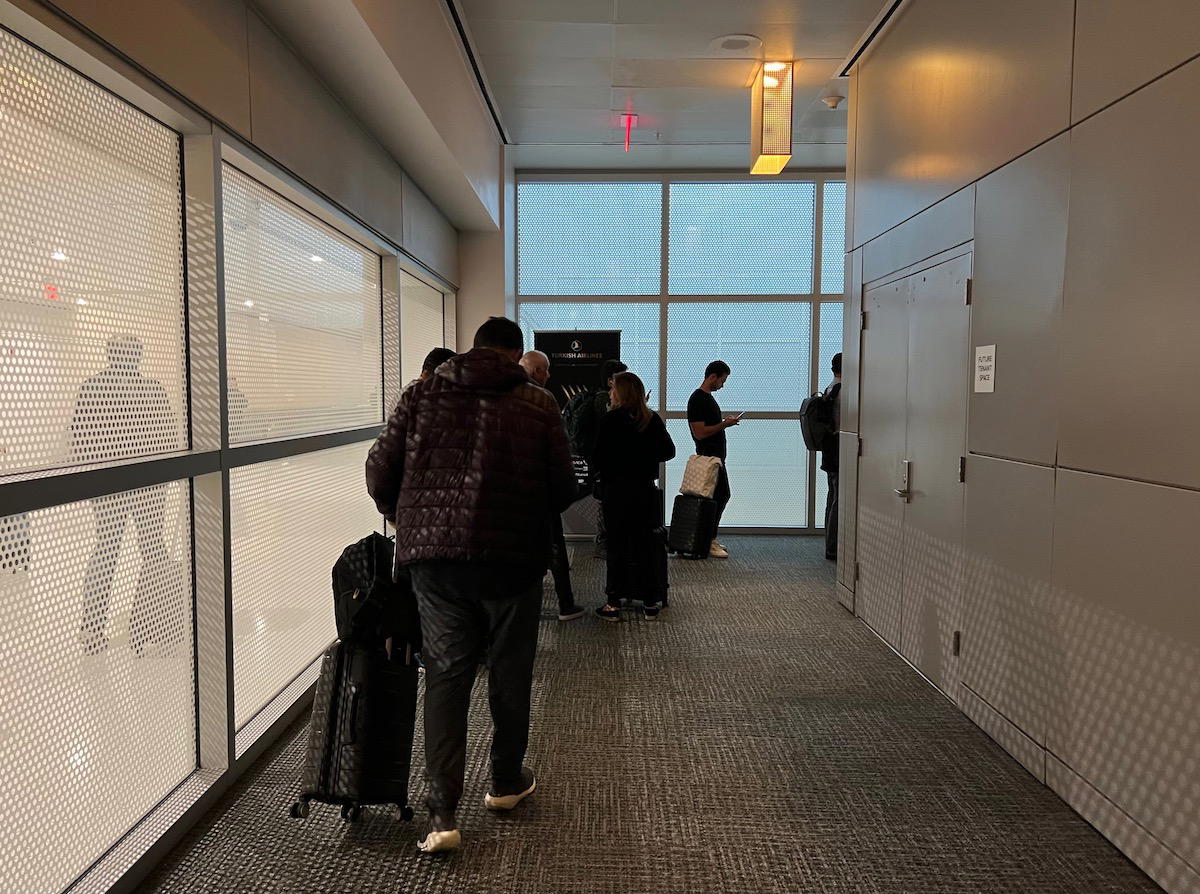
There’s no denying that airport lounges have become a lot more crowded over the years, particularly after the pandemic. Admittedly the crowding issues are a bit uneven, and depend on the type of lounge, how you can access it, and the location. In this post I thought it would be interesting to take a bigger picture look at the issue of lounge crowding, and how we’ve gotten to this point. Many airport lounges have a crowding issueWhy many airport lounges are so crowdedPremium credit cards have become incredibly popularAirport lounge capacity hasn’t kept up with demandPremium leisure & blended travel is all the rageAir travel is being monetized more efficientlyHow I approach airport lounge access & crowdingBottom line Many airport lounges have a crowding issueBack in the day, airport lounges were marketed as an oasis of calm, and as somewhere you could go to get away from the hustle and bustle of the terminal. Nowadays, it’s not uncommon for the entrance to airport lounges to look more like nightclubs, with lines out the door.Admittedly there are many factors that impact crowding levels:Generally you’ll find that Priority Pass and credit card lounges (like Amex Centurion Lounges, Chase Sapphire Lounges, and Capital One Lounges) are the most crowded, followed by membership lounges (like American Admirals Clubs and United Clubs), followed by business class lounges, followed by first class loungesThere are also geographic differences, based on where in the world you are; crowding is a big issue in the United States, while it’s not as consistently an issue in other parts of the globe (though often still is a problem)For example, at my home airport of Miami, it’s common to see a line out the door for the Turkish Airlines Lounge in the afternoons, which belongs to Priority Pass and is also used for Star Alliance airlines. Some Priority Pass lounges have a line out the doorMeanwhile I’ve certainly used other Priority Pass lounges across the globe — like the Eventyr Lounge Copenhagen — where I basically had the place to myself.Some Priority Pass lounges have no crowding issuesIn the United States, Delta Sky Clubs are probably most notorious for their crowding issues, to the point that the airline has two queues to even enter the lounge, with a priority entry option for select passengers. This would’ve been inconceivable a decade ago.Delta Sky Clubs even have a priority entry queueHistorically, many have thought of airport lounges as being for business travelers. Even well over six years after the start of the pandemic, business travel still hasn’t fully recovered to pre-pandemic levels, in terms of the percentage of traffic it makes up. Despite that, airport lounges are busier than ever before.The way I view it, there are a variety of factors that have contributed to this. Let me share what I think they are, roughly in the order in which they’re leading to the crowding levels.Premium credit cards have become incredibly popularThe popularity of premium credit cards that offer lounge access have exploded over the years. A decade ago, it was mostly baby boomers who had premium credit cards. However, these cards have become much more mainstream in recent years. Not only are younger users maximizing the perks more, but they’re probably also more frequent travelers on balance.For that matter, the value proposition of premium credit cards has improved significantly over the years. Going back well over a decade, the Amex Platinum Card was basically the only premium card on the market. Now we have the Chase Sapphire Reserve and Capital One Venture X, both of which offer Priority Pass™ memberships, with a great overall value proposition. You don’t have to be “rich” anymore to have a premium credit card, so airport lounge access has really been democratized, and I’d say that’s good overall. For that matter, psychologically I feel like those with premium credit cards also show up to airports earlier, so they can justify the annual fees on their cards, and enjoy “free” food and drinks.Airport lounge access has been democratizedAirport lounge capacity hasn’t kept up with demandThe first factor to consider is that total passenger capacity around the globe has increased massively over the years, from both legacy and ultra low cost carriers. In many parts of the world, it’s just not practical to hugely expand terminals, and as a result, we’re finding more and more passengers crowded into the same terminals.Many airlines and airport lounge operators want to greatly increase their lounge footprint, but there’s only so much available space. For that matter, keep in mind that airports are essentially shopping malls with jet bridges, and the way airports are monetized is largely through duty free stores, restaurants, etc.The point is, most airports are built with profit maximization, rather than passenger experience, in mind. It’s the same reason some airports are ditching moving walkways.Airport terminals can’t be expanded fast enoughPremium leisure & blended travel is all the rageDespite the fact that business travel is still down compared to pre-pandemic, that doesn’t mean that premium cabin demand is down. Quite to the contrary, premium cabin demand has been at an all-time high in recent years, and there’s seemingly no sign of that trend changing. There are many things contributing to this, including that many people would rather spend more money on experiences rather than material goods. We’re also seeing a lot more blended travel, whereby people have the flexibility to work from anywhere, or have the flexibility to combine business and leisure travel. This makes people much more likely to arrive at the airport a bit early and enjoy a lounge experience, especially if they can work from anywhere.For many people, airport lounges act as ano fficeAir travel is being monetized more efficientlyIf given the choice of being in an empty lounge or a full lounge, I think anyone would choose an empty lounge. That’s only logical, right?The thing is, lounges take up expensive real estate in terminals. Lounge operators — whether it’s an airline, a credit card company, or an independent airport lounge group — want to get as much of a “return” out of that as they can, and that’s logical:Independent lounge operators are typically paid per visit, so of course they have an incentive to have lounges be as full as possibleCredit card lounges want to maximize goodwill among cardmembers to keep people engaged in the ecosystemLounges specifically for first and business class passengers are a bit different, since they’re still a cost center, though we have seen many airlines increase their premium cabin footprint over the years, without lounge capacity increasingly proportionallyThe entire air travel ecosystem is monetized much better than it was one or two decades ago, and that’s why airlines are in a more stable situation. As they view it, the busier the lounges, the better.Of course the risk is that you get to the point where lounges are so full that they detract from the experience, and people no longer want access. While I do think that’s a potential concern, I seem to be in the minority in feeling that way. After all, we continue to see lines out the doors for many lounges, so clearly people see value in this. Air travel is being monetized more efficientlyHow I approach airport lounge access & crowdingEveryone is looking for different things from an airport lounge. Some people want peace and quiet. Some want fast Wi-Fi. Some want food and drinks. Personally my lounge habits have changed quite a bit over the years.Here’s how I generally approach the value of airport lounge access based on crowding levels:For me, the single most important thing about a lounge is that it’s reasonably quietIf I’m just taking a basic domestic trip in the United States, I’m not really looking to eat or drink all that much; I don’t really drink alcohol when traveling domestically, and the lounge food isn’t usually much to get excited aboutIn the United States, I do still really enjoy Capital One Lounges and Chase Sapphire Lounges, even if they are busy, as they have some features that I really appreciate, like great coffeeIf I’m traveling internationally, there are still some amazing first and business class lounges, even if they are busy, and they’re worth visitingI’m a sucker for cold brew on tap!More often than not, when I’m traveling domestically, I’d rather just seek out a gate area that looks like the below, where I have relative quiet, and can connect to the airport’s Wi-Fi. I just don’t bother going out of my way to sit in a crowded lounge.Often gate seating is better than a loungeIt’s one of the reasons I quite like the increasing trend toward grab & go lounges, where those with lounge access can just pick up a drink or snack, rather than lounging around, and then find a quiet place in the terminal to sit.I love airport lounges with grab & go offeringsBottom lineAirport lounges have become increasingly crowded in recent years, especially in the United States. This is due to a combination of factors — the increasing popularity of premium credit cards, the higher demand for premium air travel, and airport lounge capacity just not keeping up with the increase in demand. While there are still lots of amazing lounges, personally I often skip the typical, run-of-the-mill Priority Pass lounge in the United States. I’d rather sit in a quiet gate area with Wi-Fi, lots of natural light, and with no one nearby.Where do you stand on airport lounge crowding? Have your lounge usage patterns changed as a result of crowding?
Why Have Airport Lounges Become So Crowded?
Full Article
Original Source
Read the full article at Onemileatatime →KhanList aggregates and links to publicly available news content. We do not host full articles from third-party sources. Always verify important information with original sources.