
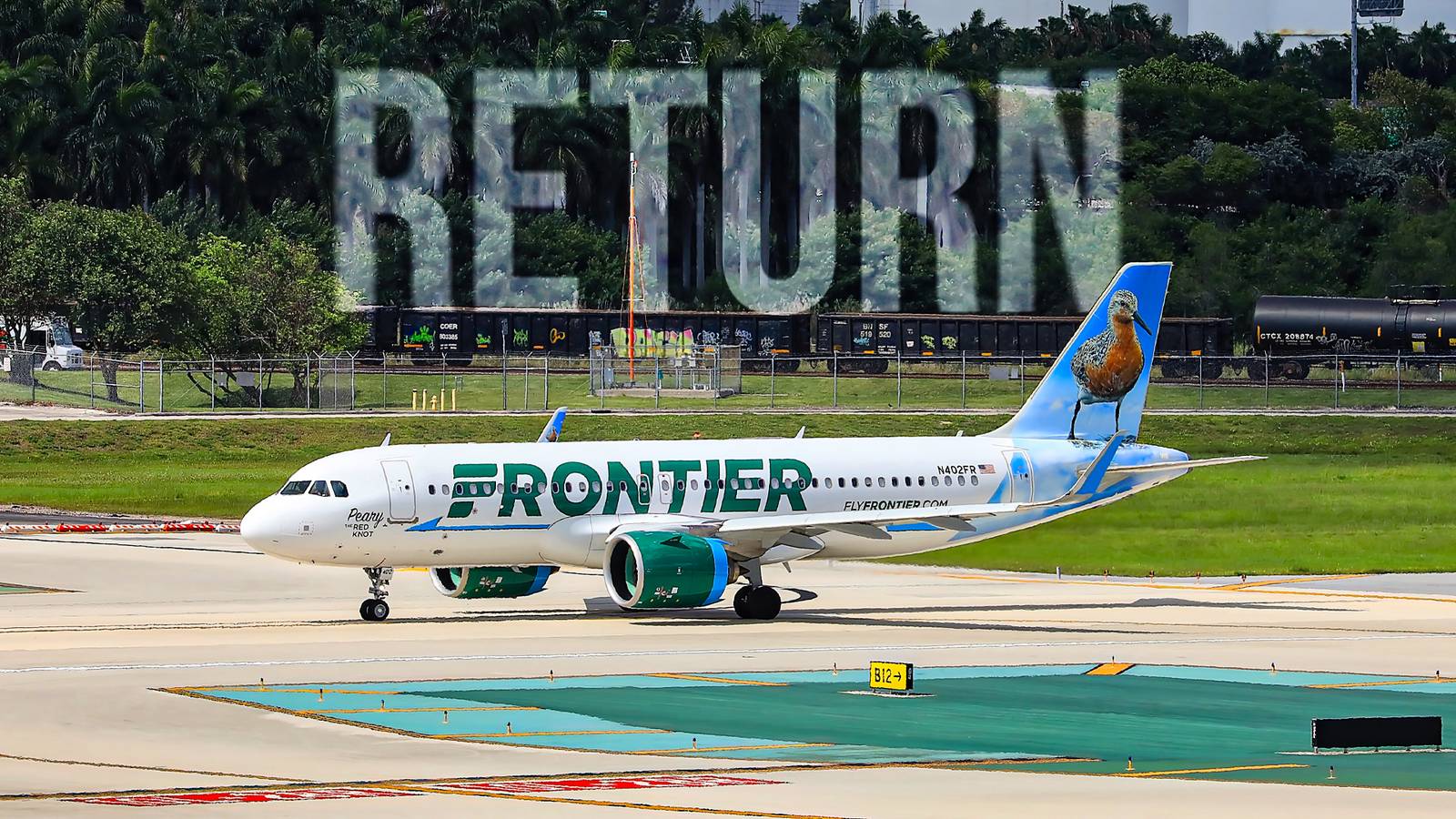
Published Sep 13, 2026, 10:00 AM EDT Journalist - Steven has a varied background in communications, and it was this passion for writing combined with his in-depth knowledge of the aviation industry that led him to Simple Flying. A keen linguist, he also has experience in translation and interpreting. Based in Palma, Spain Frontier Airlines' return to Oakland San Francisco Bay Airport (OAK) looks, on the surface, like a fairly ordinary route relaunch - 11 weekly flights to Las Vegas, a promotional fare, and an airline returning to an airport it left three years ago. But the timing makes the move considerably more important. Frontier is stepping back into Oakland just as Southwest Airlines has reduced its presence by more than 20% over two years and Spirit Airlines has disappeared, leaving behind a market that is unusually open for a low-cost carrier willing to compete aggressively. That makes the August 20 restart even more significant, as Frontier is now once again present at Oakland San Francisco Bay Airport (OAK), San Francisco International Airport (SFO), and Norman Y. Mineta San Jose International Airport (SJC), giving it access to all three major Bay Area airports while its ultra-low-cost competitor has retreated. The result is a quiet opportunity to capture demand, test the market, and potentially expand into an airport where the competitive balance has changed significantly. Let's take a closer look... Frontier Returns At An Interesting Moment Frontier officially resumed service at Oakland San Francisco Bay Airport on August 20, launching 11 weekly nonstop flights to Harry Reid International Airport (LAS) after last operating at Oakland through 2023. The frequency is notable because this is not a token once-a-week leisure operation designed simply to place the airport on a route map. Eleven weekly flights provide enough capacity to serve multiple travel patterns while concentrating flying on days when leisure demand is strongest. The route also gives Frontier a familiar market rather than requiring the carrier to create demand from scratch. Las Vegas is one of the most popular leisure destinations in the US, while Oakland provides access to the densely populated East Bay and surrounding parts of Northern California. Frontier previously served the airport, so the return represents a reopening of an existing commercial relationship rather than a completely new experiment. More importantly, the ultra-low-cost-carrier (ULCC) is returning to an airport whose competitive landscape has changed considerably. Spirit Airlines has exited Oakland, removing a carrier that had competed directly for price-sensitive leisure passengers, while Southwest Airlines has reduced its Oakland schedule by more than 20% compared with two years earlier, according to schedule data cited by aviation analysts. That combination creates precisely the sort of gap an ultra-low-cost carrier can exploit. Southwest Airlines Has Created Room Without Leaving Credit: Shutterstock Southwest Airlines remains the dominant airline at Oakland, which means Frontier is not entering an airport where competition has disappeared. Instead, the opportunity comes from a more subtle shift - Southwest Airlines still has enormous scale at Oakland, but it no longer occupies as much of the airport as it once did. The carrier continues to account for a substantial share of Oakland's scheduled passenger traffic even as its overall schedule has contracted. That distinction matters because Frontier does not need to replace Southwest for Oakland to be worthwhile. It only needs to identify routes where the latter's reduced capacity has weakened the competitive proposition, particularly on short-haul leisure markets where passengers are highly sensitive to the combination of fare and schedule. Las Vegas fits that description almost perfectly, and an 11-times weekly schedule gives Frontier a meaningful presence without requiring a huge initial commitment. The largest airlines at the airport by market share are Southwest and Volaris, according to the Bureau of Transportation Statistics. Ranking Airline Market Share 1 Southwest Airlines 77.4% 2 Volaris 7.9% 3 Alaska Airlines 5.8% 4 Hawaiian Airlines 2.2% 5 Delta Air Lines 1.6% There is also a strategic advantage in entering while Southwest Airlines is still the dominant player. A lower-cost competitor can influence fares even without becoming the largest carrier, because the mere presence of additional seats offers consumers another option and gives the airline a chance to stimulate traffic with promotional pricing. Frontier initially advertised the Oakland-Las Vegas service from $49 and later offered launch fares as low as $29, reinforcing the idea that price is central to the market-entry strategy. Spirit Airlines' Exit Makes The Opening Larger Credit: Shutterstock Spirit's departure is arguably just as important as Southwest Airlines' pullback because it changes the economics of Oakland's low-fare market. It had established a meaningful presence at the airport, including Las Vegas and several California routes, and its disappearance removed a carrier whose business model was built around stimulating demand through very low base fares. Frontier has increasingly positioned itself to capture some of that displaced demand, making Oakland a logical place to test that strategy. The opportunity is not limited to passengers who previously flew Spirit. Low-cost capacity can also encourage people who might otherwise drive, connect through another airport, or simply avoid traveling because fares are too high. That is particularly relevant in a large metropolitan area with three significant commercial airports. A cheap nonstop from Oakland can be a materially different proposition from a more expensive itinerary from SFO, even when both airports serve the same broad population. The busiest routes last year from OAK are outlined in the table below: Ranking Destination Passengers 1 Las Vegas 443,000 2 San Diego 363,000 3 Seattle 277,000 4 Burbank 276,000 5 Phoenix 262,000 Frontier has also been moving into markets previously served by Spirit elsewhere in the country, launching routes that were operated by its former ultra-low-cost rival. Returning to Oakland is part of that strategy to recapture demand left behind by Spirit Airlines. Oakland Fits The ULCC Airport Playbook Credit: Shutterstock For an ultra-low-cost carrier, secondary airports can offer advantages that extend beyond headline landing fees. Airports such as OAK can provide access to major metropolitan markets without requiring an airline to compete exclusively for scarce slots, congested gates, or premium facilities at the region's primary airport. The strategy works particularly well when the secondary airport remains highly accessible to a large population, which is one reason Oakland continues to matter despite the Bay Area's proximity to San Francisco International Airport and San Jose Mineta International Airport. Frontier's network philosophy has long made secondary metropolitan airports useful because its aircraft need to generate revenue through efficient utilization. A route such as Oakland-Las Vegas can support a relatively straightforward narrowbody operation while serving a strong leisure market at both ends. If the aircraft can arrive, turn quickly, and depart without the delays associated with more congested facilities, the airline has another lever for keeping its cost structure low. The Bay Area is especially interesting because Frontier can now cover the region from all three major airports. Its presence at SFO and SJC already gives it access to different passenger pools, while the Oakland return fills the geographic gap on the East Bay side. Rather than betting everything on one airport, Frontier can use three airports to broaden its reach and selectively add capacity where demand and costs make the most sense. 11 Flights Could Be The Beginning Credit: Shutterstock The most important question now is not whether Oakland-Las Vegas can work, because the route has already demonstrated its appeal over multiple years and through multiple carriers. The more interesting question is whether Frontier sees the 11-weekly schedule as the start of further expansion. The carrier has deliberately returned frequently enough to be visible to consumers, but not with sufficient capacity to require an immediate buildout of an extensive Oakland operation. The schedule itself offers clues about how Frontier is thinking about the market. The airline operates double-daily service on Mondays, Thursdays, Fridays, and Sundays, concentrating additional flights on days that support leisure trips and longer weekends. That kind of frequency allows Frontier to compete for both spontaneous travelers and passengers planning conventional short vacations without committing to a full double-daily schedule throughout the week. If the flights perform well, additional California leisure routes would be a logical next step, particularly where Spirit previously demonstrated demand. Frontier does not need to duplicate Spirit's former network exactly, and it would be unlikely to do so without evidence that the economics work. Instead, the airline can use Oakland-Las Vegas as a relatively low-risk test of fares, passenger response, and operational performance before deciding whether the airport deserves a larger footprint. The Bigger Battle Is For Low-Fare Passengers The quiet land grab is therefore less about airports themselves than about control of the San Francisco Bay Area's price-sensitive traveler. Southwest remains dominant at Oakland, but its reduced schedule has freed up some capacity, while Spirit's demise has removed a direct ultra-low-cost competitor. Frontier is arriving with a model specifically designed to exploit that combination, using low introductory fares, a familiar leisure destination, and an aircraft type suited to relatively efficient short-haul flying. That does not mean Frontier will automatically recreate the ultra-low-cost competition Oakland enjoyed in earlier years. Ultra-low-cost carriers still have to prove that routes can produce acceptable returns after fuel, labor, airport expenses, and other operating costs, while promotional fares can stimulate demand without necessarily translating into strong margins. Frontier's own return announcement emphasized its broader effort to expand its network and offer low fares, but the commercial test will ultimately be whether enough passengers continue buying after the introductory pricing disappears. What makes the move significant is the timing: Frontier is not arriving when Oakland is at its strongest; it is arriving as the airport adjusts to a smaller overall schedule and a changing airline mix. That creates both risk and opportunity. If Frontier can make 11 weekly Oakland-Las Vegas flights work in this environment, the airline will have a stronger case for treating Oakland as more than a reopened station. It could become one piece of a broader attempt to occupy the ultra-low-cost space being vacated across the San Francisco Bay Area, one route at a time.
Why Frontier Airlines' Return To Oakland Signals A Quiet ULCC Land Grab After Southwest's 20% Pullback
Full Article
Original Source
Read the full article at Simpleflying →KhanList aggregates and links to publicly available news content. We do not host full articles from third-party sources. Always verify important information with original sources.