
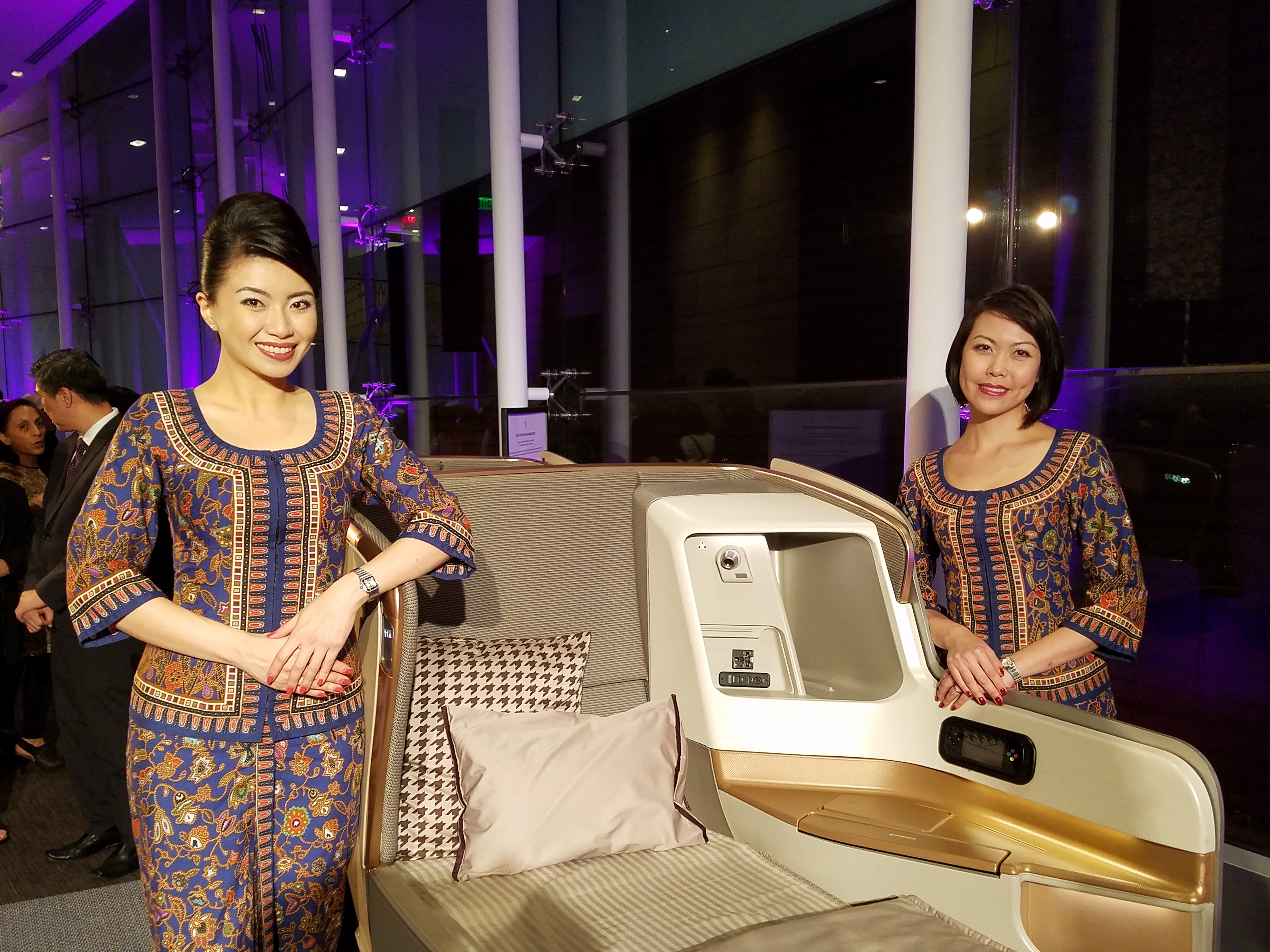
There’s a question exploding on Twitter over why flight attendants in Asia look younger and more attractive than those on U.S. airlines. The replies mostly say “DEI” which is not even close. U.S. airlines once sold exactly the same image, and the reasons they changed are actually pretty understandable if you stop to think. Why are flight attendants in Asia all pretty young things, while in the U.S they’re elderly women and gay dudes? (not throwing shade, serious question) — Jeremy Bernier (@jeremybernier) September 18, 2026 There are also variations on “Quotas” and “woke shit.” One reply recycles the explanation, “Because communists won WWII.” In fact, there are three big forces behind the change in the composition of the U.S. flight attendant workforce: deregulation, employment discrimination law, and unionization (seniority). Different hiring markets and different ideas about what an airline is selling help explain why the result hasn’t been the same everywhere. Flight attendants used to be sex symbols: “Coffee, tea or me.” They were young, attractive, thin—and airlines required them to be unmarried and therefore ‘available.’ U.S. airlines can’t impose that same combination of hiring and employment rules today, even though some competitors around the world have continued using them. National Airlines flight attendants used to invite passengers to “Fly Me.” Braniff declared, “Even An Airline Hostess Should Look Like A Girl” and promoted flight attendants ‘stripping,’ or changing uniforms for different stages of flight. The airline business in the U.S. has changed significantly, but it hasn’t changed everywhere. And part of the explanation is the same reason airlines don’t serve food that’s nearly as good either. The Three Forces That Changed The American Flight Attendant Job U.S. cabin crew hiring and employment rules are completely different than they were in the 1960s. 1. Deregulation Changed What Airlines Competed On Before 1978 deregulation, the federal government controlled interstate routes and fares. Prices were protected to support airline profitability and prevent ‘ruinous competition.’ Since airlines couldn’t freely compete on price, they competed on food, service, and providing their mostly male business customers with an ‘experience.’ Airlines spent more on food to attract passengers at regulated fares. Another way to ‘attract’ passengers was young women as cabin crew. Deregulation drove down fares, changed how airlines competed, and changed the mix of passengers. Male business travelers no longer dominated in the same way as fares came down. Airlines had to cater more to families. 2. Three Court Cases Upended The Old Employment Rules Title VII of the Civil Rights Act of 1964 barred employment discrimination based on sex. A trio of cases were important in applying that to airlines. Diaz v. Pan Am, 1971. Pan Am tried to justify hiring only women as flight attendants. They argued that women were better at reassuring passengers and providing the personal side of service, and that customers preferred them. The appeals court rejected the idea that being female was necessary for the job. Pan Am could evaluate individual applicants’ ability to provide service and couldn’t exclude every man as a substitute for doing that. Sprogis v. United, 1971. United fired Mary Sprogis for getting married. Its no-marriage rule applied to stewardesses, while male stewards were allowed to marry. The court upheld the ruling against United, including reinstatement, back pay and seniority. Women could keep doing the job after marriage, instead of being replaced by a new group of young, single employees. That meant they continued to work longer at the airline, too. Wilson v. Southwest, 1981. This was the famous Southwest “Love Airlines” case, and the airline’s argument was that female sex appeal was essential to its business. Since Southwest was based at Love Field in Dallas, they promoted the ‘love’ theme. LUV is their ticker symbol. Their automated ticketing machines were called “Quickies.” Snacks were “Love Bites.” Flight attendants wore hot pants and go-go boots in a uniform designed by Juanice Muse, wife of the airline’s first president, Lamar Muse. Gregory Wilson represented more than 100 male applicants challenging exclusion from flight attendant and ticket agent jobs. Southwest admitted the discrimination. They argued that being female was a bona fide occupational qualification necessary to operate the particular business they had built. The judge accepted that the airline’s marketing had helped it succeed, but ruled that didn’t establish a need to exclude men. Even Southwest’s survey evidence put courteous, attentive hostesses behind punctuality, frequency, helpful ground and reservations staff, and convenient departure times. The court explained, “Love” is the manner of job performance, not the job performed. The essence of its business was transportation, and female sex appeal wasn’t necessary to perform flight attendant or ticket agent duties. Making women central to the advertising didn’t create an exemption from discrimination law. The broader legal shift both reflected a cultural change and helped drive further change. It made a long airline career possible for people who would previously have been excluded or forced out early. However, the rule isn’t that airlines are forbidden to hire attractive people. Attractiveness itself isn’t a protected category under the main federal employment discrimination laws. Airlines can still set grooming standards, subject to the rules against discrimination and requirements for accommodation. They can also screen for friendliness and teach service. The law helps explain the end of “young, single women only.” But it doesn’t require an airline to give up on presentation or hospitality. 3. Unionization And Seniority Made It A Career Unions fought mandatory retirement. Schedules are handed out based on seniority, and as airlines went through waves of struggle, they froze hiring rather than growing. The average age of flight attendants went up. There are strong reasons to stay. The job gets better with seniority: more control over trips, a better chance of getting the base you want, and less time spent on reserve. Moving to another airline usually means starting over on its seniority list. Hiring freezes during rocky economic periods let the existing workforce age. Furloughs that remove junior employees make the remaining workforce older still. And a desirable international trip may attract particularly senior employees. The U.S. crew working your flight to Asia isn’t necessarily representative of everyone the airline has hired. Overt Sexualization Remains In Parts Of Asia, Especially Among Low Cost Carriers The costs work differently in some Asian labor markets. Where airline work offers good pay and status relative to other opportunities, there’s a steady supply of applicants. In places where women have more limited alternatives, that can give airlines even more choice. Selecting for appearance can be a cheap way to sell an image without investing in premium seats or elaborate service. SpiceJet’s 2018 recruiting requirements called for single women under 28 and included height and weight standards. They also insisted on a pleasing personality, an unblemished complexion and good body language. In 2017, Malaysian airline Malindo Air required potential flight attendants to disrobe in interviews. Applicants could leave their bras on, but had to expose their upper bodies and legs so interviewers could inspect marks that might be visible in uniform. The airline defended this as a matter of making sure cabin crew were presentable. At AirAsia, is it really the meals they’re promoting as ‘hot’? Low cost carrier VietJet was even more explicit. They became known as ‘the bikini airline.’ Here’s an image from their 2018 promotional calendar that I’ve used before: In 2023, China’s Hainan Airlines introduced restrictions on female cabin crew who exceeded its weight standards, including suspension at 10% over the limit. Air India required flight attendants it deemed overweight to lose 5 pounds per month, and Malaysia Airlines fired a female flight attendant for being 1.5 pounds overweight under its rules. Premium Asian Carriers Remain More Subtle In Their Approach Many Asian long haul carriers, especially flag carriers, remain invested in a premium image and choreographed service: the bow, the uniform, specified makeup and hairstyle, and even posture. The image of ‘Asian hospitality’ they’re selling is graceful, attentive, elegant and composed. At airlines using a distinctly feminine image, the flight attendant is still partly a hospitality symbol. When I visited Singapore Airlines’ training center, I learned that each new flight attendant spent a day and a half on hair and makeup. They received a grooming card that outlined the limited choices available to them. There were 5 approved hairstyles, but each woman was told which ones she could use. There were specific makeup colors, and a woman might be given only one—or, if she was more experienced at applying it, two—she was allowed to use. After the first day of training, some women would spend up to 4 hours getting ready for class. I was told that, on average, a woman might take an hour doing her hair and makeup for a flight. What passengers see reflects that work. It isn’t just whom the airline hires. And the same attention extended to serving meals: trainees practiced laying out servingware, facing logos toward the passenger, and asking about bread and wine at the right time. The cabin crew aesthetic became part of national soft power and product differentiation at carriers like Singapore Airlines, Cathay Pacific, Korean Air and EVA. Passengers associate that formality and attention to detail with a premium experience. A young crew serving a bad meal in a tight seat isn’t the same product. Singapore Airlines advertises an initial five-year cabin crew contract, renewable based on performance. Its 2025 collective agreement provides for multiple five-year terms, with more terms available at higher ranks. Renewal criteria include conduct, performance, grooming and bearing. Crew don’t necessarily have ‘forever jobs’. The Gulf Carriers Recruit From A Different Pool The explanation for Emirates or Qatar Airways isn’t simply that women in their home countries have fewer alternatives. They recruit internationally for jobs that involve moving abroad. Their potential workforce is much larger than the population of the United Arab Emirates or Qatar. Emirates recruits around the world and describes a workforce spanning more than 120 nationalities. Its advertised average starting cabin crew pay is roughly $3,061 a month, plus furnished accommodation and transport. Housing is generally shared. I suspect the package helps select the applicant pool before an interviewer sees anyone. Moving to Dubai and sharing company accommodation is a different proposition at 23 than at 48 with an established household. Pay plus housing can also be especially attractive relative to earnings in an applicant’s home country. The airline sets presentation standards, including no tattoos visible in uniform. Its published minimum age is 21; it doesn’t publish a maximum on that recruiting page. There are paths into senior cabin crew and other roles, so this isn’t evidence that everyone is dismissed at a particular birthday. A worldwide recruiting pool, an appealing package for mobile applicants, and deliberate selection and grooming help explain the result. A workforce drawn from more than 120 nationalities also makes DEI claims of “diversity prevents polished service” a particularly odd explanation. Southwest Also Shows What U.S. Airlines Can Still Do There’s a difference between whether flight attendants are young, whether they’re attractive, and whether they’re good at serving passengers. Asian airlines employ men and older crew, too. Southwest’s story didn’t end with the hot pants lawsuit. They became known for screening for personality: warmth, humor and a willingness to help. To some extent, you get what you screen for here as well. The Diaz decision left airlines free to assess an individual applicant’s ability to provide the personal side of service. A decade ago American Airlines used to trumpet the number of applicants they’d get for flight attendant training, announcing that becoming a flight attendant for American was (statistically) ‘tougher than getting into Harvard’. I always thought at the time this meant management was especially bad at talent selection. Topics on this page
Why Flight Attendants Look Young And Pretty In Asia—And Why U.S. Airlines Stopped Selling Sex Appeal
Full Article
Original Source
Read the full article at Viewfromthewing →KhanList aggregates and links to publicly available news content. We do not host full articles from third-party sources. Always verify important information with original sources.