
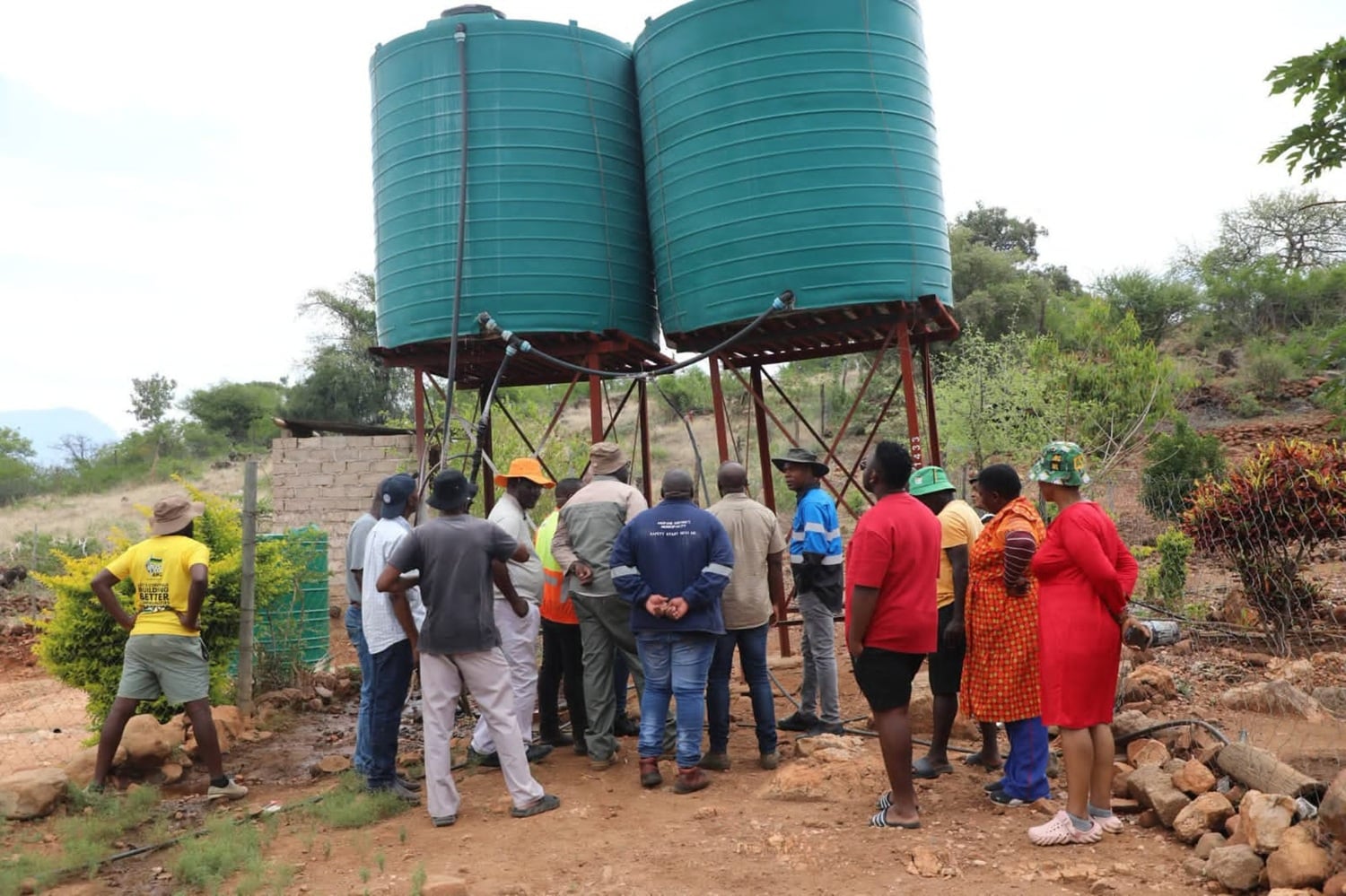
The community scrambled to raise money to buy electricity from a private household to power the borehole, a community activist said. A Limpopo municipality is racing against time to provide water to residents before Wednesday’s local government elections. The Citizen can reveal that the Mopani District Municipality is struggling to energise more than 400 boreholes drilled in the past five years, with the majority of its more than 1.1 million residents living without this precious basic human need, 32 years after the advent of democracy. On Tuesday, the district spent the day handing over two newly energised boreholes to jubilant Digalagaleng and Iraq communities in the Willows, outside Hoedspruit, under Maruleng Local Municipality. LIVE interactive map, latest news, multimedia and more! View Map Many villagers who had lived without water for years sang anti-apartheid mixed with traditional songs as they finally gained access to clean water after the boreholes were connected to electricity. “The boreholes had been without electricity for more than seven years. The community had to struggle to raise money to buy airtime to connect electricity from one private household to the borehole. “But now, through renewed collaboration between the Mopani district and Eskom, the boreholes are fully operational, restoring water access to the affected communities,” said community activist Buns Mmola. “We are now happy and plead with the Mopani district and Eskom to do the same in other communities in and around Limpopo.” 2 out of 432 Mopani District Municipality’s executive mayor, Dagma Mamanyoha, who was appointed mayor on September 16, said 432 boreholes across the district currently require electrification. “These boreholes we are handing over today are two of the 432 boreholes requiring electrification. We appreciate the patience of our communities as we continue working with Eskom to energise the remaining boreholes in the district,” he said. Mamanyoha said access to safe drinking water prevents waterborne illnesses, restores health, and reclaims time for education and development. He said talks are underway with Eskom to electrify all drilled boreholes, while the district has launched “Operation Fix All” – a service delivery programme that runs alongside the provincial “Hi Nwa Mati Friday” initiative championed by Premier Dr Phophi Ramathuba. “The central goal is to fix broken and dysfunctional boreholes. In its initial push, the programme successfully restored over 104 boreholes across multiple villages,” Mamanyoha said. “Beyond repairs, the team has drilled and handed over brand-new boreholes to highly distressed, water-scarce areas. The initiative also incorporates targeted repairs to wastewater treatment plants.” The intervention, he said, has been rolled out across Tzaneen, Hoedspruit, Modjadjiskloof, Giyani, Phalaborwa and other areas. Finally, water … but is it enough? The Citizen visited several areas to gauge the programme’s impact. Mpho Molewa from Bolobedu praised the initiative, saying communities that previously had no water are now starting to experience the ANC’s promise of a better life for all. However, Evans Maboa of Jane Furse in Sekhukhune said boreholes alone are not enough in a water-scarce country like South Africa. “The problem is that the provincial Hi Nwa Mati programme is not doing well on the ground. Now water scarcity will remain our daily bread and butter,” he said. Call the rain queen Some residents interviewed suggested government should consult the Modjadji Rain Queen, whose family is historically renowned for rainmaking rituals. “The Modjadjies are world-renowned for their rainmaking powers. They pour a traditional beer called Mphapho on the foot of a tree older than 1 000 years. Then they dance around the tree, trying to appease their ancestors. “If their pleas are answered, the cloud would start to gather, and the ancestors will respond with rain that would fill rivers and dams up to their banks,” said one resident from Khethakone, near the Rain Queen’s Royal Palace, who asked not to be named. Mamanyoha insisted the district is committed to resolving the water crisis. “Water is the fundamental life-support system for all living things. Human bodies are roughly two-thirds water. That is why we all need water to survive. “We will work tirelessly, as government, to bring fresh running tap water to you because not only is it expected of us, but because we have all your interests at heart,” he said.
Why don’t we ask Modjadjies for rain, say residents amid long battle to get boreholes online
Full Article
Original Source
Read the full article at Citizen →KhanList aggregates and links to publicly available news content. We do not host full articles from third-party sources. Always verify important information with original sources.