
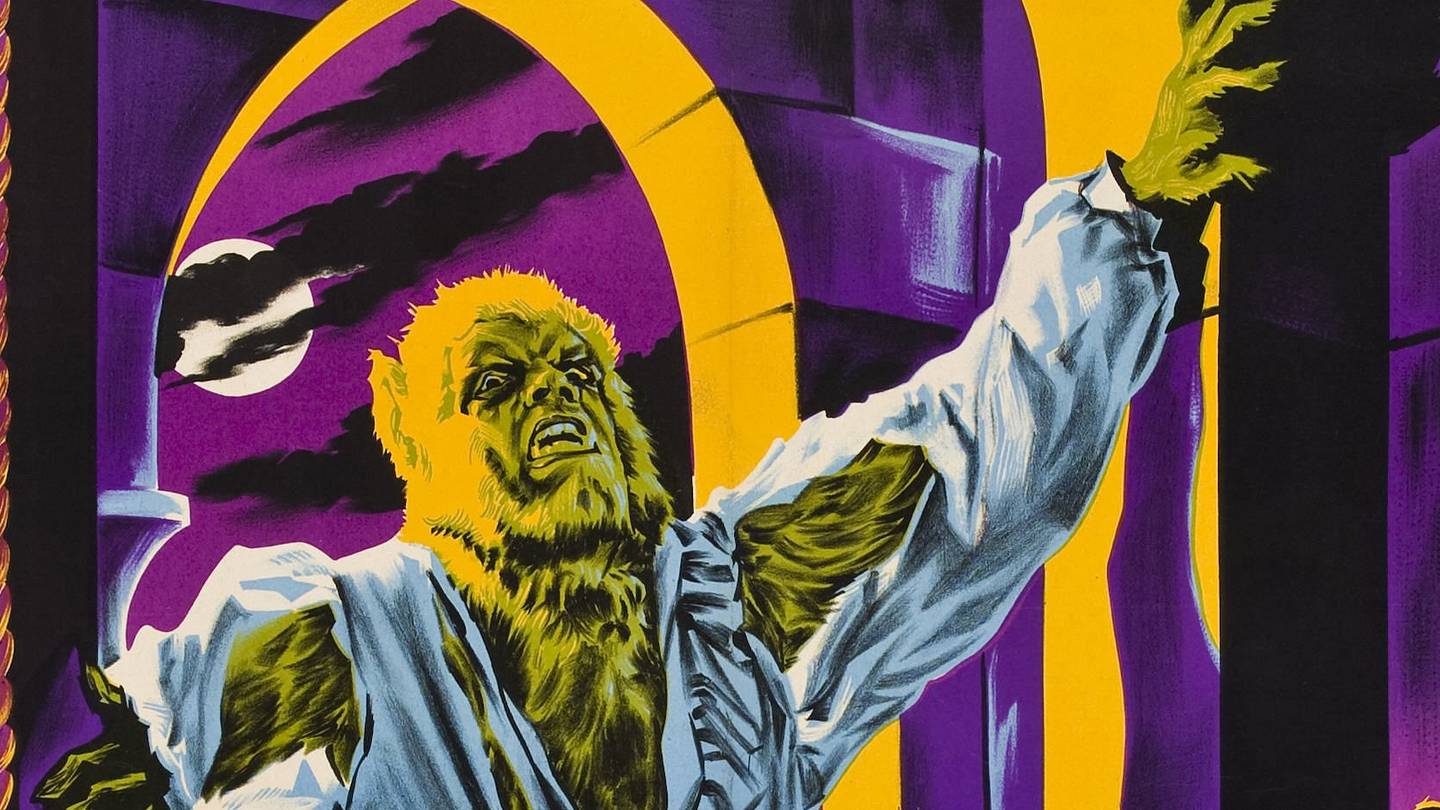
Werewolves have been a part of cultural mythology for hundreds of years, reflecting the enduring fascination with the idea of “a person transformed into a wolf or capable of assuming a wolf's form,” as Merriam-Webster defines the creature.However, one specific aspect of werewolf myth has become so prevalent that the Cambridge Dictionary actually includes it in its definition: “someone who, in stories, changes into a wolf at the time of the full moon.” But how did the idea that werewolves change during full moons become so widespread?The roots of werewolf loreTreatise on Lycanthrope | DEA / A. DAGLI ORTI/GettyImagesThe origins of the word “werewolf” can be traced to Old English, though the earliest literary depiction of a person being transformed into a wolf dates back to the Epic of Gilgamesh of around 2100 BCE, in which the Goddess Ishtar speaks of a former lover whom she turned into a wolf. References to people shapeshifting into wolves can also be found in ancient Greek and Roman texts. Some aspects of werewolf mythology have shifted over the centuries. For example, stories from the Middle Ages often emphasized the humans trapped within the wolves, whereas more recent depictions have tended to emphasize werewolves’ animal characteristics. Like other aspects of werewolf lore, the idea that these creatures transform due to the full moon has not always been part of their story, but has instead developed over time.Many medieval folktales described werewolves transforming in specific rhythms or patterns. In the encyclopedia Otia imperialia (1214), Gervase of Tilbury mentions “men changing into wolves every lunar month.” Still, it is not known when, exactly, the first reference to werewolves specifically transforming during the full moon appeared.The connection between werewolves and the full moon may have evolved in part due to the influence of folklore and observations of the night sky. Normal wolves have also long been linked to the lunar cycle; January’s moon is widely named the Wolf Moon, allegedly because wolves could be heard howling more frequently during that time of year in both North America and Europe. Werewolves’ connection to the moon was also strengthened in the popular imagination because the moon itself has sometimes been linked to changes in human behavior, though this is based more on superstition than science.Werewolves and the moon in pop cultureOliver Reed In 'The Curse Of The Werewolf' | John Kisch Archive/GettyImagesUltimately, it was Hollywood that successfully popularized the idea that werewolves transform with the full moon. The 1941 film The Wolf Man connected werewolves with the moon, and its 1943 sequel, Frankenstein Meets the Wolf Man, is often credited with cementing the link between full moons and werewolves’ transformations. The idea that the transformation from human to wolf is intertwined with the full moon may also have become a popular part of the werewolf legend because this connection creates a sense of tragic inevitability: the person can do nothing to stop the lunar cycle from triggering the transformation, and in some ways is therefore a victim of their supernatural condition. This sense of victimization and involuntary transformation has frequently appeared in werewolf stories in cinema. Ultimately, the development of this concept from the folklore of centuries ago to the cinema of recent decades provides a powerful illustration of how supernatural concepts can continue to evolve in the public imagination as time goes by.
Why Do Werewolves Transform During a Full Moon?
Full Article
Original Source
Read the full article at Mentalfloss →KhanList aggregates and links to publicly available news content. We do not host full articles from third-party sources. Always verify important information with original sources.