
Open your wardrobe. Now count: How much of it is black? If you’re like me, the answer skews well past half.We’re not alone. Walk into almost any clothing store and there’s a good chance the black version of a popular piece will be among the first to disappear.There are obvious reasons for its enduring appeal. Black is easy to match, versatile enough to dress up or down and, as anyone who has ever spilled lunch on themselves knows, considerably more forgiving than lighter colours.But speak to the people who design, sell and style clothing in Singapore, and a broader explanation emerges.Black does something few other colours can: It takes some of the risk out of getting dressed.It can make shoppers feel less self-conscious about their bodies, stains or wrinkles. It can make an adventurous silhouette feel easier to pull off. It is unlikely to look inappropriate at work or overly conspicuous at an event. And when shoppers are deciding whether something is worth their money, black offers another reassurance: chances are, they will wear it again.In other words, its popularity may not simply be about playing it safe. Black gives people the confidence to buy.WHY BLACK CLOTHES TOP SALESAt Singaporean womenswear label Rock Daisy, the data speaks for itself. Black accounts for 32 per cent of total sales – nearly triple its nearest rival, green, at 11 per cent, with cream trailing at 9 per cent.The colour is consistently the brand’s best-seller regardless of product type, a pattern reliable enough that it now shapes production budgets, said founder Rachel Liou, in an email interview. Rock Daisy's Juliet tops in black and red. (Photos: Rock Daisy) Take Rock Daisy’s Juliet, a sheer silk organza reversible top, for example. Half of its production run went to black, which went on to claim 55 per cent of sales, more than double red’s 24 per cent.“For a small independent label, you can always count on black to sell well, especially when your brand plays in workwear or everyday-type basics,” said Liou.At StyleLab, managing director John Ng has observed the same pattern across several fashion brands the company distributes and runs, including Agnes b, known for its understated wardrobe staples, and contemporary Chinese labels Edition and Mo&Co. A black look from Edition. (Photo: Edition) “Black is the number one colour at Agnes b, it sells through consistently faster than any other colour. For Edition and Mo&Co, black consistently ranks first and outperforms other colours across seasons. It sells through faster than trend-led shades,” he said.HOW COLOUR PREFERENCES VARY BY BRANDBlack’s popularity, however, isn’t universal.StyleLab’s multi-brand portfolio shows how much brand identity can influence what customers reach for. While black is foundational at Agnes b, Edition and Mo&Co, it accounts for only a small share of sales at 45R, the Japanese label known for its craftsmanship and signature indigo-dyed denim. A display at 45R at Paragon. (Photo: 45R) “Indigo blue is the top performer. Customers associate the colour directly with 45R, and it’s what drives repeat purchase,” said Ng.Category matters too. Shoppers may experiment more freely with statement or seasonal pieces, Ng noted, while staples such as blazers, trousers and workwear skew towards black across nearly every brand under the company’s umbrella.The same distinction plays out at local womenswear label Good Addition, where black makes up just 10 to 15 per cent of inventory. The brand is known instead for its bright, bold colours.Yet even there, co-founder Andrea Chong said black and white are among its best-performing colours for basics such as tank tops.“We cater to a lot of working professionals and mothers,” she said. “They would need black for a work setting, or to feel more confident as black has a slimming effect.” Good Addition's beaded halter cheongsam. (Photo: Good Addition) The pull of black can extend even to occasions traditionally associated with colour. During Chinese New Year, Good Addition’s black cheongsams sold out first.WHY BLACK FEELS LIKE A SAFER CHOICEPart of black’s reliability is practical. But for Liou, its grip on shoppers is also psychological.“Not only is black the easiest colour to match in your wardrobe, it also hides imperfections – subjective, like body shape, or objective, like wrinkles or stains,” she said.She has also noticed that shoppers appear to have a limited appetite for risk in any one outfit. Someone might be willing to commit to an unusual silhouette or daring neckline but pairing it with an equally bold colour can feel like one experiment too many.Black solves that problem. It allows the wearer to take a chance on the cut without having to take another on the colour.Celebrity stylist Jeremy Tan hears similar reasoning from clients who request black specifically. Often, it is because it suits the dress code or reads as “elegant and classy”. Zoe Tay in a black gown. (Photo: Jeremy Tan) He styled Zoe Tay in a sculptural black dress for a Cartier event in 2024, where the colour kept the bold silhouette feeling polished rather than overpowering while allowing her jewellery to take centre stage. More recently, he dressed Kit Chan in a dramatic black Frederick Lee Couture gown for her Atrium Live Tour Concert in Guangzhou in May. Kit Chan in a dramatic black Frederick Lee Couture gown for her Atrium Live Tour Concert in Guangzhou. (Photo: Jeremy Tan) For formal or business occasions, particularly among his mature clients, black offers the polished, sophisticated look they want without feeling too “loud” or “trend-driven”, he said.But choosing black does not necessarily mean wanting to disappear.Wykidd Song, creative director of Monoloq, sees it as a way to make an impression more quietly. Black or shades of black make up an estimated 35 to 40 per cent of each collection, he said, with the colour performing particularly well in dresses and bottoms such as trousers and skirts. An all-black look from Monoloq. (Photo: Monoloq) “Our customers are sophisticated and they appreciate a non-colour; it either says ‘you do not want to stand out’ or ‘you want to be seen as sharp, serious, and full of effortless grace’,” he said.A black piece can be worn simply during the day, he added, then elevated with pearls or a brooch for more formal dressing.Taken together, these qualities give black an unusual advantage: it can make the wearer feel less exposed without making them feel underdressed.WHAT MAKES SHOPPERS EMBRACE COLOURThat does not mean Singapore shoppers are inherently unwilling to wear colour.In fact, what happens when some of the uncertainty around colour is removed suggests the opposite.When Rock Daisy launched its debut collection online in 2024, black and cream led sales. But at the brand’s first physical pop-up, where customers could see and touch the clothes in person, green overtook everything and sold out, said Liou.Over time, her customers have also grown bolder – provided they are shown how to style the brighter pieces. That is why Rock Daisy now invests heavily in lookbooks and social content demonstrating how its more adventurous colours can be worn.Tan takes a similar gradual approach with his styling clients, easing them from black into navy, cream, beige, chocolate brown or deep jewel tones. A neutral look from Edition. (Photo: Edition) “Once they see themselves in something different and feel good in it, they usually become much more receptive,” he said.His celebrity clients, too, are generally more adventurous with colour today, with their choices ultimately depending on the occasion and the image they want to create.These experiences suggest the preference for black may be less about rejecting colour than about certainty. When shoppers can see how another colour looks on them, understand how to style it or imagine where they would wear it, the perceived risk falls – and their choices can change.But when that certainty isn't there, familiar habits are harder to overcome.At Tan’s own streetwear label Koterie, black is consistently the best-seller whenever a style comes in multiple colourways. Celebrity stylist Jeremy Tan wearing a black look from Kotorie. (Photo: Jeremy Tan) “People may come in saying they want to try something more colourful, but when it comes down to making the purchase, they often go back to what feels familiar and comfortable,” he said. “If they're given several colour options, black is very often the first choice.”WHY BLACK REMAINS A WARDROBE STAPLEThat gap between what shoppers are interested in and what they ultimately buy may be the key to black’s staying power.At Trt – which, like Monoloq, is also owned by the Iora Group – black holds around 10 per cent of apparel sales and a steady place among the top three best-selling colours, especially in trousers, skirts and dresses. A look from TRT. (Photo: TRT) The brand does not see the growing appetite for colour as competition for black.“Black remains an anchor, while colour provides personality and freshness,” a spokesperson said. “It works across occasions and makes it easy for customers to build multiple looks around pieces they already own.”StyleLab’s Ng pointed to Singapore’s lifestyle as another reason for that reliability. The same outfit may need to take someone from work to lunch, shopping and dinner, and black makes those transitions relatively effortless.There is a financial calculation too.“In a market increasingly conscious of value and considered purchasing, black doesn’t date the way seasonal colours can, so it’s often seen as the more rational investment,” he said.That may ultimately explain why black remains so difficult to dislodge even as Singaporeans become more adventurous dressers.It is not necessarily the colour shoppers find most exciting. Nor is choosing it always about wanting to blend in.Black simply removes a remarkable number of doubts from a purchase. Will it match what I own? Will I feel confident in it? Can I wear it to work? Can I dress it up? Will I still want to wear it next year?With black, shoppers already feel they know the answers.Colour can offer novelty, personality and excitement. But when shoppers are spending money on pieces they need to wear repeatedly, style easily and get their money’s worth from, black offers something potentially more persuasive: certainty.
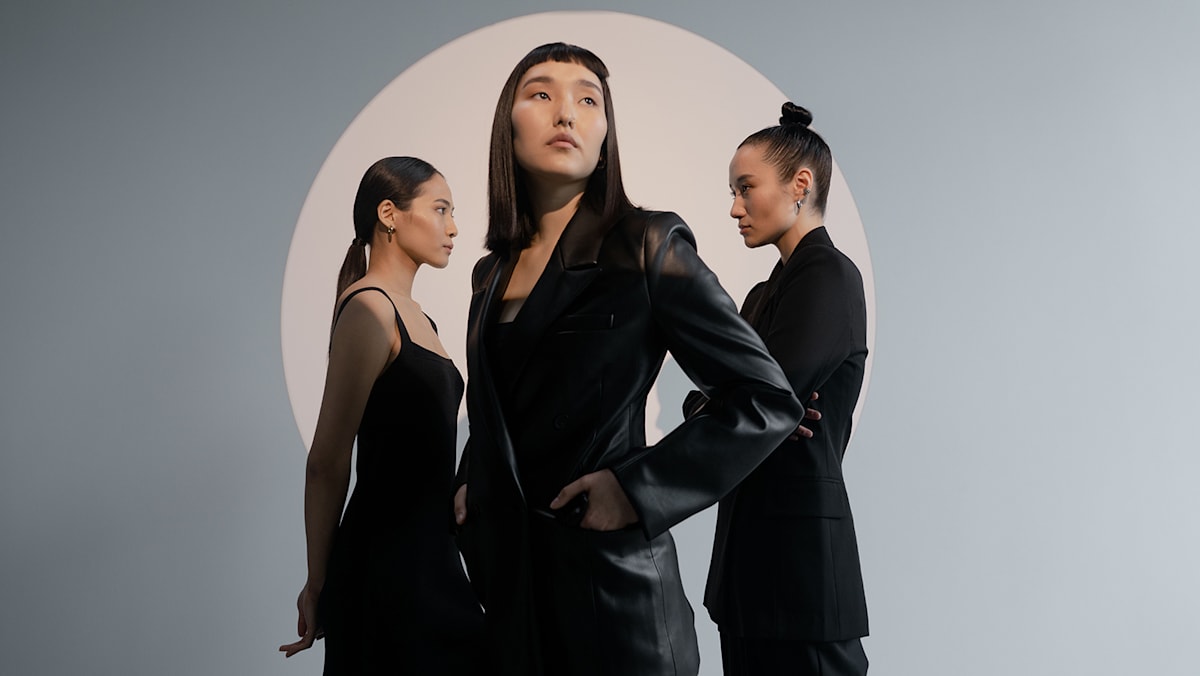
Why do we keep buying black clothes – even when we want to wear more colour?
Full Article
Original Source
Read the full article at Cnalifestyle →KhanList aggregates and links to publicly available news content. We do not host full articles from third-party sources. Always verify important information with original sources.