
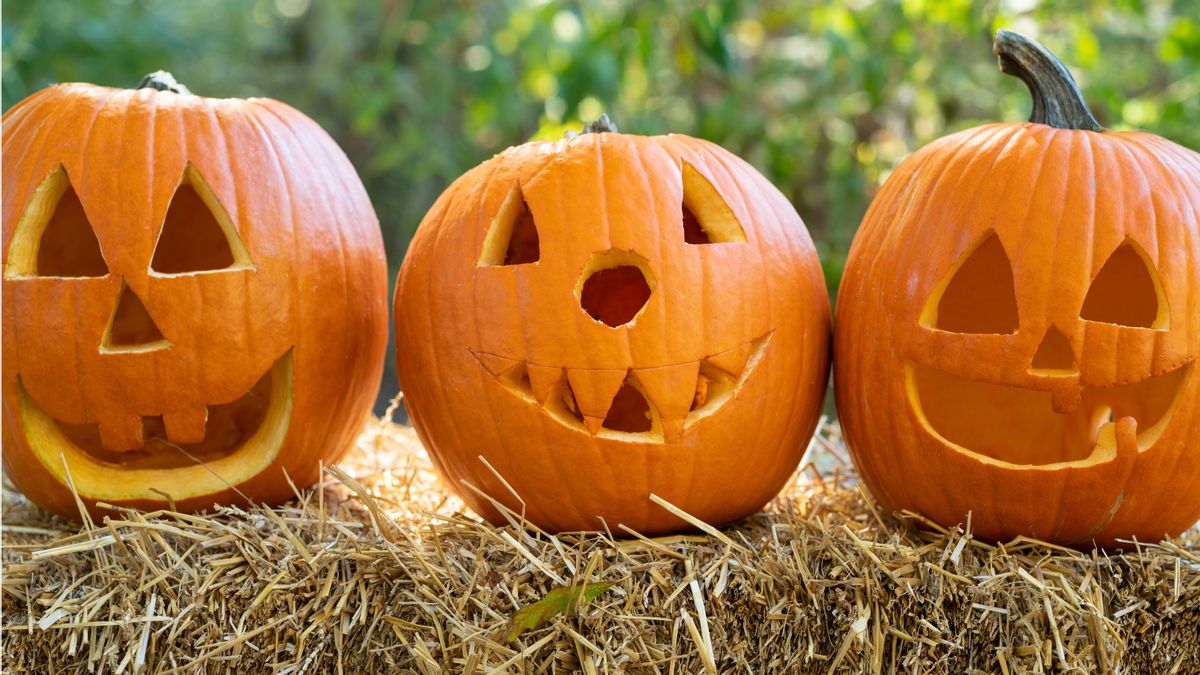
The tradition of making jack-o'-lanterns to ward off spirits has roots in Irish folklore. Published Oct. 22, 2026 According to the National Retail Federation, a trade association for retail professionals, consumer spending on Halloween in the United States is expected to reach $13.5 billion in 2026. That's more than a billion higher than in 2023, when the total spent reached about $12.2 billion. American companies — particularly candy and costume makers — pounced on the rising popularity of the trick-or-treat tradition in the 1950s to commodify Halloween and grow their businesses. That commodification became so commonplace in a short span of years that the co-host of NPR's "Throughline" podcast, Rund Abdelfatah, would eventually cite Halloween as "an American capitalist success story." What began as a Celtic tradition called Samhain now operates as a billion-dollar holiday across the globe, encompassing everything from religious folklore to secular spooky fun with a particular growth in mass appeal during the 20th century. One of the most beloved traditions of "spooky season" that predates trick-or-treating and scary movies is carving jack-o'-lanterns; a tradition whose popularity is reflected in the fact that it's projected Americans will spend about $771 million in 2026 on Halloween pumpkins alone. But where did this strange tradition come from? While the custom itself has a spooky story to go along with it, carving pumpkins was not always traditionally linked to Halloween, nor were the objects carved always pumpkins. While the exact origins are unknown, there is a piece of Irish folklore that purports an explanation: The legend of "Stingy Jack," which first appeared in print in the 19th century. Snopes has covered the legend of "Stingy Jack" at length previously, including its even older connections to stories about "will o' the wisps," ethereal lights seen floating in the darkness of the woods. (Getty Images) In short, it is the tale of a man named Jack who played tricks on the Devil, only to find himself banished from both Heaven and Hell when he died. The legend says the Devil then sent Jack wandering the earthly plane forever, his only light a burning coal placed inside a hollowed-out turnip. Across Ireland and Scotland, people began carving their own turnips and placing a candle inside to ward off Jack and other spirits who may come around. One early mention of this practice was as early as 1640 in a letter penned by author James Howell, which mentioned "a Turnip cut like a Death's-head with a Candle in't." The practice was not dissimilar to the Samhain tradition of wearing disguises to protect oneself from wandering spirits. And like that tradition, over time, the legends about Stingy Jack — and thus, jack-o'-lanterns — were integrated into Halloween lore. When immigrants from Ireland and Great Britain started making their way to the United States, the Halloween traditions followed, and soon the carving object of choice became pumpkins due to their wide availability in America. An 1885 issue of Harper's Young People magazine reflects the increasing popularity of the tradition at the time: American boys delight in the funny grinning jack-o'-lanterns made of huge yellow pumpkins with a candle inside. Any lad skillful with a penknife can carve the eyes, nose, and wide mouth with huge teeth that seem like those of a veritable goblin when they appear suddenly at a window or adorning a gate post. As Halloween's popularity grew, so too did the jack-o'-lantern. Now, companies can be found specializing in pumpkin-carving kits, reality TV shows and pumpkin festivals. Snopes' archives contributed to this report. Sources Laycock, Richard, and Catherine Choi. "How Much Will Americans Spend on Jack-O'-Lanterns This Halloween?" Finder.Com, finder, 26 Oct. 2016, www.finder.com/research/cost-of-pumpkins. Accessed 20 Oct. 2026."NRF Halloween Survey Shows Consumer Spending Expected to Reach $13.5 Billion." Nrf.Com, 22 Sept. 2026, nrf.com/media-center/press-releases/nrf-halloween-survey-shows-consumer-spending-expected-to-reach-13-5-billion. Accessed 20 Oct. 2026.Emery, David. "'Stingy Jack' and the Origins of the Jack-o'-Lantern." Snopes, 23 Oct. 2021, https://www.snopes.com//articles/373299/stingy-jack-origins-jack-o-lantern/."Halloween Spending to Reach Record $12.2 Billion as Participation Exceeds Pre-Pandemic Levels." NRF, 20 Sept. 2023, https://nrf.com/media-center/press-releases/halloween-spending-reach-record-122-billion-participation-exceeds-pre.Harper's Young People. Harper & Bros., 1885."How Jack O'Lanterns Originated in Irish Myth." HISTORY, 27 Sept. 2024, https://www.history.com/news/history-of-the-jack-o-lantern-irish-origins.Howell, James. Epistolae Ho-Elianae:: Familiar Letters Domestick and Foreign, Divided Into Four Books: Partly Historical, Political, Philosophical: Upon Emergent Occasions. D. Midwinter, A. Bettesworth and C. Hitch, J. and J. Pemberton, R. Ware, C. Rivington [and 6 others in London], 1737.Ibrahim, Nur. "Why Do We Wear Costumes on Halloween?" Snopes, 30 Sept. 2022, https://www.snopes.com//articles/455936/origins-halloween-costumes/.Laycock, Richard. "How Much Will Americans Spend on Jack-o'-Lanterns This Halloween?" Finder.Com, 26 Oct. 2016, https://www.finder.com/credit-cards/cost-of-pumpkins."NPR History Podcast 'Throughline' Examines the Rise of Halloween's Popularity." Morning Edition, directed by Rund Abdelfatah, NPR, 30 Oct. 2023. NPR, https://www.npr.org/2023/10/30/1209377198/npr-history-podcast-throughline-examines-the-rise-of-halloweens-popularity. By Joey Esposito Joey Esposito has written for a variety of entertainment publications. He's into music, video games ... and birds. Article Tags
Why do we carve pumpkins for Halloween? Tracing the history
Full Article
Original Source
Read the full article at Snopes →KhanList aggregates and links to publicly available news content. We do not host full articles from third-party sources. Always verify important information with original sources.