
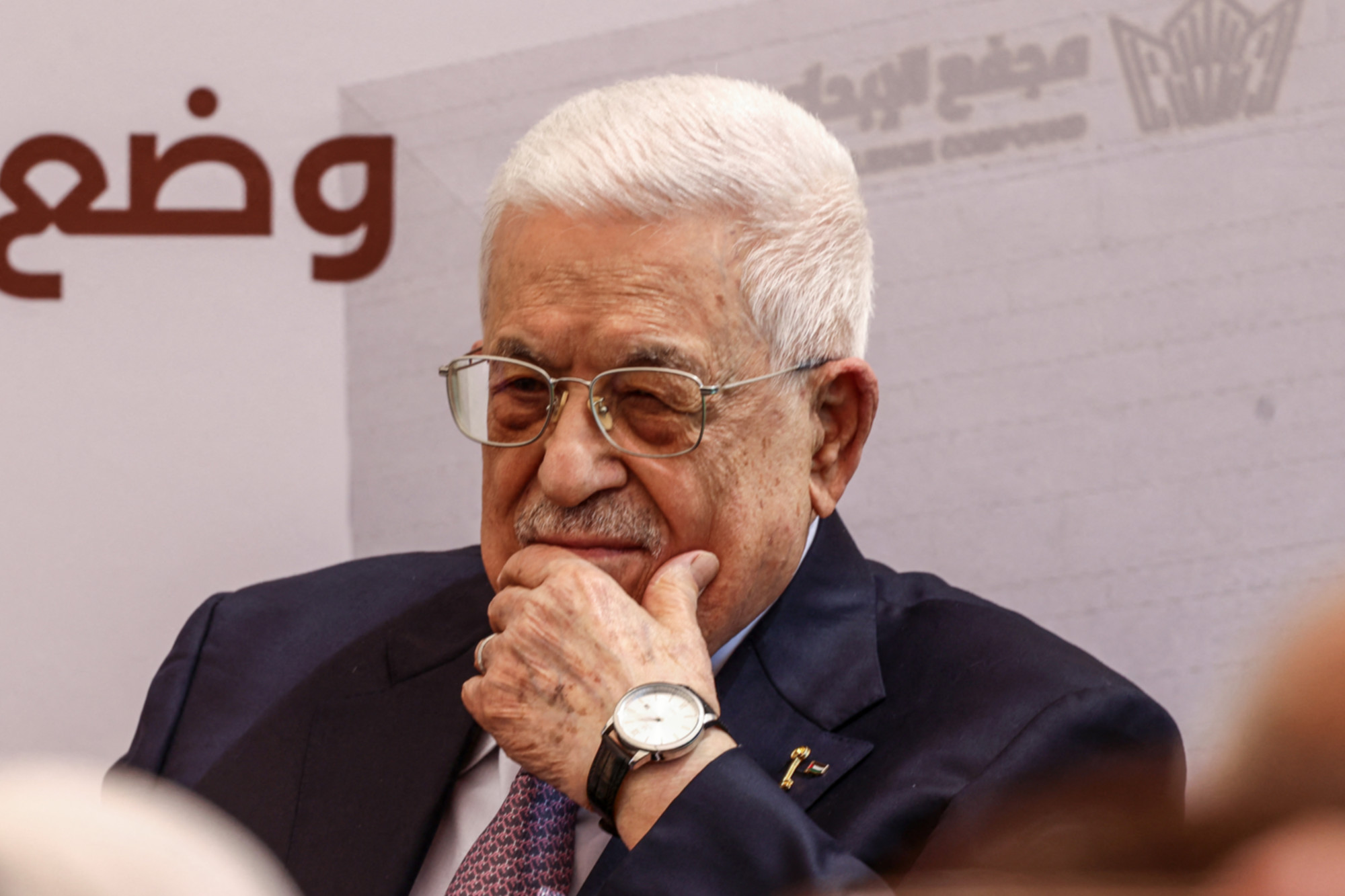
Three months after Palestinian President Mahmoud Abbas announced elections, the vote has been postponed once again, deepening questions over the legitimacy of the Palestinian Authority (PA). Announced by presidential decree on 10 October, the decision cited Israeli restrictions on the electoral commission and deteriorating conditions in Gaza and the occupied West Bank. But analysts and Palestinian political insiders say logistical obstacles tell only part of the story. An unlikely alliance between Hamas and the faction of former Fatah official Mohammed Dahlan, both rivals of Abbas, threatened to upend Fatah’s electoral calculations and challenge its dominance. The proposed coalition sought to unite major opposition forces and independent figures under one umbrella. New MEE newsletter: Jerusalem Dispatch Sign up to get the latest insights and analysis on Israel-Palestine, alongside Turkey Unpacked and other MEE newsletters Its announcement last month prompted a flurry of meetings in Cairo between Fatah, Hamas, Dahlan's faction, and other Palestinian groups. The talks helped pave the way for postponing the elections from 27 November 2026 to 11 September 2027. Jibril Rajoub, a senior Fatah official, said earlier this month that the factions would instead prepare for a "comprehensive national dialogue" aimed at reaching "common ground" on political issues before next year’s vote. But behind the language of consensus lies a deeper struggle over who will shape Palestinian politics, as Abbas faces mounting pressure, while the emerging alliance threatens to redraw the political map. Calculations The last Palestinian parliamentary elections were held in 2006, when Hamas won a surprise majority over Fatah, which had long dominated Palestinian politics. Fighting between the two factions in 2007 led to the emergence of rival administrations: Hamas in Gaza and Fatah in the West Bank. Repeated attempts at reconciliation and fresh elections have failed for 20 years, leaving Abbas to govern without a renewed electoral mandate. A senior Fatah insider, who spoke to Middle East Eye on condition of anonymity, said Abbas announced the elections in July largely in response to international pressure to renew the PA's legitimacy. "Most of our Palestinian elections take place under external pressure," the insider said, pointing to European pressure and reform commitments Abbas had reportedly made to France. The timing, however, appeared disconnected from conditions on the ground. Gaza remained devastated by Israel's genocide in the enclave, with Palestinians struggling to secure food and shelter. In the occupied West Bank, Palestinians face a worsening economic crisis, escalating Israeli settler violence and tighter movement restrictions. Can Palestinian elections still matter after the Gaza genocide? Read More » "The announcement of the elections was surprising and incomprehensible to the Palestinian people," the insider said. "People in Gaza cannot find food or a place to live, and people talk about elections. I do not think this was an appropriate time for it." Hani al-Masri, a Palestinian political analyst, said the timing also reflected a calculation in Ramallah that Hamas had been weakened by Israel's genocide in Gaza, creating an opening for Fatah to regain ground. But those calculations became increasingly uncertain. Hamas quickly welcomed the election announcement and declared its intention to participate as part of the broadest possible coalition. A month later, it announced an alliance involving Dahlan’s faction - a striking development given his history as a bitter rival of the group and his close ties to the United Arab Emirates (UAE). "The coalition had yet taken its final shape, but the mere fact that its idea emerged had the impact of a thunderbolt on the PA's leadership," Masri said. "Initially, there was talk that the coalition would bring in major political forces and prominent individuals, which would be able to win a majority of the seats and change the political landscape." Masri said opinion polls had continued to show declining support for Fatah and Abbas, driven by internal divisions, corruption allegations, economic hardship, and mounting public anger. Against this backdrop, the PA pushed the elections back by nearly a year. But Masri believes the Hamas-Dahlan alliance is unlikely to disappear. From enemies to partners A longtime Fatah member, Dahlan headed the Preventive Security Force in Gaza after the PA was established under the Oslo Accords in the 1990s. As head of the force, he oversaw crackdowns, arrests and the suppression of Hamas members. After Hamas won the 2006 elections, it accused Dahlan of plotting a coup. The ensuing infighting ended with Dahlan being driven out of Gaza by force. He later fell out with Abbas and went into self-imposed exile in the UAE, where he maintains close ties with the country’s rulers. His new alignment with Hamas has therefore surprised many Palestinians. 'Hamas needed someone to help it climb down from the tree' - Hani al-Masri, a political analyst But according to Masri, cooperation between the two sides did not emerge overnight. He said contacts over financial assistance to Gaza had been active as far back as 2017. Their cooperation intensified after Israel’s genocidal war on Gaza began in 2023, with Dahlan becoming a key figure in bringing in aid, facilitating social initiatives and establishing political contacts. "The money comes from the UAE, but it’s facilitated by Dahlan," the Fatah insider said. He argued that Dahlan’s role in channelling assistance helped boost his popularity and made a return to Palestinian politics increasingly plausible. Another factor, he said, was the current PA leadership's poor performance. "People think, well, if not Mohammed Dahlan, then who?" he said. The insider also pointed to Dahlan's role in backchannel talks with the US over a ceasefire agreement in Gaza. Palestinian elites have been collaborating against the resistance for a century Read More » Hamas, meanwhile, has emerged from the war in a difficult financial and political position, helping explain its willingness to work with a former adversary. "Hamas needed someone to help it climb down from the tree," Masri said. The alliance, he argued, could mark the beginning of a new political order. But he warned that it risked taking shape without a coherent national programme. "There is a new [political] map taking shape, but it doesn’t have a national programme," he said. He argued that any new leadership must address the immediate needs of Palestinians across Gaza and the occupied West Bank while preserving a broader political project. "It is as though, now, in exchange for a loaf of bread and medicine, we are willing to give up many things," he said.
Why did the Palestinian Authority postpone elections - again?
Full Article
Original Source
Read the full article at Middleeasteye →KhanList aggregates and links to publicly available news content. We do not host full articles from third-party sources. Always verify important information with original sources.