
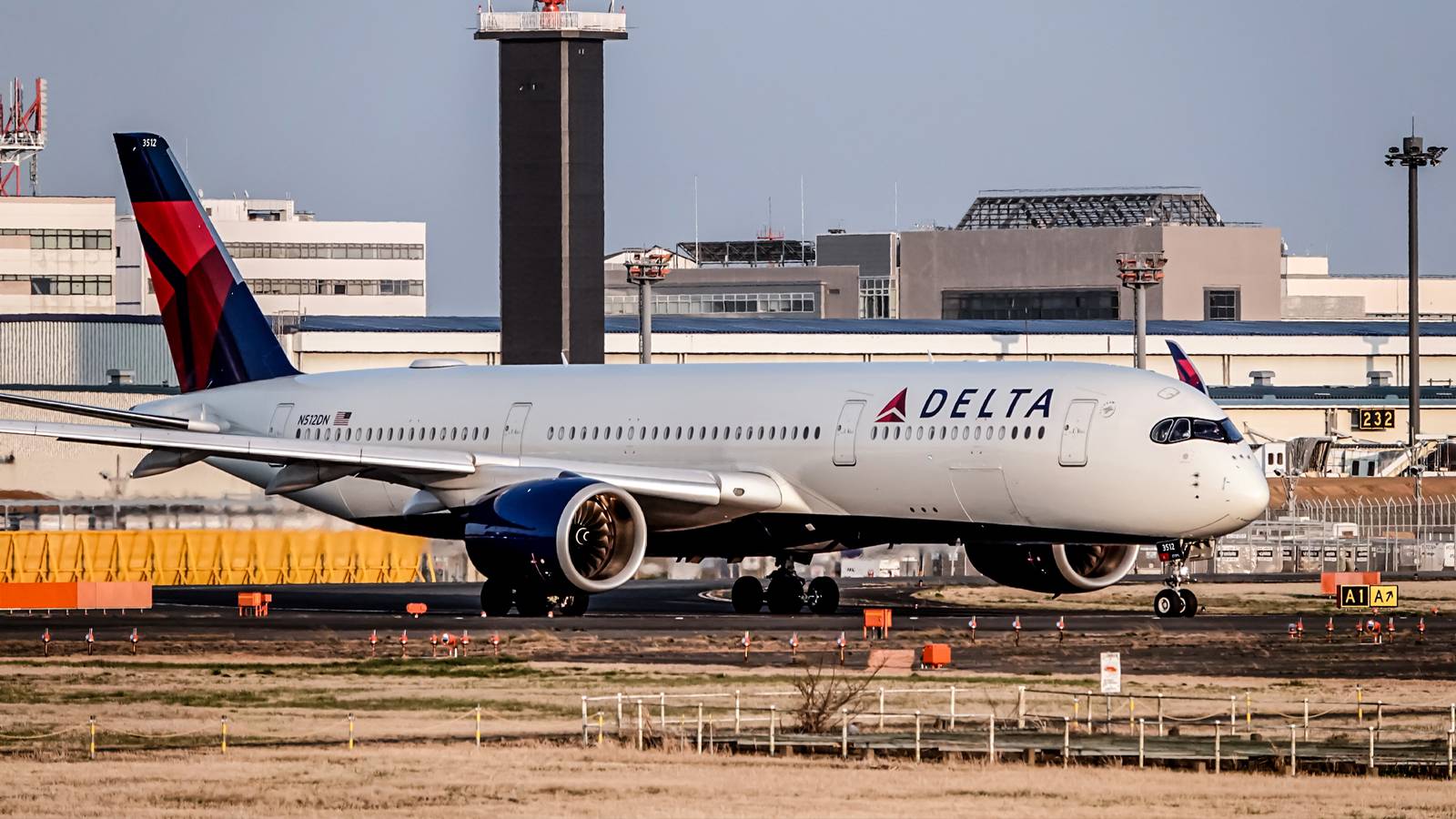
Published Oct 10, 2026, 7:00 AM EDT Brandon's passion for aviation started at a young age. He became involved in the flight simulator and VATSIM communities, which sparked his interest in aviation and eventually led him to earn his private pilot license. Outside of work, he continues to build flight hours, explore new airports, and stay involved in the aviation community. Delta Air Lines operated three different cabin layouts on the Airbus A350-900 until late 2025. The standard configuration carried 306 passengers. A premium-heavy layout introduced in 2024 carried 275. Nine aircraft acquired from LATAM carried 339, with business class seats in a 2-2-2 arrangement that provided no direct aisle access and no Delta Premium Select cabin at all. A passenger paying a Delta One fare could end up on any of the three depending on which airframe operated the flight. The 339-seat aircraft flew its last Delta service on October 25, 2025. The final airframe was ferried to Singapore for reconfiguration into the 275-seat layout, which carries 40 Delta One suites versus 32 in the standard configuration and removes 31 seats in total. Delta has indicated the entire A350-900 fleet will standardize on that layout as part of a cabin redesign spanning multiple aircraft types. Three Layouts On One Aircraft Type Credit: Karolis Kavolelis | Shutterstock Delta Air Lines spent several years operating three different cabin layouts on the same aircraft type. The Airbus A350-900 is the carrier's flagship widebody, and until late 2025, the configuration a passenger encountered depended entirely on which airframe the airline assigned to the flight. The standard layout carried 306 passengers across four cabins: 32 Delta One suites in a 1-2-1 configuration with doors, 48 Delta Premium Select seats in a 2-4-2 configuration, 36 Delta Comfort+ seats, and 190 in the Main Cabin. Delta One seats measure 20.5 inches wide with 76 to 77 inches of pitch. Premium Select seats are 18.5 inches wide at 38 inches of pitch. The main cabin seats sit nine abreast, 17.4 inches wide, with 31 to 32 inches of pitch. That layout defined the A350 experience for most passengers from the type's introduction, and a portion of the fleet still operates it. The second layout came from LATAM and carried 339 passengers, the densest configuration Delta has ever flown on the type. It held 30 business class seats in a 2-2-2 arrangement, 63 extra-legroom economy seats, and 246 Main Cabin seats. There was no Premium Select cabin. The third layout, introduced in 2024, went in the opposite direction entirely, dropping to 275 seats with 40 Delta One suites, 40 Premium Select, 36 Comfort+, and 159 Main Cabin. Across the three, Delta One capacity ranged from 30 to 40 seats, and premium cabins accounted for between 9% and nearly 15% of total seating. Three configurations of one aircraft type produced three materially different products sold under the same fare codes. Where The 339-Seat Aircraft Came From Credit: Matheus Obst | Shutterstock LATAM Airlines filed for Chapter 11 bankruptcy protection in May 2020, three months into the pandemic that had collapsed demand across South America. As part of the restructuring, the carrier announced it would retire its entire Airbus A350-900 fleet. The aircraft were relatively young and came onto the market at a moment when most airlines were parking widebodies rather than acquiring them. Delta was in an unusual position to buy. The airline had retired its Boeing 777 fleet early during the pandemic, and the ex-LATAM A350s allowed Delta to fill the capacity gap that retirement created. Delta acquired nine of the airframes, adding to a type it had already selected for its flagship long-haul flying without waiting for new deliveries from Airbus. The aircraft arrived with LATAM's interiors rather than Delta's, which is how the 339-seat layout entered the fleet. Delta committed to reconfiguring them to its own standard, but the process was slow. One Mile at a Time described the reconfiguration program as having been anything but quick, with the work stretching across several years. The final result was not the 306-seat standard layout Delta was flying when the aircraft arrived. By the time the conversions were finished, Delta had moved to the newer 275-seat premium configuration, and the ex-LATAM aircraft were reconfigured into that instead. The Business Class Problem Credit: Parkdolly | Shutterstock The core problem with the ex-LATAM aircraft was the business class seat. Delta sells Delta One as a lie-flat suite with a closing door in a 1-2-1 layout, which gives every passenger direct aisle access. The ex-LATAM A350s carried 30 business class seats in a 2-2-2 arrangement, meaning passengers in window seats had to pass a neighbor to reach the aisle. Simple Flying identified this directly as a major challenge with the 339-seaters, describing the hard product as inferior and uncompetitive specifically because the business seats lacked direct aisle access. The cabin was also missing a product. Delta Premium Select is the airline's premium economy cabin, sold as a distinct fare class with a wider seat, more recline, and upgraded service. The ex-LATAM aircraft had no Premium Select section. In its place were 63 extra-legroom economy seats, a different product at a different price point, bringing the aircraft to three cabins rather than four. The result was inconsistency across the same fleet. Premium cabins accounted for just 9% of seats on the ex-LATAM aircraft once Delta One and Premium Select were combined, against almost a quarter on both of Delta's own layouts. Simple Flying's coverage of the retrofit program noted that the ex-LATAM airframes arrived with high-density layouts and outdated products that diluted the brand's consistency, which is why Delta's broader cabin standardization effort is built around it. The 275-Seat Layout And Why It Goes Lower Credit: Delta Air Lines The 275-seat layout moves in the opposite direction from the aircraft it replaced. Delta announced it in 2024 as a premium-heavy configuration for the longest routes in its network, and the seat count tells the story: 40 Delta One suites, 40 Premium Select, 36 Comfort+, and 159 Main Cabin. Against the 306-seat standard layout, that is eight more Delta One suites, a 25% increase, offset by eight fewer Premium Select seats and 31 fewer seats in total. The proportions shift substantially. Delta One accounts for nearly 15% of seats on the 275-seat aircraft, against 10% on the 306-seat layout and 9% on the ex-LATAM configuration. Adding Premium Select, premium cabins make up roughly 29% of the 275-seat aircraft. The airline is giving up 31 revenue seats per departure in exchange for a cabin weighted toward the fares that generate the most revenue per square foot of floor space. As one industry observer noted when the layout was announced, Delta is essentially trading eight Premium Select seats for eight more Delta One suites and removing 30 seats from the aircraft, producing some of the least dense A350-900s flying outside Singapore Airlines' ultra-long-range variants. Delta introduced the layout on Atlanta to Johannesburg and Cape Town, routes that run close to the limit of what the A350-900 can fly. Ultra-long sectors favor premium-heavy configurations for two reasons. Passengers paying for 15 or more hours in a seat are more willing to pay for a flat bed, which lifts the share of premium bookings. Removing 31 seats also removes weight and payload, which matters on routes where range is a binding constraint rather than a comfortable margin. The aircraft assigned to these routes are the 283-tonne higher-weight A350-900 variant, which carries additional fuel for exactly that reason. Where The Fleet Stands Now Credit: Delta Air Lines The last 339-seat A350 flight operated on October 25, 2025. The final aircraft was ferried to Singapore's Paya Lebar for reconfiguration into the 275-seat layout. All nine ex-LATAM airframes now fly in Delta's premium configuration rather than the layout they arrived with. From October 26, 2025, only two A350-900 layouts remained in the fleet. The 306-seat layout is the one still being worked through. Delta's fleet listings show both the 275-seat and 306-seat configurations in service, with 23 A350-900s delivered and 18 more on order. The reconfiguration forms part of a broader cabin redesign Delta began rolling out across its fleet, debuting on the Boeing 757 in autumn 2025 before moving to the A350. The redesign covers every cabin, not just the premium sections, with wool-blend seat coverings in Delta One and deeper recline, memory foam cushions, and device storage in Premium Select. The stated goal is product uniformity, so passengers encounter the same materials, lighting, and layout logic regardless of which aircraft operates their flight. The A350-1000 adds another layout rather than consolidating towards one. Delta has 20 on order configured with 314 seats across 53 Delta One suites, 48 Premium Select, 51 Comfort+, and 162 Main Cabin. That is a longer aircraft, so it has a higher seat count, and it means the A350 fleet will carry more than one seat count even once the -900s are standardized. The product changes rather than the number. The 53 Delta One suites on the A350-1000 continue the premium-weighted direction the 275-seat layout established.
Why Delta Air Lines Retired Its Densest Airbus A350 Layout & Standardized On 275 Seats
Full Article
Original Source
Read the full article at Simpleflying →KhanList aggregates and links to publicly available news content. We do not host full articles from third-party sources. Always verify important information with original sources.