
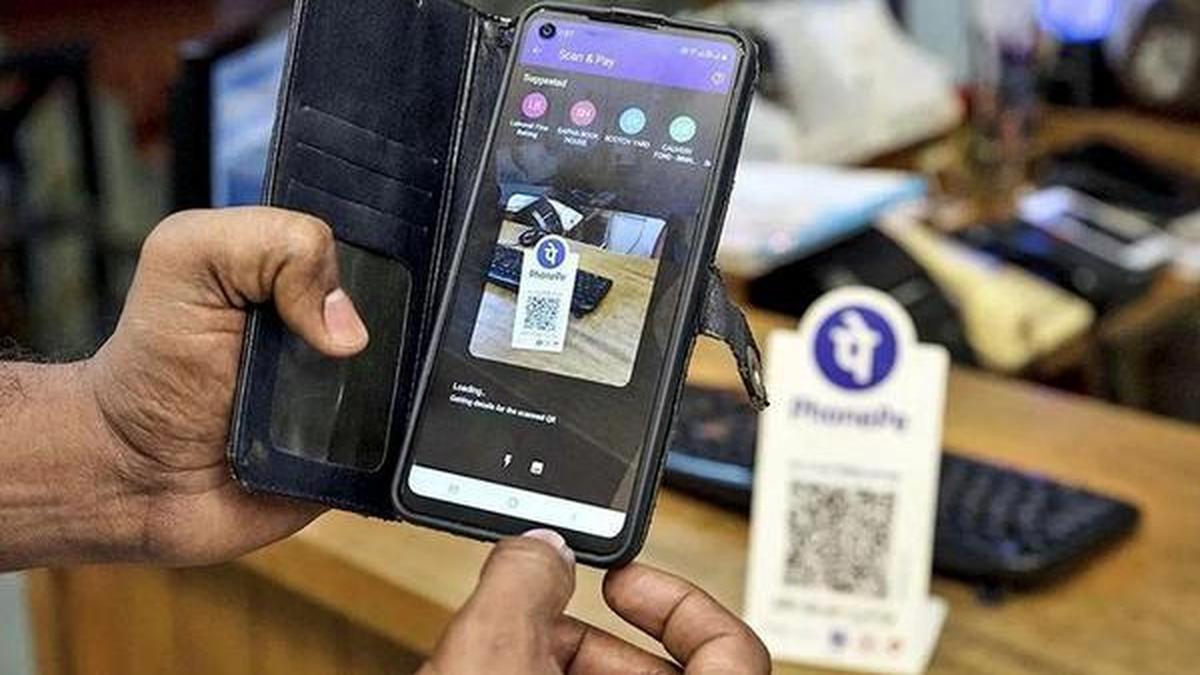
Service pivot. Industry executives said that the move, if implemented, could fundamentally reshape competition in the payments ecosystem | Photo Credit: bl-online Administrator In the decade since its launch, India’s Unified Payments Interface (UPI) has evolved from a promising digital experiment into critical economic infrastructure. Against this backdrop, the Union Finance Ministry has notified that the National Payments Corporation of India (NPCI) will operationalise a 0.4% Merchant Discount Rate (MDR) on specified merchant transactions above ₹2,000 from October 15. While consumers will not be charged directly, this marks a significant departure from UPI’s zero-MDR model for merchants. While the reasoning is understandable, considering the costs to run UPI, one question deserves an answer: what has UPI cost India, and what has it saved?Editorial | Complex priorities: On UPI transactions, MDR chargesThe costs are easy to see as servers, security and fraud controls show up on balance sheets, while the savings are scattered across the economy. For example, take a small shopkeeper. Before digital payments, taking cash meant counting notes, keeping change, guarding the till and making trips to the bank, with the added risk of theft. UPI removed most of that, with customers also saving themselves a few trips to the ATM. Further, banks now handle less physical cash, businesses reconcile accounts faster, lenders are able to read a small trader’s cash flow from digital records, and most importantly, the government gets a trail that helps with formalisation and tax compliance. None of this is revenue to UPI; it is spread across banks, consumers and the exchequer.The case for MDR is that the payments ecosystem needs a steady income to maintain and expand UPI, which is a fair point. Yet this logic assumes that most of UPI’s cost should be recovered from the transactions on it; the wider benefits are not accounted for. Every payment that moves from cash to UPI cuts handling costs elsewhere while every merchant who joins adds to formalisation. Further, the increase in UPI users makes the network more useful to those already on it. India has acted on this logic before: the government approved ₹1,500 crore in 2024-25 alone to incentivise low-value merchant transactions, with the view that moving cash through digital networks was worth paying for.Balancing benefitsOn September 28, the Supreme Court, while declining to stay the levy, asked the Centre, the RBI and the NPCI to explain, on affidavit, the legal basis for the levy, including whether the MDR was a tax or a fee. In response, the government stated that nothing reaches the exchequer and that the money was a settlement between banks and service providers. This answers the legal question but not the economic one — what is India giving up?Consider a highway between an industrial region and a port. A toll can be perfectly reasonable, but toll collections say little about the highway’s real return, which is the faster movement of goods and the businesses that grow with it. A port is similar; while container fees pay for operations, its larger contribution is the trade that it enables. UPI also deserves the same lens. Any plan to recover its maintenance bill should ask what happens to the activity it supports once a toll is introduced. That calculation is largely missing from the MDR debate.MDR might raise money that lets banks and payment providers invest more in resilience and expansion. But it would also lead to a change in behaviour. Some merchants may prefer cash for transactions, while others may nudge customers towards a different payment instrument. When payments slip back to cash, the costs UPI had removed come back, such as handling, reconciliation, cash logistics, and less digital visibility. Some of the formalisation gains go too. If ₹100 collected in MDR causes more than ₹100 of economic value to disappear elsewhere, the payment system ends up better funded and the country poorer.Additionally, UPI and RuPay had helped India build a domestic payments ecosystem at the expense of global card networks. The USTR had earlier called India’s zero-MDR policy a market-access barrier for Visa and Mastercard; these players now stand to gain from any drift back to cards. A lasting domestic advantage should not be conceded for trade terms that can later be revised.A network that millions of Indians rely on has to be secure, resilient and able to grow. The harder question is what “self-sustaining” should mean. The test for the new toll should be straightforward: does it increase India’s overall economic return from UPI after accounting for the behaviour it may change and the wider benefits the network creates? This is the question policymakers should answer.Americai V. Narayanan is National Spokesperson of the Tamilaga Vettri Kazhagam (TVK), a certified public accountant (CPA) and a certified management accountant (CMA) Published - October 07, 2026 01:17 am IST
Why charging for UPI changes the math
Full Article
Original Source
Read the full article at Thehindu →KhanList aggregates and links to publicly available news content. We do not host full articles from third-party sources. Always verify important information with original sources.