
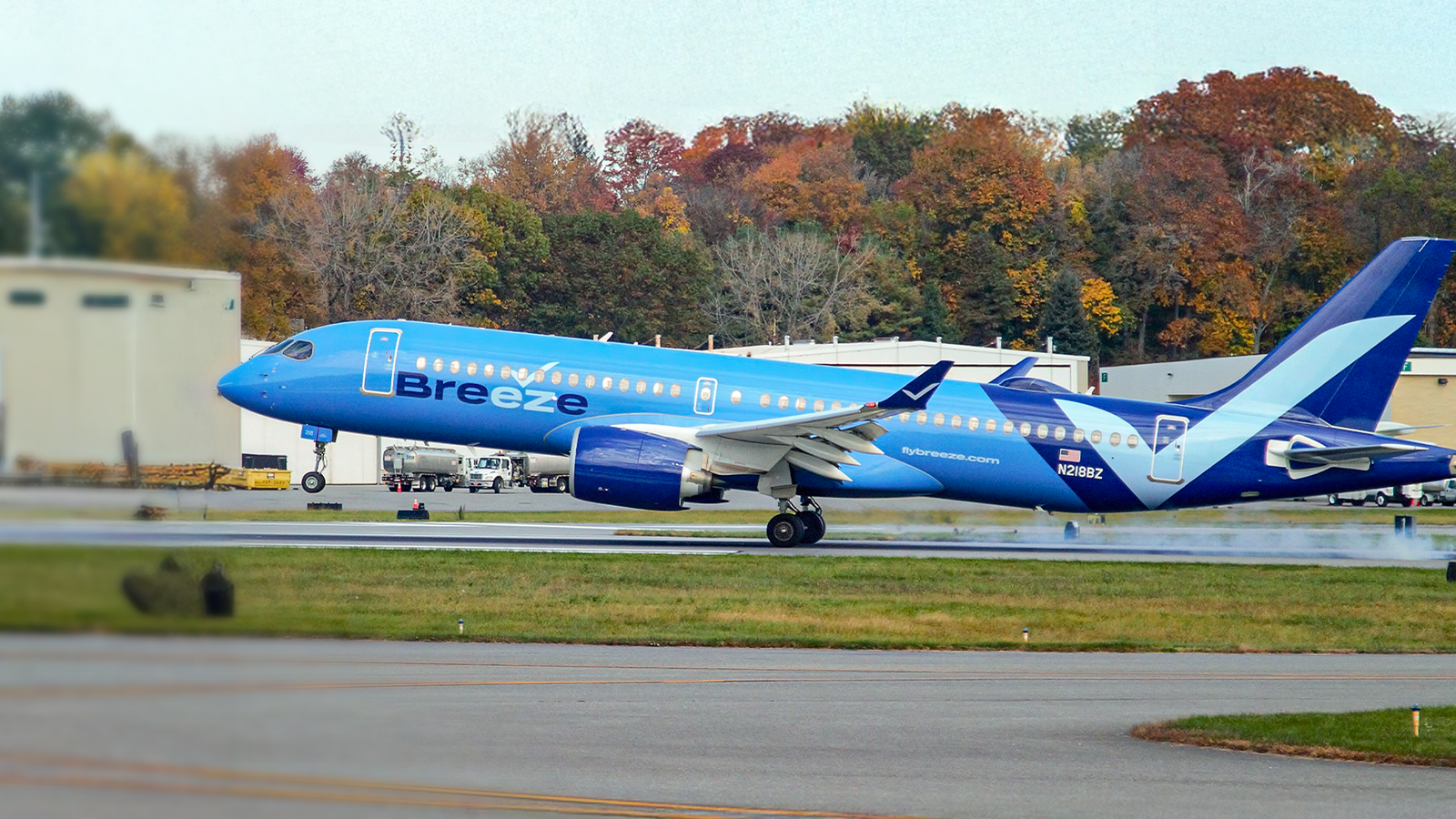
The collapse of Spirit Airlines in May has created opportunities across the US aviation market, leaving several airports without commercial service and removing an important source of low-cost competition on popular leisure routes. While other airlines have been cautious about taking over these abandoned markets, Breeze Airways is moving quickly. It has been targeting destinations where passengers have lost convenient nonstop connections and where existing airline competition remains relatively limited. However, Breeze Airways is not attempting to recreate the network that Spirit Airlines once operated. Instead, its expansion reveals a much more selective strategy. It is concentrating on smaller regional airports, holiday destinations, and point-to-point international services rather than competing directly on the country's busiest routes. From Latrobe, Pennsylvania, to Tampa, Florida, the airline is choosing opportunities that fit its operating model, suggesting that the most attractive parts of Spirit Airlines' former network are not necessarily its biggest routes. Spirit Airlines' Collapse Has Created Opportunities For Breeze Airways Credit: Yes Market Media | Shutterstock Spirit Airlines officially ceased operations on May 2, 2026, following its unsuccessful attempts to reorganize under Chapter 11 bankruptcy protection and its subsequent move towards Chapter 7 liquidation. Rising fuel prices, which exceeded $4 per gallon amid geopolitical disruptions affecting energy markets, placed additional pressure on an already financially troubled business. The deteriorating economics made its restructuring plans increasingly difficult to sustain. Its departure immediately created gaps in several markets where ultra-low-cost airlines had been the only commercial operator. Smaller airports were particularly exposed because they lacked the passenger volumes and competing airlines that could make replacing lost services relatively straightforward. For communities accustomed to affordable nonstop flights, the shutdown meant losing more than an airline; it meant losing convenient access to important leisure destinations. Breeze Airways has identified these abandoned markets as potential opportunities, particularly where passengers previously depended on Spirit Airlines for direct holiday connections. Rather than simply copying its former competitor's entire network, Breeze Airways is selecting individual routes that appear compatible with its aircraft, operating costs, and passenger demand. This distinction is important because not every route previously operated by Spirit Airlines necessarily offers attractive economics. The airline's approach also reflects the competitive environment following Spirit Airlines' departure. Average fares have increased considerably on routes no longer served, demonstrating how the removal of an ultra-low-cost competitor can affect ticket prices. Breeze Airways therefore has an opportunity to attract price-conscious passengers without necessarily matching every fare previously offered by Spirit Airlines. Latrobe Demonstrates The Appeal Of Smaller Airports Credit: Robin Guess | Shutterstock One of the clearest examples of this strategy is Arnold Palmer Regional Airport (LBE) in Latrobe, Pennsylvania. The airport lost all commercial passenger service when Spirit Airlines departed, leaving an important gap for residents of Westmoreland County and surrounding communities. The consequences extended beyond passengers, with the airport also facing employment and economic challenges following the withdrawal of its only commercial airline. In the 12 months leading up to Spirit Airlines' collapse, data from the US Bureau of Transportation Statistics shows that the busiest three routes from the airport were those detailed in the table below. Ranking Destination Passengers 1 Orlando 36,000 2 Myrtle Beach 20,000 3 Fort Lauderdale 5,000 Breeze Airways will restore scheduled commercial service with twice-weekly flights to Myrtle Beach International Airport (MYR) beginning February 9, 2027, followed by service to Orlando International Airport (MCO) from May 26, 2027. Both destinations appeal strongly to leisure travelers, offering straightforward connections to popular vacation markets. Crucially, as well, they do not require passengers to travel through Pittsburgh International Airport (PIT) or another larger airport. The advertised introductory one-way fares make the routes particularly interesting. Myrtle Beach flights have been promoted from $49, while Orlando services start at $59. These prices position Breeze Airways competitively for families and travelers who previously relied on Spirit Airlines. However, additional charges and changing availability mean the advertised starting fares will not represent every passenger's final ticket price. Latrobe also offers infrastructure advantages that make the opportunity more attractive. Its approximately $28 million terminal expansion introduced additional gate capacity and improved passenger facilities. This created an airport environment capable of supporting renewed airline operations. With a relatively uncomplicated operating environment and limited direct competition, Breeze Airways can establish a presence without immediately entering the expensive competitive battles associated with major metropolitan airports. Leisure Destinations Offer A More Natural Fit Credit: Markus Mainka | Shutterstock Breeze Airways' selection of Myrtle Beach and Orlando illustrates why leisure markets are central to its expansion strategy. Both destinations attract substantial holiday demand, particularly from families and travelers planning trips around school holidays, seasonal breaks, and longer weekends. Their appeal is also relatively easy to communicate to passengers. This makes them suitable destinations for an airline building awareness in previously underserved communities. Unlike large business-oriented markets, leisure routes can often be developed around concentrated periods of demand. Passengers traveling to Florida or South Carolina may be more willing to arrange their schedules around particular departure days. This allows an airline to operate limited weekly frequencies instead of committing substantial capacity to daily service. This flexibility can be particularly valuable when testing a relatively new market. Breeze Airways is also expanding its presence at Tampa International Airport (TPA), where the airline is building a growing network of holiday connections. Ranking Destination Passengers 1 Atlanta 991,000 2 Denver 473,000 3 Chicago 468,000 4 Charlotte 461,000 5 Dallas/Fort Worth 439,000 Beginning December 16, it plans to introduce service to St. Thomas, followed by Cancún on December 18 and Montego Bay on December 19. These destinations provide additional opportunities to attract passengers seeking direct access to popular Caribbean and Mexican vacation markets. The busiest destinations from Tampa International Airport last year are outlined in the table above. The wider appeal is that Breeze Airways can connect passengers with destinations they actively want to visit without necessarily competing for the same customers as major network airlines. Leisure travelers often prioritize convenient departure airports, affordable tickets, and nonstop journeys over extensive connecting networks. By concentrating on these preferences, Breeze Airways can develop a recognizable market position while avoiding some of the pressures associated with traditional hub-based competition. Tampa Is Becoming An Important International Base Credit: Markus Mainka | Shutterstock Although Breeze Airways is particularly interested in smaller airports, its expansion at Tampa demonstrates that the airline is not exclusively pursuing underserved regional communities. Tampa International Airport provides access to a much larger passenger market, a strong leisure-travel base, and opportunities to develop international services that would be difficult to support from smaller airports. The most significant addition is Santo Domingo (SDQ) in the Dominican Republic, with year-round flights scheduled to begin June 18, 2027. The service will operate twice weekly using the Airbus A220-300, giving passengers a nonstop alternative for traveling between Tampa and the Dominican Republic's capital. It will also become Breeze Airways' sixth international destination from Tampa. This expansion is significant because it demonstrates how Breeze Airways can use an established operating base to support international growth without attempting to challenge the largest airlines across their most important domestic markets. Tampa already offers the airline a foundation of existing routes, aircraft operations, and passenger recognition. Ranking Destination Passengers 1 Toronto 124,000 2 Frankfurt 77,000 3 Panama City 74,000 4 London Heathrow 73,000 5 London Gatwick 67,000 This makes additional international destinations a more logical extension of its network. As detailed in the table above, Toronto Pearson International Airport (YYZ) was the busiest international destination from Tampa International Airport last year. The Caribbean additions also create opportunities to distribute aircraft utilization across different markets. St. Thomas, Cancún, Montego Bay and Santo Domingo appeal to different passenger groups, but they share an important characteristic: each offers a recognizable leisure or VFR market. This gives Breeze Airways several opportunities to build demand while maintaining a network focused on relatively straightforward nonstop journeys. Why Breeze Airways Is Not Chasing Larger Trunk Routes Credit: Ceri Breeze | Shutterstock The absence of an aggressive push into major trunk routes is arguably the most revealing part of Breeze Airways' expansion strategy. Routes connecting cities such as New York, Chicago, Los Angeles, and Atlanta can generate enormous passenger volumes, but they also involve intense competition, expensive airport operations, and established relationships between major airlines and corporate customers. Entering these markets is not automatically attractive simply because passenger demand is substantial. Major airlines, including American Airlines, Delta Air Lines, and United Airlines, have extensive networks, established frequent-flyer programs, and substantial connecting traffic. Competing directly against these advantages requires more than inexpensive tickets. A smaller carrier must also generate sufficient demand, maintain attractive schedules, and withstand the pricing pressure that established competitors can apply when defending important markets. Breeze Airways' operating model is better suited to identifying gaps between cities where passengers currently face inconvenient connections or lengthy surface journeys. These routes can offer a meaningful convenience advantage without requiring the airline to build a massive operation at a major hub. Smaller airports may also provide more manageable operating environments, helping the carrier concentrate on delivering its intended passenger experience. There is also a financial consideration. Specifically, operating frequent services on heavily contested trunk routes requires considerable aircraft capacity and consistent passenger demand throughout the week. Breeze Airways can instead introduce selected routes with limited weekly frequencies, observe booking patterns, and adjust its capacity accordingly. This approach does not eliminate commercial risk, but it offers greater flexibility than immediately committing significant resources to an established competitive corridor. The Airbus A220-300 Supports A More Selective Expansion Strategy Credit: Tampa International Airport Aircraft selection is another important part of understanding Breeze Airways' approach. Its Airbus A220-300 fleet provides a combination of operating efficiency, passenger capacity, and range that supports the airline's preference for connecting smaller markets with popular leisure destinations. The aircraft is particularly useful for an airline seeking to operate routes that might not justify larger narrowbody aircraft. The A220-300 also gives Breeze the flexibility to serve domestic and international destinations from its existing network. Its capabilities support services from regional airports as well as longer leisure connections, allowing the airline to pursue opportunities without relying on a single aircraft type for substantially different operating requirements. This flexibility is particularly relevant as its network continues expanding. The latest data from ch-aviation shows that Breeze Airways currently has 66 Airbus A220s in its fleet, making it the third-largest operator of the type, as detailed below. Breeze Airways expects to serve approximately 95 cities and operate more than 300 routes by mid-2027, representing a substantial expansion from its original network. Ranking Airline Airbus A220-100 Airbus A220-300 Total 1 Delta Air Lines 45 51 96 2 JetBlue - 70 70 3 Breeze Airways - 66 66 4 Air France - 59 59 5 airBaltic - 54 54 However, the number of destinations is only part of the story. The airline's ability to maintain profitable frequencies, manage fuel expenses, and generate consistent passenger demand will ultimately matter more than how quickly its route map grows. The experience of Spirit Airlines provides an important reminder that low fares and substantial passenger numbers cannot guarantee financial sustainability. Fuel prices, aircraft utilization, competitive pressure, and operating costs all influence whether a route can generate sufficient returns. Breeze Airways appears to be approaching the opportunities left behind with that lesson in mind, selecting markets where nonstop leisure demand, manageable competition, and its A220-300 fleet can work together economically.
Why Breeze Airways Is Taking Spirit Airlines' Leftover Leisure Markets But Avoiding Big Trunk Routes
Full Article
Original Source
Read the full article at Simpleflying →KhanList aggregates and links to publicly available news content. We do not host full articles from third-party sources. Always verify important information with original sources.