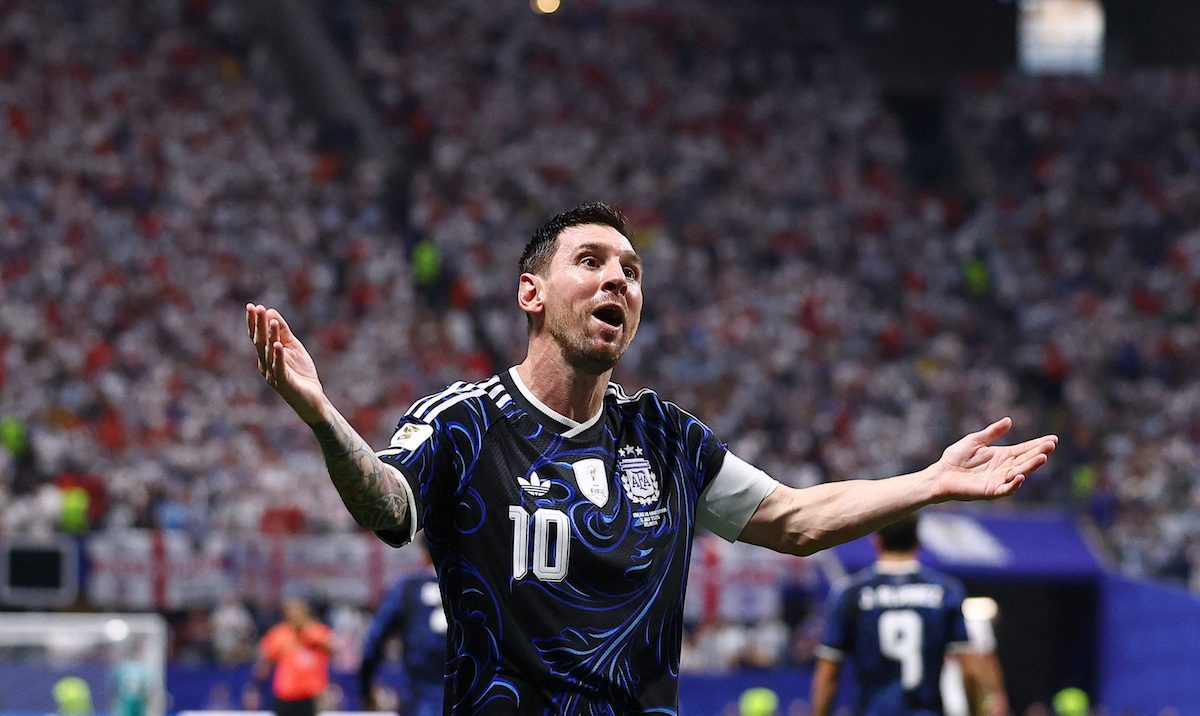
Argentina's football identity is shaped by legendary players like Diego Maradona and Lionel Messi, inspiring both admiration and resentment globally. The country's complex image in Latin America is marked by cultural distinctiveness and perceived arrogance, leading to deep rivalries, particularly with Brazil and Chile. Fans often express extreme nationalism, which can result in controversial remarks and behaviors, contributing to a sentiment of 'anyone but Argentina' among rival supporters. This is AI-generated and may have errors. For context, always refer to the full article. Report issues here. GREAT. Argentina's Lionel Messi celebrates after Lautaro Martinez scores their second goal in their semifinal against England in the 2026 FIFA World Cup. Agustin Marcarian/REUTERS From Diego Maradona's defiance to Lionel Messi's global celebrity, Argentina has long inspired devotion at home and abroad, alongside irritation, envy, and resentment from rivals For some fans following this FIFA World Cup, the calculation has been simple: support whoever is playing against Argentina. Across the tournament, that has meant wearing the green of Algeria, the blue of Cape Verde, or the red of Switzerland. Even the often maligned England got a boost in global social media pledges of support last week ahead of their semifinal clash. And in the final on Sunday, July 19 (Monday, July 20, Manila time), it may mean pulling on a red Spain shirt. Argentina is one of football’s most successful and recognizable national teams, but also one of its most polarizing. From Diego Maradona’s defiance to Lionel Messi’s global celebrity, the Albiceleste have long inspired devotion at home and abroad, alongside irritation, envy, and resentment from rivals. The Maradona legend Argentina’s football identity has been shaped by extraordinary individual players of global fame. Maradona provided Argentina with its most defiant sporting myth, leading the country to the 1986 World Cup title. His two goals against England in the quarterfinals — the infamous “Hand of God” and a solo run later voted “Goal of the Century” — remain central to Argentina’s football narrative. The memory of the “Hand of God” goal still stings for many English fans, while Argentines often view it as part of a larger story of defiance and revenge after the 1982 Falklands War, in which Britain kept control of the disputed island territory. After Argentina’s 2026 World Cup semifinal win over England, players brandished a banner reading “Las Malvinas Son Argentinas” (“The Falklands are Argentine”), in reference to the long-running dispute over the islands, in apparent contravention of FIFA rules banning political statements. The Messi effect Lionel Messi gave Argentina a different kind of icon to Maradona: quieter in public, but with greater global reach and longevity. He won nearly every major honor at club level with Barcelona, becoming the face of a dominant side, though that success made him a target for rival fans. His rivalry with Portugal’s Cristiano Ronaldo added another layer, splitting global football into Messi and Ronaldo camps. After years of being compared to Maradona and nagged for failing to deliver a major tournament title for his country, Messi led Argentina to the 2022 title in Qatar. His continuing presence has made Argentina a magnet for admirers, including in India and Bangladesh, many miles from Argentina. But others have wearied of the Messi-centric narrative and the adulation surrounding him. A complicated neighbor Argentina’s image in Latin America is complex. The country has long seen itself as culturally distinct, shaped by strong European influences and a football culture that often treats victory as proof of national exceptionalism. That self-assurance is sometimes admired, but in parts of the region it also feeds a stereotype of Argentine arrogance. Fans of many nations use tournaments to display national pride with drums, flags and chants, but the fanaticism of Argentina can seem extreme at times. And that nationalism can veer into uglier territory. One Argentine TV commentator earlier this month called Mexicans “detestable” and accused them of envying Argentines “not just in soccer, in everything,” remarks that Mexican President Claudia Sheinbaum called “outrageous.” In the stadiums, some fans still chant an offensive song that mocks the African origins of many France players, one that Argentine players in 2024 apologized for after singing it. Other incidents involving racism or disorder by Argentine fans have been shared on social media or complained of by other supporters. Deep rivalries Argentina’s deepest rivalry is with Brazil, rooted in decades of competition between South America’s two most successful nations. At the 2014 World Cup in Brazil, Argentine supporters chanted, “Brasil, decime que se siente” (Brazil, tell me how it feels), taunting the hosts while reveling in Argentina’s progress. Tension with Chile intensified after Chile beat Argentina in the 2015 and 2016 Copa America finals, both on penalties. Mexico and Argentina have also developed a charged football relationship, fuelled by repeated World Cup meetings and social media debates over performance. Argentina’s playing style — defined by virtuosity and cunning — can be joyful to watch but is also seen by some as against ideals of fair play. For some fans, “anyone but Argentina” has become a default tournament position. – Rappler.com How does this make you feel? Loading
Why Argentina is the FIFA World Cup’s favorite villain
Full Article
📰 Original Source
Read full article at Rappler →KhanList aggregates and links to publicly available news content. We do not host full articles from third-party sources. Always verify important information with original sources.