
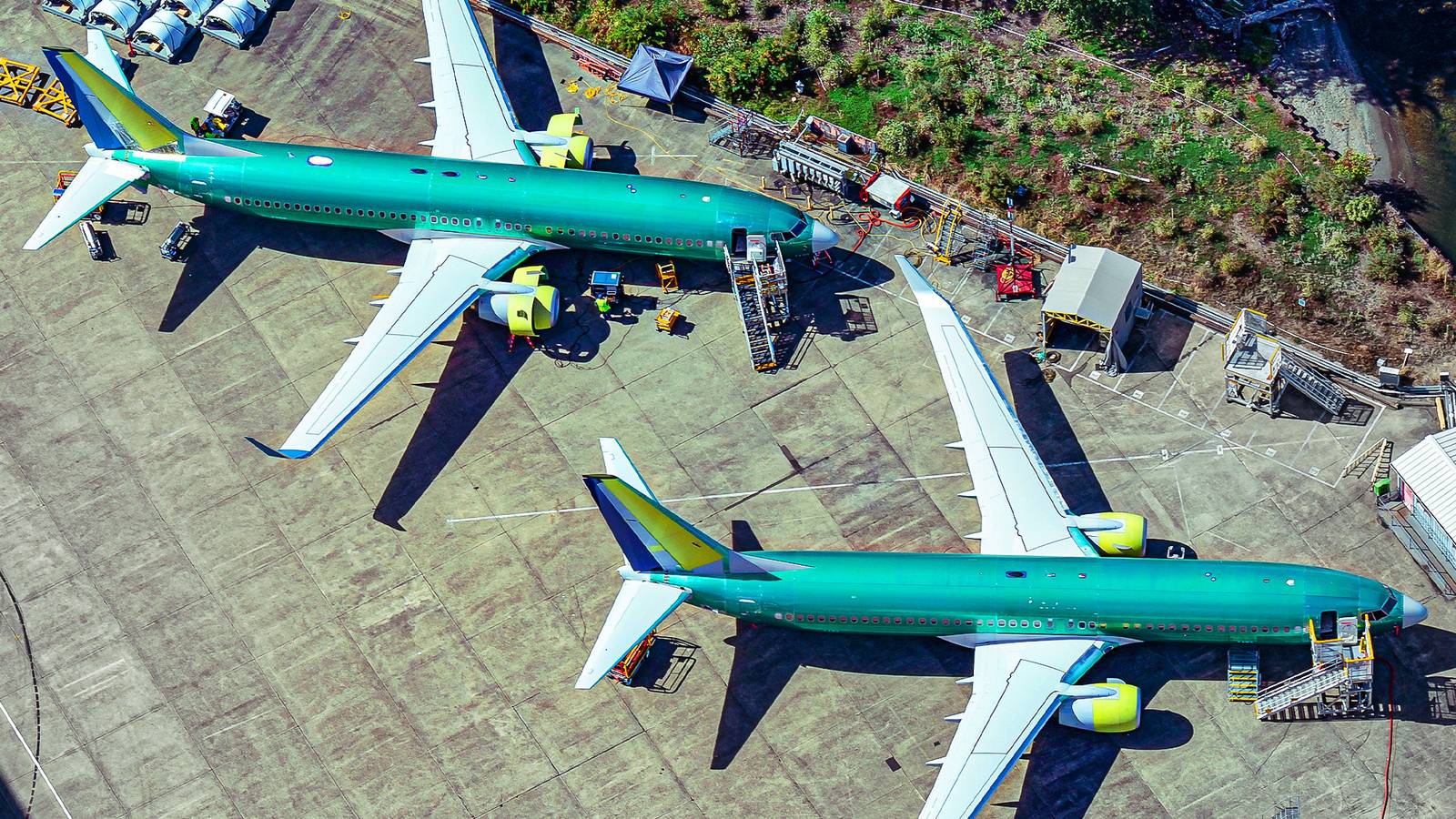
Published Sep 26, 2026, 3:16 PM EDT Daniel comes to Simple Flying with a business focused approach to the aviation world. Daniel enjoys analyzing strategy and how companies move against each other to gain a step ahead in the skies. Besides strategy, Daniel also has a passion for aircraft design and the history of aviation. Based in New York One of the final steps in producing large airliners is painting. All airlines feature carefully designed liveries to reflect their brand image, and they apply this to an airliner after assembly and before delivery. You'd think that before being painted, the aircraft would simply display bare metal, as seen on the former American Airlines livery, for example. In reality, unpainted Boeing airliners feature a glossy emerald green color during the assembly process, a striking and unusual color scheme. Most modern airliners are primarily constructed out of an aluminum alloy, and the green color is a coat of primer paint. The primer is applied during the production of various aircraft components, which are then shipped to final assembly still wearing this green color. Boeing airliners are then assembled and occasionally even perform flight tests while painted green before receiving their interiors and full airline livery. The aircraft completes more ground and flight tests before being handed off to the customer. The Process Of Building An Airliner Credit: Ian Dewar Photography | Shutterstock Individual components of an aircraft are constructed worldwide by various suppliers and contractors. The degree of component outsourcing varies by aircraft; Spirit AeroSystems assembles the Boeing 737 fuselage in Wichita, Kansas, while Boeing assembles the 777 fuselagein Everett, Washington. Overall, Boeing traditionally assembles most aircraft components in-house, but the 787 features by far the highest level of outsourcing. Boeing completes the final assembly of the 737 in Renton, Washington, while the 767 and 777 are completed in Everett. Boeing assembled the 707, 727, and 757 in Renton, while it formerly built the 747 in Everett. The Boeing 787, meanwhile, previously had a final assembly line in Everett, but Boeing shut it down in 2021 as it consolidated 787 production in North Charleston, South Carolina. Once the fuselage is complete and placed on the final assembly line, workers install interior systems such as electrics, plumbing, and hydraulics. Workers then attach the radome and doors before attaching the aircraft's wings. Next, workers install the aircraft's landing gear, followed by the vertical and horizontal stabilizers. After that, workers install the engines and, finally, the aircraft's interior before sending it to the paint shop. Overall, a 737 MAX can be assembled in roughly nine to ten days, while a widebody Boeing 777 can take roughly 17 days to assemble. Why Are Newly Constructed Boeing Airliners Green? Credit: Thiago B Trevisan | Shutterstock The green paint is a primer intended to preserve the aluminum alloy used for the aircraft's components. While the alloys used are incredibly durable and corrosion-resistant, the primer adds an extra layer of protection against corrosion and metal fatigue. The paint itself is yellow, but lampblack is added to protect against ultraviolet light from the sun. Adding lampblack changes the primer's shade from yellow to green. The anti-corrosion primer is a zinc-chromate coating, which was pioneered in the automotive industry by Ford in the 1920s. Although it was first used in car assembly, zinc-chromate primers are most heavily used today in the aviation industry to protect aluminum during production, and they have become the standard across all manufacturers. You will, however, notice that some components of a Boeing airliner under production feature mismatched shades of paint. Aircraft Primary Material Boeing 737 Aluminum alloy Boeing 767 Aluminum alloy Boeing 777 Aluminum allow Boeing 787 Dreamliner Carbon fiber reinforced polymer Zinc-chromate primers protect aluminum alloys from corrosion and fatigue, which is why they're applied only to certain sections of an airliner. The 787, for instance, is primarily made of carbon composite materials, which generally do not corrode. As such, you'll never find a 787 wearing the green primer coating. In addition, certain sections of an aircraft, such as the wings of a Boeing 747-8, may be made of carbon composites and not require primer. Painting An Airliner After Final Assembly Credit: mirigifford | Shutterstock After being fully assembled, it's time for the aircraft to receive its livery. Boeing operates its own painting facilities in Renton, Everett, and North Charleston. Because of capacity constraints, you may occasionally see aircraft fly to another paint facility rather than the one at their production site. Furthermore, an airline may opt to have an aircraft be painted at a contract facility after assembly rather than by Boeing. This was the case with Alaska Airlines' 787-9, N784HA, which International Aerospace Coatings in Fort Worth, Texas, painted. It typically takes about a week to repaint a narrowbody airliner like the Boeing 737, while a larger widebody like the 777 may take multiple weeks. Repainting an aircraft involves stripping the existing paint, and in this case, the primer helps bind the new paint to the aircraft's structure. The windows, engine intakes, and sensitive equipment are covered up before a base coat of paint is applied. From there, the airline's livery design and logo are painted, and then finally, a clear coat is applied. Aircraft are typically repainted every six to ten years, and repainting involves stripping an aircraft down to reveal the bare metal. This is mainly done to save weight, since paint on an airliner can weigh hundreds of pounds. The preexisting primer is also removed and replaced before applying the new coats of paint. It can routinely cost over $100,000 to repaint even a smaller narrowbody like a 737, while a widebody such as the 777 can cost double and require several weeks to be repainted. How Does This Differ From Carbon Composite Airliners? Credit: First Class Photography | Shutterstock You'll never see a Boeing 787 Dreamliner wear the bright green colors because it's made out of carbon-composite materials. As a result, it doesn't require the same zinc-chromate primer as other Boeing airliners. However, the 787 still requires primer paint. The carbon-composites used on the 787 require a specialized primer to help the paint bond to the fuselage. With the 787, components are often painted before final assembly, but the primer remains underneath the skin. The difference between the 787 Dreamliner and other Boeing aircraft is simply that it uses a different primer, and the paint procedures during assembly differ. However, with the 787, Boeing also sought to radically alter its production and assembly process. Most notably, the 787's fuselage is made from whole barrels rather than traditional panels. Although Boeing has had some issues with the 787's assembly process, the barrel process is meant to be cheaper with fewer parts than the panel process. The 787 also features significantly more outsourcing than prior Boeing airliners. For older projects like the 777, Boeing manufactured many components in-house near the final assembly line. With the 787, Boeing has delegated the manufacturing of most of the aircraft to suppliers. These components, such as the wings and fuselage barrels, are then transported to the final assembly line. Boeing then assumes responsibility for attaching all components and installing the aircraft's interior before delivering it to the customer. Differences With Airbus' Procedures Credit: Qantas Just like Boeing, Airbus uses primers on its aluminum aircraft to protect against corrosion, as do all manufacturers, and Airbus's primer paint also has a green color. Airbus' primers have a matte appearance, unlike the glossy primers used on Boeing aircraft, but this is only due to a difference in the primer brand. You'll also notice similar matte primers being used by Gulfstream. Meanwhile, the primer paint Bombardier uses for its business jets is closer to yellow. The A350 is a composite airliner just like the 787, meaning that it doesn't require the same type of primer as the company's metal aircraft types. However, Airbus still uses a different type of primer with a prominent yellow shade, which is easily spotted when A350s are towed between various Airbus plants. In addition, Airbus routinely performs test flights with unpainted A350s before they receive their customer's livery. Facility Role Aircraft Airbus Tianjin Widebody Completion and Delivery Center Aircraft liveries, interiors Airbus A330 Airbus A350 Airbus Tianjin Final Assembly Line Final assembly line Airbus A320 Airbus' production and assembly methods differ significantly from Boeing's. As another example, the A350 is built using traditional fuselage panels rather than the barrel method used by the 787, despite being a new airliner. The two aircraft also differ significantly in design. Overall, however, both companies achieve the same result: their airliners are exceptionally durable, reliable, and perform well for customers, ensuring future orders will keep coming in for these two proven manufacturers.
Why Are New Boeing Planes Green Before They Are Delivered?
Full Article
Original Source
Read the full article at Simpleflying →KhanList aggregates and links to publicly available news content. We do not host full articles from third-party sources. Always verify important information with original sources.