
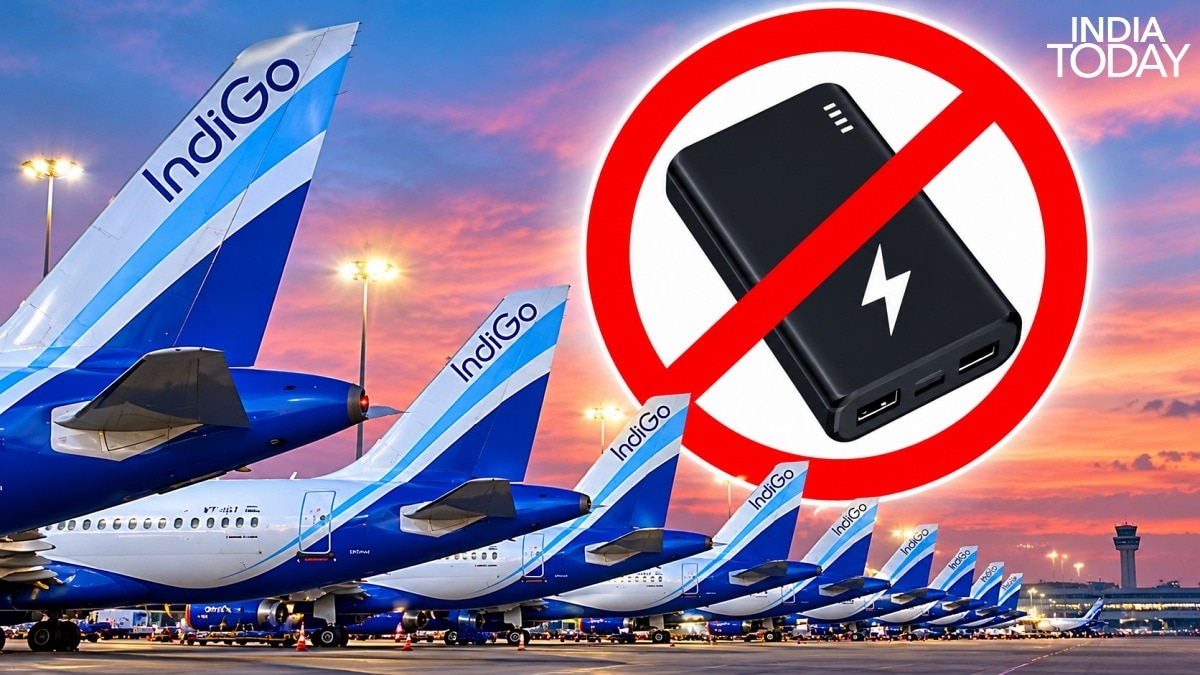
An IndiGo Delhi-Chennai flight was diverted to Hyderabad after smoke was detected from a passenger's personal electronic device. The incident has renewed focus on how failing lithium-ion batteries can become a fire hazard in flight.Airlines impose stricter restrictions on them, particularly prohibiting their carriage in checked-in baggage. (Photo: India Today)New Delhi,Oct 13, 2026 11:58 ISTAn IndiGo flight operating from Delhi to Chennai was diverted to Hyderabad on Sunday after smoke was detected from a passenger's personal electronic device onboard the aircraft, once again highlighting the fire risks associated with lithium-ion batteries during air travel.Flight 6E 6115, operating on October 11, 2026, landed safely at Rajiv Gandhi International Airport in Shamshabad, Hyderabad. IndiGo said the cabin crew responded promptly and brought the situation under control.While power banks are commonly used to charge smartphones and other devices, airlines impose stricter restrictions on them, particularly prohibiting their carriage in checked-in baggage.The reason lies in how lithium-ion batteries behave when they fail, overheat or suffer internal damage. INDIGO FLIGHT scary FIRE on 6E -6115 , Delhi - Chennai Route on 11th October. Fire breaks on overhead Cabin luggage zone of Passanger from a Power-Bank device of Passanger. Pilot diverted to Hyderabad International airport as precautionary landing. Another concious & instinctive reaction of the passanger save the airplane from major Inflight fire Accident. @icao @MoCA_Ind @PIB_India @aviationWeek @MoCA_Ind @airmainengineer @BcasHq @atcguildindia @DelhiAirport @HyderabadAirpo1 @Indian_Aviation— Capt. B. Parthosarothy (@pilotpartho) October 11, 2026 WHAT MAKES POWER BANKS DANGEROUS?Most modern power banks contain lithium-ion or lithium-polymer battery cells. These store substantial amounts of energy in a compact space through electrochemical reactions. Under normal conditions, the process is controlled and safe.However, a manufacturing defect, physical damage, overcharging or an internal short circuit can trigger a dangerous chain reaction called thermal runaway. During thermal runaway, a battery generates heat faster than it can dissipate it. Rising temperatures accelerate chemical reactions inside the cell, potentially releasing flammable gases, smoke and intense heat.The battery can ignite and, in some cases, neighbouring cells can also catch fire. The battery can ignite and, in some cases, neighbouring cells can also catch fire. (Photo: Getty) Manufacturing defects can include microscopic metal particles contaminating the cell, damaged separators between electrodes, poor-quality materials or flaws introduced during assembly. Such defects may remain undetected until the battery is used, charged or exposed to particular operating conditions.WHY CHECKED-IN BAGGAGE IS RISKIERPower banks are generally prohibited in checked baggage because a battery fire inside the cargo hold could go undetected for longer.Although aircraft have fire-detection and suppression systems, lithium-battery fires can be difficult to extinguish and may reignite. Keeping spare batteries in the cabin allows crew members to detect smoke and respond more quickly.Smartphones also contain lithium-ion batteries, but they are not treated identically to spare power banks. Phones are integrated electronic devices with battery-management systems and protective circuitry. Commercial aircraft cabins are pressurised, but cabin pressure is lower than at sea level. (Photo: Getty) They are generally permitted in both cabin and checked baggage under applicable rules, although carrying them in the cabin is preferred. Damaged or recalled devices remain a concern.DOES CABIN ALTITUDE AFFECT BATTERIES?Commercial aircraft cabins are pressurised, but cabin pressure is lower than at sea level. Lower pressure can influence heat transfer and the behaviour of gases released by a failing battery.However, there is no simple rule that ordinary cabin altitude makes every lithium-ion battery more likely to catch fire.The principal risks remain internal defects, damage, overheating and electrical faults. Lower pressure may affect the consequences of a battery failure, but it is not the primary cause of most battery fires.The lesson for passengers is clear: carry power banks in cabin baggage, protect them from damage and never use a swollen or overheating battery.A small device that safely charges a phone on the ground can become a serious aviation hazard if its battery fails in flight.- Ends
Why airlines fear power banks: The science behind lithium battery fires
Full Article
Original Source
Read the full article at Indiatoday →KhanList aggregates and links to publicly available news content. We do not host full articles from third-party sources. Always verify important information with original sources.