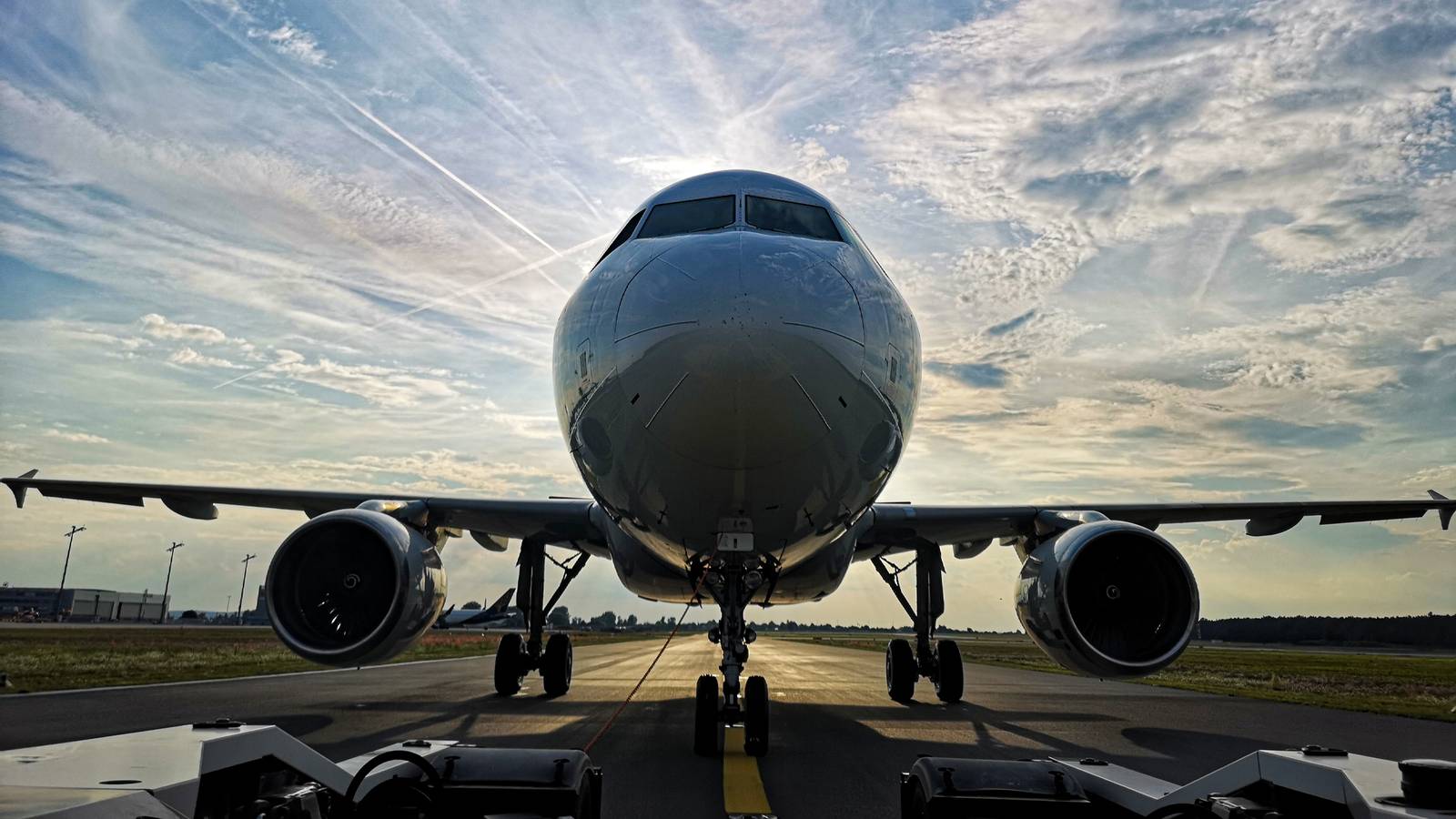
Published Jul 19, 2026, 5:00 PM EDT Airline and Airport Management Graduate, Student Commercial Pilot and Commercial Aviation Writer. Based in London & Nagoya Passengers looking out of a terminal window or the cabin window of a modern Airbus A320 might occasionally notice a quiet, unexpected sight as the aircraft maneuvers toward the terminal or pushes back from the gate. A completely stationary fan blade can often be seen, while the opposite engine hums with operational power. This guide explores the engineering, operational logic, and hidden systems behind single-engine taxi procedures on the A320 family and why this even happens in the first place. For some time, this technique was treated as an operational afterthought, practiced primarily by ultra-low-cost carriers or during severe airport delays. However, as operating costs and environmental pressures have intensified, what was once a minor efficiency trick has transitioned into a core element of modern airline operations. A Recommendation Becoming Standardized Credit: Shutterstock Now that single-engine taxiing has gone from an optional cost-saving maneuver to an industry-wide default standard, it is clear that the mindset for cost savings has become even more aggressive. For years, manufacturers designed twin-engine passenger jets under the operational assumption that both powerplants would run from pushback to gate arrival. However, as flight operational data proved the safety and viability of ground operations on a single engine, Airbus took the remarkable step of restructuring its official pilot documentation. Rather than leaving the decision up to the discretion of individual airlines, the European airframe manufacturer promoted the single-engine taxi-in procedure from the Supplementary Procedures chapter of the Flight Crew Operating Manual to the Standard Operating Procedures chapter. The documentation shift effectively rewrote the baseline operating philosophy for thousands of crews worldwide, all through making one-engine ground transit the default factory recommendation. Airbus's reorganization was much more than a cosmetic update and required regulatory coordination and a complete reassessment of flight deck task sharing. Airlines quickly integrated these manufacturer recommendations into their own company manuals. For line pilots, this meant that the traditional post-landing flow became very different from before. Today, unless specific environmental or mechanical factors forbid it, shutting down Engine Two during taxi-in is as routine as dropping the flaps or turning on the taxi light. Why Not Use Both Engines? Credit: Shutterstock So, where does the motivation behind taxiing on one engine actually come from? In reality, a lot of the decision comes down to the microeconomics of ground fuel burn. Aircraft engines are highly optimized for high-altitude cruise, meaning their efficiency at sea-level idle is incredibly poor. A standard A320 operating both powerplants on the ground at idle thrust burns fuel at a rapid rate, leading to significant wastage during long airport congestion queues. By shutting down one engine, pilots can cut this idle fuel consumption nearly in half. On average, an A320 saves approximately 8.8 pounds (four kilograms) of jet fuel for every single minute it operates on one engine rather than two. When scaled across a massive global fleet operating hundreds of thousands of flights annually, these seemingly minor minute-by-minute savings compound into massive economic and environmental reductions. These cumulative efficiency gains completely reshape the carbon footprint of short-haul airline operations. Critics often dismiss operational changes on the ground as minor compared to high-altitude cruise emissions, but flight data analytics reveal a different reality. When airlines reduce their ground fuel burn, they not only save millions of dollars in direct operating costs, but they also significantly lower emissions at the airport level, improving local air quality. Plenty Of Power Available Credit: Shutterstock What often becomes an interesting point of discussion is how a single engine can safely maneuver a fully loaded passenger aircraft weighing up to 171,960 pounds (78,000 kilograms) without causing excessive strain. Immense static thrust produced by modern turbofans, specifically the CFM56 and its successor powerplants are more than plenty for getting the airliner moving. These powerplants are not small, low-thrust regional turbines, and they possess significant raw power even at idle. The CFM56-5B engines installed on the A320 family produce a massive thrust of 27,000 pounds (120 kilonewtons). This high idle thrust means that once the aircraft is in motion, the residual power from a single running engine is more than sufficient to keep the airliner rolling at a standard ground speed of 15 to 20 knots. In fact, pilots often have to apply the brakes periodically on a single-engine taxi because the idle thrust of one CFM56 is still strong enough to accelerate the aircraft on flat ground. The unique thrust profile allows the A320 to avoid the time-cost penalty that plagues smaller, lower-thrust regional jets. When a lower-thrust aircraft attempts to taxi on one engine, the flight crew is often forced to apply high breakaway thrust to overcome static friction, which dramatically increases fuel burn and generates a hazardous high-velocity jet blast in the ramp area. The A320, by contrast, can break static inertia cleanly with minimal throttle input, making single-engine taxiing a safe and highly practical reality on busy, congested taxiways. A Crucial Upgrade Credit: Shutterstock Shutting down an engine on the ground seems like a straightforward way to save fuel, but it introduces a major system integration challenge. Although automatic bus ties and power transfer systems allow a single operating engine to cross-feed electricity and hydraulic pressure to the entire aircraft, they cannot supply pneumatic air conditioning or full system redundancy without the aid of the Auxiliary Power Unit. To keep the cockpit screens alive, the cabin lights on, and the air conditioning running, pilots traditionally had to keep the Auxiliary Power Unit running. The APU is a small gas turbine engine located in the tail cone of the fuselage. While it is smaller than the main engines, it is still a fuel-consuming turbine that burns roughly 277.8 pounds (126 kilograms) of fuel per hour. Constant consumption from the APU means a portion of the fuel saved by shutting down a main engine is immediately burned away by running the APU. Through modifying the engine fire extinguishing circuits, the Single Engine Taxi Without APU (SETWA) upgrade allows both fire bottles to be powered by the battery buses, enabling safe single-engine taxiing with the APU off. It means the flight crew can safely taxi with the APU completely switched off, keeping cabin ventilation active and protecting the aircraft's fire detection circuits. Being able to operate without the APU opens up the full environmental potential of ground efficiency, saving plenty of fuel and cutting a substantial amount of carbon dioxide annually for every upgraded airframe. When An Engine Gets Too Hot Credit: Shutterstock To safely run through a single-engine taxi after landing, flight crews have to manage the intense physical and thermal limits of jet engine construction. When an aircraft touches down and exits the active runway, its powerplants have just spent several hours operating at extremely high temperatures. Instantly shutting down an engine the moment the aircraft exits the runway would cause severe, permanent damage to the turbine core. The damage occurs because of a thermodynamic phenomenon known as rotor bow. When a hot engine is shut down too quickly, the residual heat rises to the top of the engine casing, while the cooler air settles at the bottom. This uneven temperature distribution causes the central rotor shaft to warp or sag slightly. If the pilot attempts to restart a warped shaft later, the compressor blades can rub against the outer casing, causing severe internal structural damage. To prevent this distortion, the CFM56 engine requires a mandatory three-minute thermal stabilization period at idle thrust before it can be safely shut down. Pilots must carefully manage this timeline during the transition from flight to ground operations because any lapse in judgment will cause a lot of headaches for operations and maintenance teams. New Technologies On The Horizon Credit: Shutterstock The passenger cabin experience undergoes a subtle but noticeable transformation the moment a flight crew initiates a single-engine shutdown. As the electrical load transfers and the pneumatic pressure adjusts, the sudden decrease in ambient noise is accompanied by a brief fluctuation in the cabin air conditioning flow. For many frequent flyers, this momentary change in cabin climate and the distinct hum of the backup power systems are the only indicators that the aircraft is navigating the taxiway with half of its primary propulsion deactivated. This minor operational compromise is a small price to pay for a massive reduction in airport ground emissions. Saving several pounds of fuel is a key objective for modern airlines, but pilots are still trained to immediately abandon the procedure if ground conditions deteriorate. The final authority always rests in the cockpit, where a captain must assess variables like wet asphalt, busy taxiway crossings, or tight gate entries before deciding to cut an engine. Ultimately, it is this balance of human oversight and technical flexibility that ensures that efficiency gains are only realized when the operational margin remains entirely secure. The practice of using high-thrust turbofans to move passenger aircraft on the ground may eventually become obsolete as new technologies emerge. Aerospace engineers are actively developing and testing electric taxi systems, which utilize small electric motors built directly into the landing gear wheels to maneuver the aircraft. These electric drives, powered entirely by the auxiliary power unit, would allow aircraft to taxi from the gate to the runway threshold with both main engines completely silent. Technology like this has not yet come into widespread use, and so, the single-engine taxi will remain the most effective tool for pilots to reduce emissions and control operating costs one minute at a time.
Why Airline Pilots Deliberately Shut Down An Airbus A320 Engine While Taxiing
Full Article
📰 Original Source
Read full article at Simpleflying →KhanList aggregates and links to publicly available news content. We do not host full articles from third-party sources. Always verify important information with original sources.