
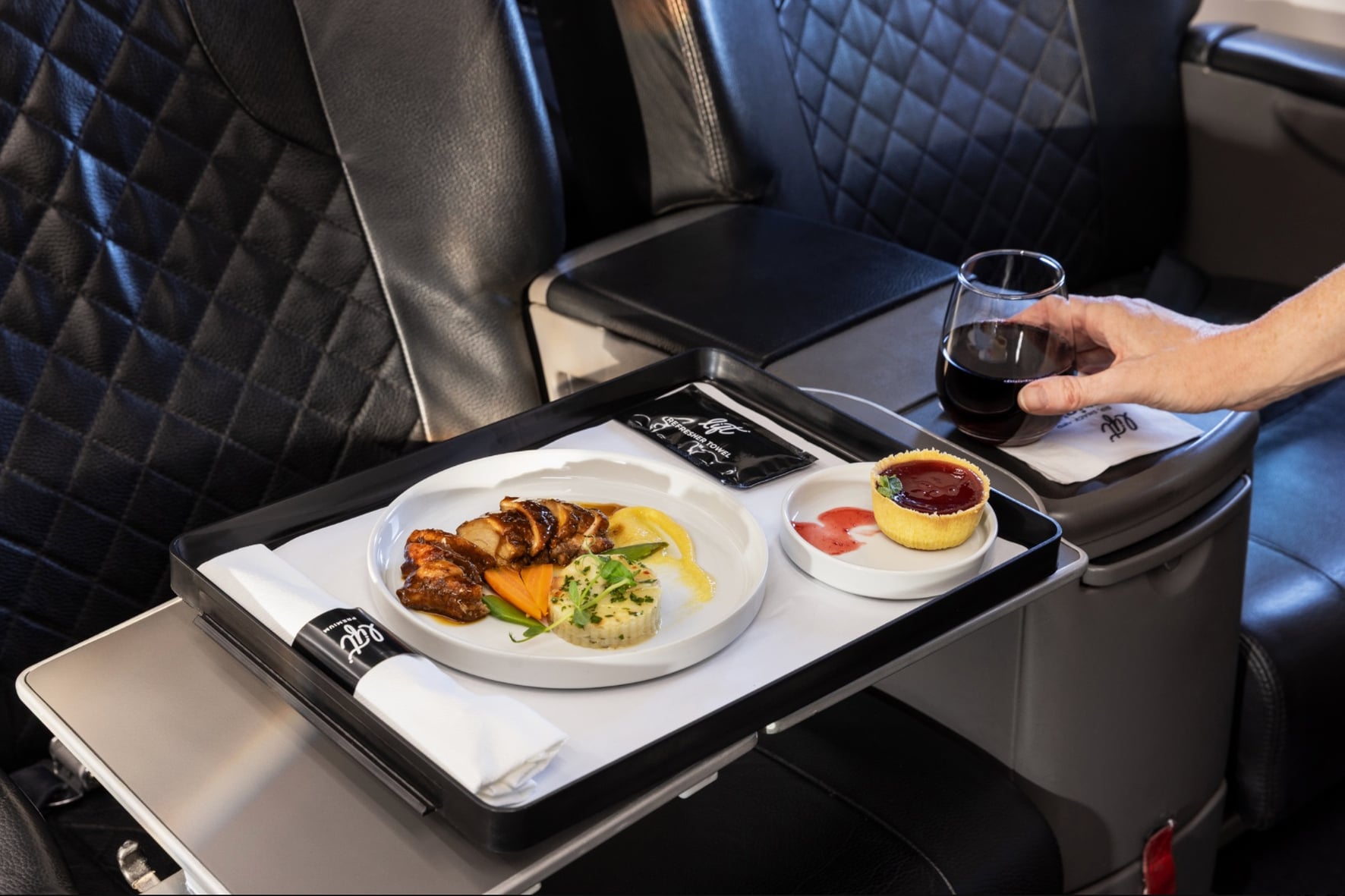
Taste changes at altitude, too, and Van der Westhuizen said airline meals require stronger seasoning. Airline food was never really the Mile High Club of travelling. Stale sandwiches, pap lettuce, and watery veggies with something that used to look like a scone. That was that, and in-flight dining has often been the butt of jokes, for good reason. But airlines are upping the ante, and what passengers get served at 35 000 feet seems to be changing. Several carriers are turning to food as another way of competing for passengers. Local airline Lift has introduced a new summer menu, while Qatar Airways has enlisted a leading African chef to bring the continent’s cuisine to international skies. It’s not as easy as it sounds, though. Behind every meal is a demanding business where flavour, freshness and getting food onto aircraft on time are equally important in a value chain that’s quite complex. Even for stale sandwiches or, these days, gourmet snacks. Siyathemba Catering, which supplies onboard meals to Airlink and recently developed Lift’s new menu, produces approximately 300 000 meals monthly. It’s a lot of food, seriously. And that’s only one company. Airlines now compete on food, too The caterer’s general manager Noel van der Westhuizen said preparing food for aircraft is very different from cooking something that will be eaten immediately. “Anybody can bake a muffin and have it taste awesome for the next two hours. The trick is how you prepare it and the ingredients you use to make it stay fresh for 24 hours in the fridge and still be fresh the following day,” he said. Taste changes at altitude, too, and Van der Westhuizen said airline meals require stronger seasoning. Recipes are tested after refrigeration rather than immediately after preparation, because ingredients behave differently over time. “We will make a meal and only taste it tomorrow to see how it holds up. It’s continuous tasting. Research and development, in short,” he said. African fusion cuisine on Qatar Airways. Picture Supplied African fusion cuisine on Qatar Airways. Picture Supplied Qatar Airlines chef Chef Dieuveil Malonga. Picture Supplied Fresh tomatoes are avoided because their moisture can make meals soggy. Sun-dried tomatoes are used instead, while cucumbers are deseeded and mozzarella is generally reserved for sauces. Cream cheese serves another purpose beyond flavour. “We only put cream cheese on our breads. It seals off the sandwich, improves the taste and adds to the product’s longevity,” Van der Westhuizen said. “These are small things we’ve learned over more than twenty years. We’ve paid our school fees.” Eight months into its partnership with Siyathemba, LIFT has rolled out its new summer menu. And it is delicious. Many of the meals are now served hot, and it’s almost worth the price of a ticket just to taste the Beef Pot Pie. It’s moreish, alongside other favourites like fillet steak, chicken biryani, cheese tortellini with butternut and feta, and desserts such as Biscoff-inspired milk tart. Try Lift’s Beef Pot Pie Internationally, Qatar Airways has taken a different approach to its premium dining experience. It has appointed chef Dieuveil Malonga as the first African participant in its Flavours to Fly For programme. Malonga has worked in six Michelin-starred restaurants and travelled through 48 African countries, developing an Afrofusion cooking style combining traditional ingredients with contemporary techniques. His signature dishes will feature on selected routes. But competing for the tummies, hearts and minds of travellers is a logistical mountain to summit, every flight. Siyathemba employs close to 300 people and operates around the clock. Its weekly purchases include 800kg of cream cheese and two tonnes of chicken breast. Multiply that by the suppliers, farmers, airlines and other catering companies involved, and the economic contribution of that seemingly ordinary in-flight sandwich begins to look rather substantial. Imagine the logistics behind gorgeous in-flight meals. Picture: Supplied Van der Westhuizen said the biggest challenge is often not preparing meals but delivering them. Siyathemba services around 130 departing flights daily, with schedules, passenger numbers and aircraft delays constantly affecting operations. “Making the food is the easy part. Getting it on time to the aircraft is a little bit more technical,” he said. Some airlines provide final passenger numbers only shortly before departure, leaving the caterer approximately 55 minutes to adjust quantities and deliver meals. “In certain cases, we have to re-cater flights, so you have to take from another flight that’s scheduled later and quickly start from scratch. It’s never-ending,” he said. Van der Westhuizen said operations continue around the clock, with production and deliveries keeping hundreds of employees occupied. “From four o’clock in the morning until ten o’clock at night, it’s 120 kilometres an hour,” he said.
Why airline food may not suck anymore
Full Article
Original Source
Read the full article at Citizen →KhanList aggregates and links to publicly available news content. We do not host full articles from third-party sources. Always verify important information with original sources.