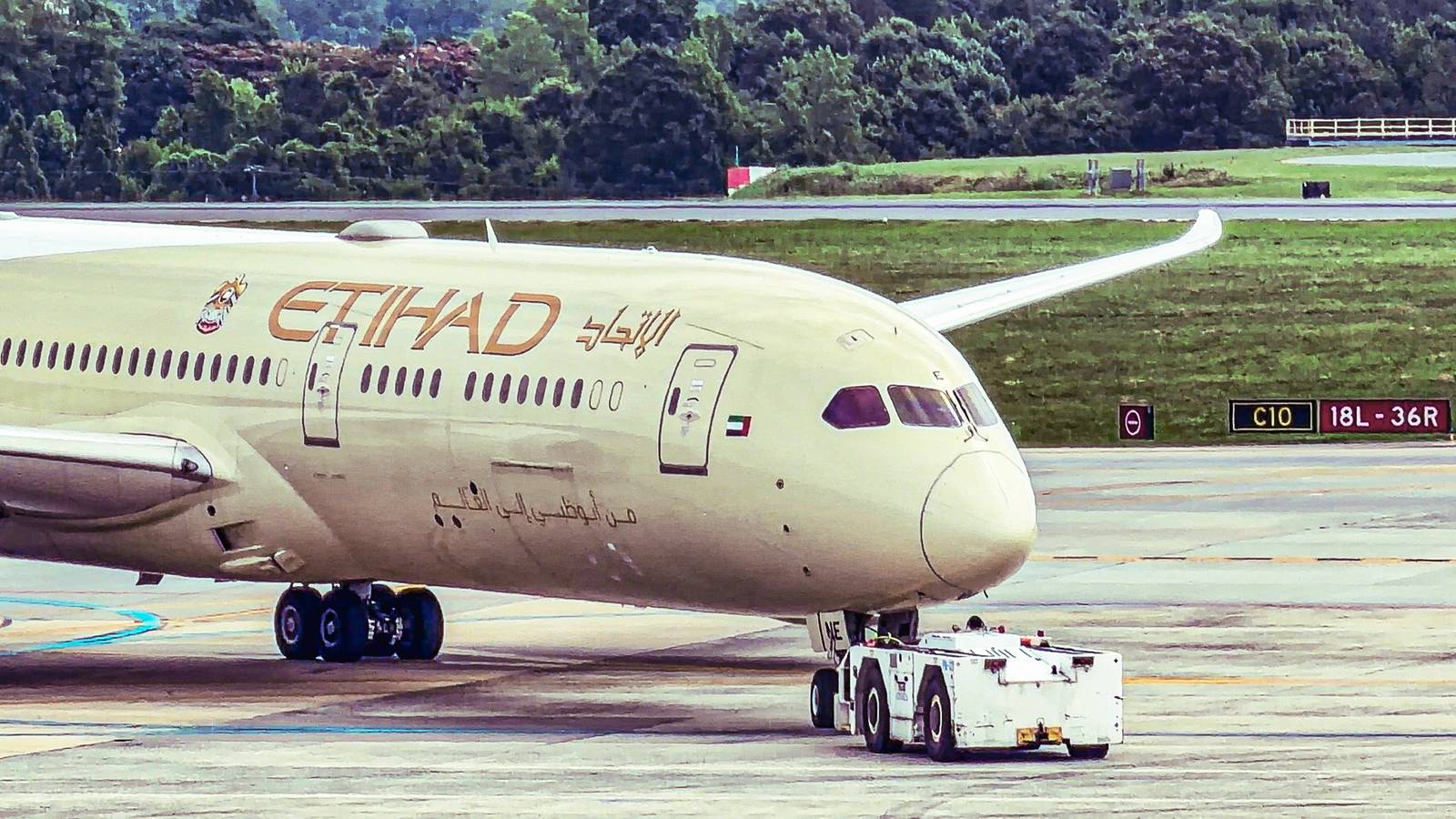
Published Jul 19, 2026, 10:00 AM EDT Josh is an Aviation Journalist and lifelong aviation enthusiast who's now turning that passion into a career. From watching planes and playing flight simulators at a young age to now sitting in the cockpit, Josh has always been drawn to the world of flight. Currently training to become a commercial pilot, Josh aims to make aviation interesting and accessible to everyone, whether you're in the industry or simply passionate about aviation. Now actively building a career in Aviation, Josh is focused on telling stories from inside the aviation world, stories shaped by firsthand experience, curiosity, and a genuine love of all things that fly. When aircraft deliveries are suspended, the public usually assumes the underlying issue is obvious and substantial: an engine problem, a significant structural irregularity, or another defect that can be readily seen and understood. Few would expect the trigger to be a manufacturing deviation measuring just 0.005 inches (0.13 mm) wide, roughly the thickness of a human hair. However, that is precisely the scale of some of the manufacturing deviations that repeatedly interrupted deliveries of the Boeing 787 Dreamliner between 2020 and 2023. The consequences were enormous, with years of production disruption and roughly $2 billion in abnormal costs reported by AirInsight. The story, however, extends well beyond Boeing. The 787 represents one of the aviation industry's biggest technological shifts since the introduction of the jet engine. With approximately 50% of its structural weight made from carbon-fiber reinforced composites, the Dreamliner moved commercial aviation away from construction materials that engineers had understood for almost a century. In doing so, it exposed a challenge that every future composite aircraft will face: determining how microscopic manufacturing imperfections behave after decades of pressurization cycles when there is only around 15 years of operational experience to draw upon. When The Width Of Human Hair Becomes An Engineering Problem Credit: Boeing Modern commercial aircraft are built to extraordinarily tight tolerances, but the Dreamliner demonstrated just how unforgiving those limits can be. Aviation Week reported that some of the production issues involved deviations of only 0.005 inches (0.13 mm), a dimension that would seem insignificant in almost any other industry. However, in aerospace manufacturing, where structural loads are carefully distributed across every joint and panel, even microscopic changes can alter how stresses move through an airframe. Unlike a cosmetic flaw, these deviations occurred in critical fuselage join areas where multiple composite sections meet. Engineers discovered combinations of slightly uneven surfaces and structural shimming variations that, while individually acceptable in many cases, required additional analysis when present together. The concern was not whether an aircraft could complete its next flight, but whether those tiny differences might gradually influence structural performance after tens of thousands of flights. That distinction explains why Boeing's deliveries were paused even as Dreamliners already in airline service continued operating safely. Modern aircraft certification is not based solely on whether an aircraft is safe today, but on whether engineers can demonstrate that it will remain safe throughout its entire design life. That philosophy was shaped by hard lessons from the de Havilland Cometdisasters of the 1950s, when repeated pressurization cycles caused metal fatigue. Why Carbon Fiber Changed Everything Credit: Boeing For most of commercial aviation's history, aluminum has been the material of choice for aircraft structures. Engineers understand how metal behaves after repeated loading because they have accumulated almost 100 years of operational experience across millions of aircraft and billions of flight hours. Fatigue cracks, inspection intervals, and repair techniques have all been refined through decades of real-world evidence. The 787 introduced a different approach, with around half of the aircraft's structural weight consisting of carbon-fiber reinforced composites, making it the first widely adopted long-haul airliner built predominantly from advanced composite materials. Boeing used composites for the entire fuselage barrel sections, wings, tail, and many primary structural components, allowing the Dreamliner to be approximately 20% more fuel-efficient than the aircraft it was designed to replace. The lighter structure also reduces corrosion and fatigue associated with traditional metal airframes, contributing to lower maintenance costs over the aircraft's lifetime. Instead of developing visible fatigue cracks like aluminum, composites can experience internal delamination, resin degradation, or localized stress concentrations that are far harder to detect. Because large pressurized composite fuselages have been flying commercially only since 2011, regulators possess a small fraction of the historical evidence available for traditional metal aircraft. That lack of long-term data naturally leads to greater caution. Credit: Flickr Building a composite aircraft is fundamentally different from assembling an aluminum one. Once carbon-fiber sections are cured, they become extremely rigid and retain the precise shape created during manufacturing. Unlike metal structures, which can tolerate small amounts of adjustment during assembly, composite components offer far less flexibility. This means manufacturers must achieve exceptional accuracy when producing and joining large fuselage sections. On the 787, major fuselage barrels are manufactured as single composite sections rather than being assembled from numerous smaller aluminum panels. Manufacturers use detailed measurements and precision-machined shims to correct small variations and ensure adjoining sections fit within design specifications. These shims help create the correct alignment and load transfer between major structural components. However, the process requires extremely tight quality control, as even small differences in surface geometry, gaps, or component positioning can require additional inspection, engineering analysis, or rework before an aircraft can be delivered. For composite aircraft, manufacturing accuracy is not just about producing parts that fit together. Rather, it is about ensuring the completed structure performs exactly as engineers intended throughout its service life. A tiny variation in how those loads are distributed may never create an immediate hazard, but engineers still need to demonstrate that it will remain acceptable after decades of repeated stress. That requirement sits at the heart of the 787 investigations and explains why seemingly insignificant manufacturing imperfections demanded months of engineering analysis. Why Boeing's Quality Issues Became An Industry-Wide Lesson Credit: Shutterstock Public discussion often portrayed the 787 delays as a Boeing manufacturing crisis. While production quality was certainly central to the issue, the broader story was the evolution of aircraft certification itself. Regulators were confronting engineering questions that did not exist when aluminum dominated commercial aircraft design. Over several years, Boeing identified a series of manufacturing non-conformances involving fuselage joins, inner mold line flatness, forward pressure bulkhead gaps, and other composite structures. None of these issues automatically meant the aircraft were unsafe, but each required engineers to demonstrate that structural margins remained intact under the demanding conditions required for certification. Every investigation, inspection method, and repair developed during this period effectively expanded the industry's understanding of composite airframes. Rather than exposing a weakness unique to one manufacturer, the program highlighted the learning process involved whenever an entirely new generation of structural technology enters widespread commercial service. The Ripple Effect On Airlines Credit: Shutterstock Production slowdowns inside Boeing's factories quickly spread throughout the global airline industry. As Dreamliner deliveries stalled, Flight Plan reported that manufacturing output remained at only around five to six aircraft per month, well below Boeing's long-term objective of producing ten aircraft monthly by 2026. Every delayed aircraft forced airlines to revise schedules that had often been planned years in advance. Several operators postponed route launches or retained older Boeing 767 and 777 fleets longer than expected, per CNBC. Maintaining aging aircraft increased fuel consumption, maintenance costs, and operational complexity at a time when airlines were already facing rising demand for international travel. Even carriers with healthy fleets found themselves adjusting expansion plans because replacement aircraft simply were not arriving on schedule. Despite these setbacks, many airlines chose to remain committed to the Dreamliner rather than introduce entirely new aircraft families. Switching to another widebody type would require extensive pilot retraining, additional maintenance infrastructure, and new spare-parts inventories. For many operators, waiting for delayed deliveries remained the more practical long-term decision. The Dreamliner Is Writing the Rulebook For The Future Credit: Shutterstock Perhaps the most important outcome of the 787's manufacturing saga is that it has fundamentally changed how regulators think about composite aircraft. Every engineering review, structural inspection, and manufacturing correction has added to a growing body of evidence that did not exist when the program first entered service. Future aircraft programs, including increasingly composite-intensive designs, are unlikely to face the same uncertainties because the Dreamliner has already generated years of operational and manufacturing data. Engineers now have far more information about acceptable tolerances, inspection techniques, and repair methods than they possessed when the first 787 rolled out of the factory. In hindsight, the Dreamliner's production delays may be remembered less as a Boeing quality crisis and more as a pivotal moment in aviation history. Commercial aviation spent almost a century learning how aluminum ages under repeated stress. The 787 is providing the first large-scale real-world lessons for an era in which carbon-fiber composites will define the next generation of long-haul aircraft. That makes every microscopic defect more than a manufacturing problem. Rather, it becomes another data point in writing the safety standards that future aircraft will follow.
Why A Microscopic Defect Can Ground A Boeing 787 That Has Flown Safely For 15 Years
Full Article
📰 Original Source
Read full article at Simpleflying →KhanList aggregates and links to publicly available news content. We do not host full articles from third-party sources. Always verify important information with original sources.