
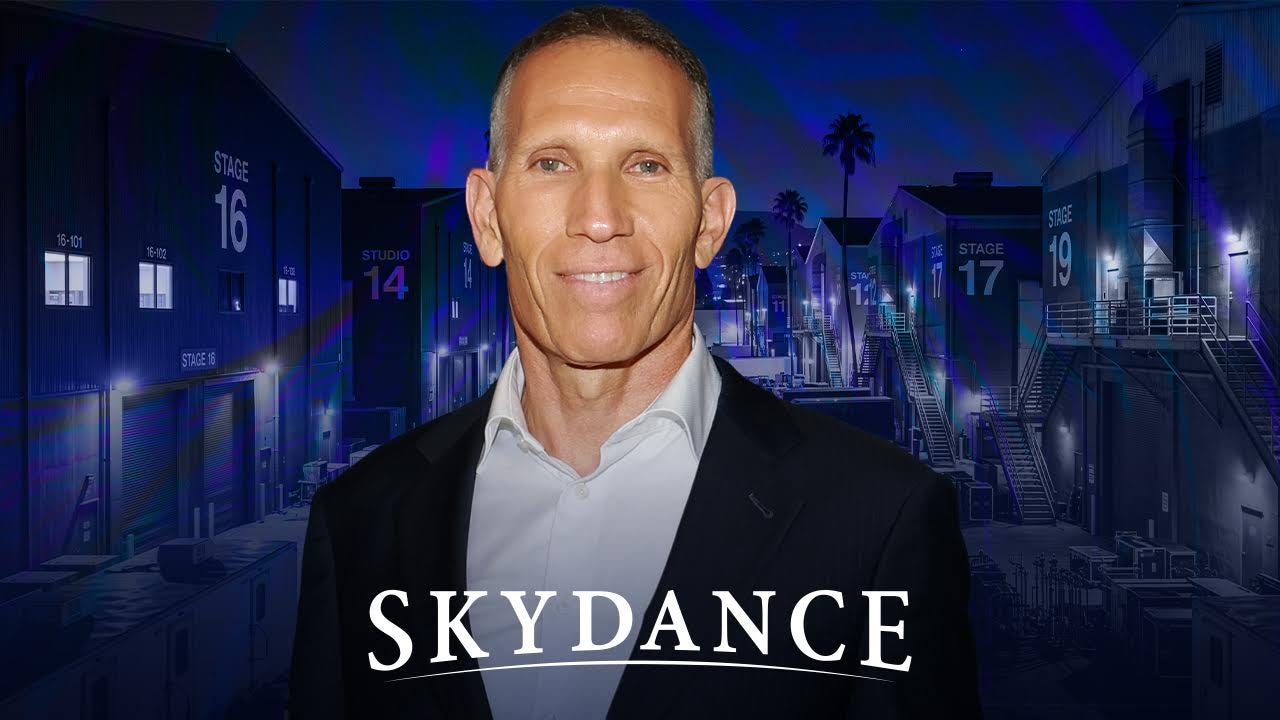
Ynon Kreiz is credited with saving Mattel from a potential financial collapse and transforming the simple toymaker into an IP-driven entertainment company. But can he do it again at an even larger scale with Skydance? Under the new co-CEO structure, David Ellison will focus on the company’s long-term strategy, creative vision and direction, including its talent relationships, strategic partnerships, technology and capital allocation, while Kreiz will focus on day-to-day management and integration of the combined businesses. The stakes couldn’t be higher. Kreiz joins as Skydance begins to integrate two massive entertainment machines, with all the layoffs that come with it, as Hollywood is still trying to get back on its feet after a pandemic, two labor strikes and the devastating cuts from media consolidation that’s come before it. This town could use some new energy. Kreiz, who in his early 60s brings a certain no-nonsense business vibe to the table opposite the 43-year-old Ellison, is expected to tap into the expertise that he’s built through his time at Mattel, where he slashed $1.5 billion in operating costs and thousands of jobs in the turnaround effort, although questions remain about his ability to deliver long-term growth. He’ll be doing so while in a rare co-CEO setup where his partner is the owner and majority shareholder of the company. Experts who spoke to TheWrap touted Kreiz as a “very well experienced” media executive with a “highly relevant” skillset. “He understands restructuring and financial discipline, and knows how to turn established brands into broader intellectual property businesses spanning content, licensing, consumer products and experiences,” PP Foresight analyst Paolo Pescatore told TheWrap. “That is precisely the mindset Skydance needs.” But they also acknowledged that Kreiz will have the pressure of having to execute on a much larger scale than his previous endeavors. “He has to somehow balance substantial efficiency initiatives and cuts with preserving creative output/long-term value, which is a very tough ask in any merger,” Paul Nary, an M&A strategy professor at the University of Pennsylvania’s Wharton School, told TheWrap. “It just so happens that he will do so in an organization that is about 20 times the size of the one he previously ran, vastly more complex and leveraged to the hilt at a rather high cost.” Ellison expressed confidence in his new co-CEO after the apppointment. “In Ynon, I’m adding a partner with strong leadership and the operating firepower this integration demands. It’s a division of labor built on our complementary strengths, with clear reporting lines and it lets me focus where I can contribute most,” Ellison said in a statement on Friday. “We’re like-minded, we see this business the same way and there’s no one I’d rather partner with.” “The industry is at an inflection point, demanding evolution, investment, and a willingness to rethink business models,” Kreiz said. “I look forward to working with the leadership team to build a cohesive global entertainment platform — one that stands out with best-in-class operations and execution powered by technology, with unparalleled creative relationships, production capabilities, and global reach.” Ynon Kreiz, Chairman and CEO, Mattel attends the Los Angeles Premiere of Amazon MGM Studios “Masters Of The Universe” at TCL Chinese Theatre on May 18, 2026 in Hollywood, California. (Photo by Brianna Bryson/WireImage) Those attributes will be critical as Skydance’s leadership team squeezes as much as it can from its numerous business. It has previously projected that the combined company would generate more than $6 billion in merger cost savings in the first three years, with the majority of those efficiencies coming from “non-labor” sources. Still, layoffs are widely expected to be devastating, with a Los Angeles County-commissioned study forecasting that the merger could impact nearly 4,500 local film and TV jobs alone over the next three years, as well as thousands of indirect and induced jobs from related small businesses. While experts said Kreiz’s background navigating media disruption and the Mattel turnaround give him a “credible start,” they warned that finding efficiencies without compromising content quality or editorial independence, diluting the HBO brand or excessive streaming price hikes will be difficult. And he’ll have to do all of that on top of adhering to the terms of a legal settlement with a dozen state attorneys general over the next five years and servicing roughly $80 billion in debt that the combined company will carry. Kreiz and Ellison will outline their vision to the press during a briefing on Tuesday evening. A Paramount spokesperson did not immediately return TheWrap’s request for comment on this story. Who is Ynon Kreiz? Born and raised in Tel Aviv, Kreiz started his career in entertainment as the chairman and CEO of Fox Kids Europe in 1997, a joint venture with Rupert Murdoch’s News Corporation. Disney acquired the company in 2008 and Kreiz left to run the international TV and distribution company Endemol Group as chairman and CEO. In 2012, he would invest in and become chairman of a digital content network called Maker Studios, which was originally conceived as an incubator for YouTube talent. The company was ultimately acquired by Disney in 2014 and Kreiz joined Mattel in 2018 after the toymaker had gone through four CEOs in four years. “Historically, throughout my career, I’ve always been drawn to perhaps maybe more complicated, more challenging situations. I relish the challenge,” Kreiz said in a 2024 interview with LinkedIn. “I believe in stepping into complicated situations and trying to find a way to create or find that economic model that will create value, especially in times where there’s such transition in technology and changing business models.” Under Kreiz’s leadership, Mattel made a major strategic shift from a traditional toymaker to an IP-driven entertainment company. He brought in Robbie Brenner to run the film division, which not only led to the 2023 smash hit “Barbie” but saw Mattel supercharge its IP to produce several adaptations in the works with various studios, including a “Masters of the Universe” film with Amazon this summer that turned out to be a box office flop. Next up for the company is Apple’s “Matchbox” movie starring John Cena, which hits the streamer on Friday. Warner Bros. But as Kreiz will have his hands in plenty of IP as co-CEO of Skydance, it’s worth looking at how he viewed Mattel’s reinvention. “I saw an opportunity to transform the company from being a toy manufacturer to an IP company that manages franchises,” Kreiz told TheWrap at the Grill conference in 2023, fresh off the “Barbie” success. “This is where we realized that the people who buy our product aren’t just consumers, they’re fans. Once you know you have fans, it’s an audience; it changes the conversation.” On the toy side, Mattel ranked number one globally in the dolls, vehicles, and infant, toddler & preschool categories. Hot Wheels is also on track for its ninth consecutive growth year and the company has continued to build momentum in Action Figures and successfully launched Mattel Brick Shop. Additionally, Kreiz oversaw the company’s expansion into digital gaming with the full ownership of developer Mattel163, which initially launched as a joint venture with China’s NetEase. Mattel’s entertainment licenses include Disney Princess and “Frozen,” Teenage Mutant Ninja Turtles, “Toy Story,” “KPop Demon Hunters” and DC, among others. While Kreiz has been credited with executing a cost-cutting plan that turned Mattel’s fortunes around, its stock price has fallen 15% in the past five years and closed at $16.05 apiece on Monday – slightly higher than when Kreiz first joined the company. Though Nary acknowledged that the company’s initial cost cutting seemed successful and financials initially improved, he argued that Kreiz ultimately “did not quite deliver a solid long-term improvement,” pointing to Mattel’s “flat or slightly negative” growth in the latter half of the executive’s tenure. “Mattel really did not capitalize on the success of ‘Barbie’ in the long term and did not repeat the success again with a different IP property,” he said. “Barbie sales are still flat/declining.” Shareholders Southeastern Asset Management and Ariel Investments have called on Mattel’s board to explore strategic alternatives, including an outright sale of the company. A spokesperson for the toymaker told TheWrap it will consider their proposal. “We appreciate Ariel Investments’ longstanding investment in Mattel and their continued engagement,” the company said in a statement. “Our Board of Directors and management team are committed to acting in the best interests of all shareholders and will consider the views expressed in Ariel Investments’ letter, as well as the views of Mattel’s other shareholders.” The Wall Street Journal reported on Friday that the company has attracted takeover interest from Authentic Brands Group, but there is no guarantee a deal will be reached. Mattel declined to comment. Can Kreiz and Ellison make the co-CEO model work? In addition to the pressure to find cost reductions, experts warn that the co-CEO structure could present more challenges than benefits, especially if Kreiz and Ellison disagree on any key decisions. “The risk is that [Kreiz] is not given enough authority. Ellison has shown he intends to remain firmly in control,” Pescatore said. “A co-CEO structure only works if responsibility is matched by real decision-making power. Otherwise, it risks adding another layer of complexity at exactly the point when the company needs to become simpler and faster.” While Ellison claims he and Kreiz are “like-minded,” Charles Elson, founding director of University of Delaware’s Weinberg Center for Corporate Governance, told TheWrap that the co-CEO model adds “a lot of conflict into the picture.” Though entertainment companies like Netflix and Spotify have successfully adopted the co-CEO model, there are plenty of examples in corporate history where it has failed to work. Companies that notably abandoned the model in favor of a single leadership structure include BlackBerry — whose co-CEOs failed to get on the same page and let the iPhone usurp their position as smartphone leaders — Oracle, Chipotle and Salesforce. “Within the organization, who do you listen to? You’re probably going to listen more intently to the person who owns the thing. The question is, will that undermine the co-CEO’s authority within the organization?” Elson said. “Will he be able to do what he needs to do and not be second-guessed by someone else? I don’t know, we’re going to have to see. It’s not an easy spot to be in.” He added that their duties are “inevitably intertwined” and will “bump into each other.” “There’s going to be disagreements and you’ve got egos involved too,” Elson said. “That makes it very difficult, no matter how well you plan it out.” The $80 billion elephant in the room When it comes to the integration, Needham & Co. analyst Laura Martin predicts it will take about two to three years to be completed, citing Warner Bros. Discovery’s “brutally siloed” corporate structure. She also told TheWrap that the company’s cost-cutting will likely be “much more dramatic” than the $6 billion in promised reductions over the next three years. When asked about what Kreiz and Ellison will need to prioritize upon closing, Martin said the most urgent issue will be tackling Skydance’s heavy debt load immediately. “That will be the big investment issue for the stock because the company is starting out at over five times leverage at really high interest rates. For the equity to work, the debt has to start going down ASAP,” Martin told TheWrap. “This company needs to figure out how to survive its debt load for the next 18 months.” In addition to the expected layoffs, Ellison and Kreiz will look to generate cost savings through areas such as merging streaming tech stacks and rationalizing the combined company’s real estate portfolio. Experts told TheWrap they will likely also have to consider potential divestitures of non-core assets. And those efficiencies will have to be balanced with a minimum annual investment of $300 million in domestic film and TV production, as well as $9.5 million in workforce training and career development programs, over the next five years, per the terms of the legal settlement with a dozen state AGs. Within 30 days of the deal closing, the company will also have to establish and make a $5 million annual contribution to a fund to purchase independent films. “There’s a lot to be done to make this merger value-creating rather than value -destroying,” Stefano Bonini, an associate professor of corporate finance at Stevens Institute of Technology, warned. “This can end up catastrophic. It can be the [AOL-Time Warner] merger if it’s not done well.” If Skydance ultimately misses its financial targets, Qualia Legacy Media Advisors managing director Aaron Meyerson told TheWrap the playbook will likely include pulling back on content spend, shelving projects, selling library rights, layoffs and asset sales. But he argued that the real damage of having one less major buyer is already baked in regardless. “Fewer buyers means fewer greenlights, less competition for talent and material, lower fees, and fewer jobs, especially below the line, where people are already hurting from production leaving California,” Meyerson said. “If the combined company stumbles, that contraction just gets deeper.”
Who Is Skydance’s New Co-CEO Ynon Kreiz?
Full Article
Original Source
Read the full article at Thewrap →KhanList aggregates and links to publicly available news content. We do not host full articles from third-party sources. Always verify important information with original sources.