
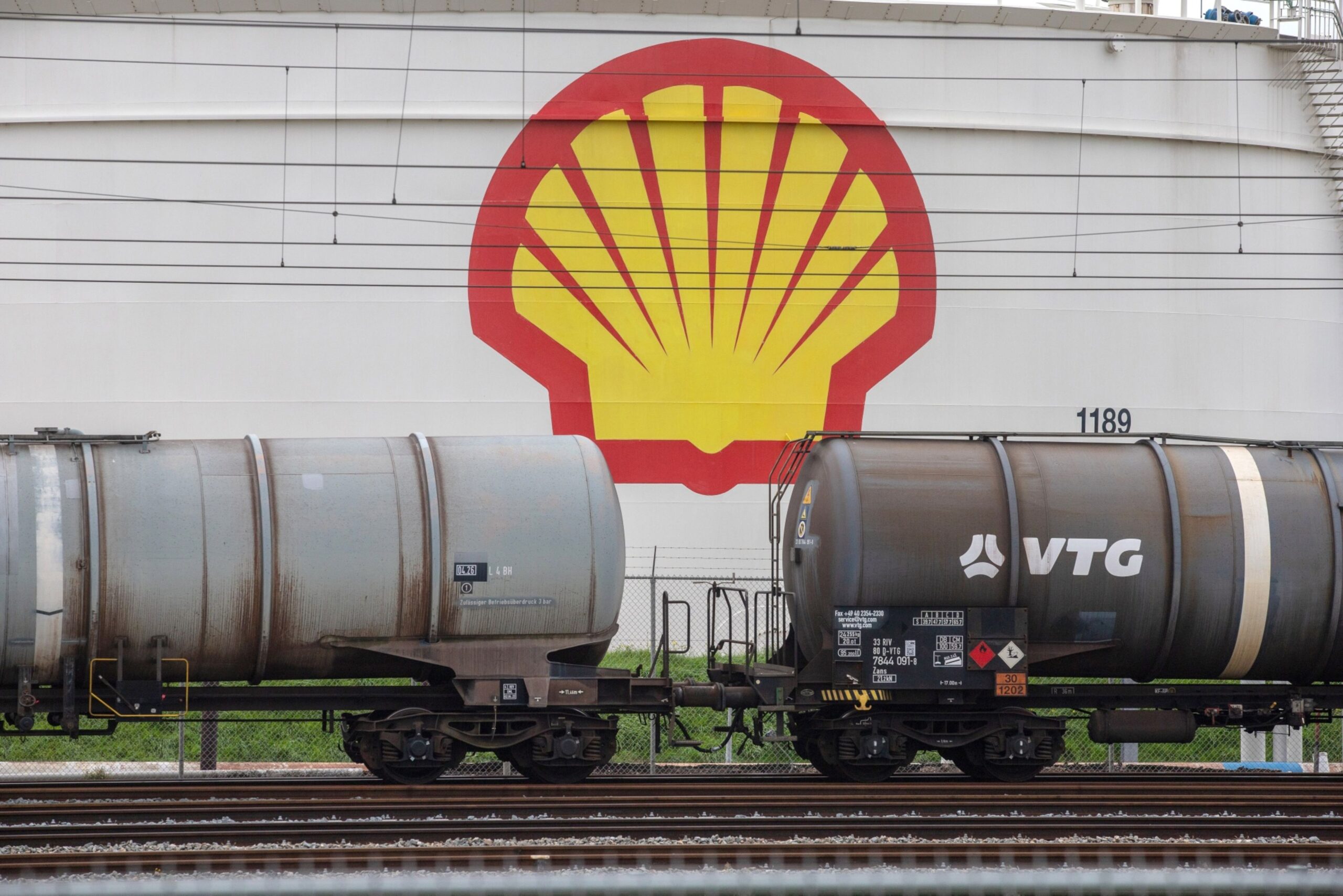
In October, Shell Plc held a “DE&I in Action and World Mental Health” day, focused on inclusion and mental wellbeing. Staff in the US and elsewhere were encouraged to reflect on their experiences at work, to “practice care, courage and curiosity” and to use a special video-conference background to mark the occasion. For an oil major that does business with the US government, the mere existence of the event is notable. At a time when many global companies are downplaying diversity measures, London-headquartered Shell — which counts the US as its biggest country market — is vocal in its commitment to diversity, equity and inclusion, calling it “a key driver for our winning performance culture.” That stance helps Shell comply with global diversity regulations that are non-negotiable for businesses based outside of the US. But it also increases the risk of scrutiny from the Trump administration and conservative activists. Shell’s DEI commitment has become central to legal challenges filed by three current or former employees represented by an activist group co-founded by President Donald Trump’s new Chief of Staff, Stephen Miller. The workers claim to have been discriminated against because they are White, describing a team restructure that favored ethnic-minority colleagues and foreign nationals, as well as a manager who they say gave them “tear jars” as jokey leaving gifts, which they found insensitive. The US Equal Employment Opportunity Commission — whose Trump-appointed chair has urged White men to report workplace discrimination — did not take up the case but gave the trio notice of the right to sue, an administrative step. In March, a judge will review whether one of the cases is ready to proceed to trial, according to court filings. Shell strongly rebuts the allegations, a company spokesperson said, adding that it does not tolerate discrimination and makes employment decisions based on merit and business needs. The business complies with local laws and regulations in countries where it operates, the spokesperson added. Shell also said in a legal filing that the unit the plaintiffs worked for has a long-standing practice of giving departing employees iconic blue-and-white Dutch pottery in recognition of their time at the company. Employment discrimination lawsuits don’t typically threaten large corporations’ core operations or business viability. And people with knowledge of the oil and gas sector said that firms like Shell broadly have good relationships with the Trump administration and more pressing concerns than DEI. Nonetheless, these cases can cause reputational damage, incur legal costs and soak up managers’ time and attention. They also show how Trump’s DEI pushback is being pursued. “We’re seeing more enforcement activity where we hadn’t seen enforcement activity before,” said Samia Kirmani, a Boston-based attorney at Jackson Lewis PC, which focuses on employment law. The EEOC has already stepped up its pursuit of DEI-related cases through policy statements and guidance; notified Fortune 500 companies that it’s prepared to litigate over DEI; filed a lawsuit against a Coca-Cola Co. distributor over a women’s-only retreat and this month settled with Lockheed Martin Corp. over alleged discrimination against White employees related to performance and compensation decisions. While the Democrats’ landslide victory in the midterm elections this month has altered the political landscape, the implications for government actions on DEI remain to be seen. Of the 32 workplace DEI-discrimination lawsuits ongoing across the country right now, most concern White people claiming discrimination, according to New York University’s Meltzer Center for Diversity, Inclusion and Belonging. In addition to the EEOC’s growing appetite for enforcement, there are President Trump’s own executive orders and directives from the Department of Justice to consider, Kirmani said, meaning businesses across the board can’t ignore the prospect of future legal action. Scaling Back In the American workforce, White people hold about 80% of all management roles and have one of the lowest unemployment rates of any cohort. The Trump administration has prioritized fighting what it describes as racism against White workers, barring federal contractors from engaging in “illegal DEI.” In response, companies like McDonald’s Corp. and Ford Motor Co. have scaled back their inclusion efforts. Meanwhile, Shell, which is among the world’s largest energy companies and is enjoying healthy financial growth after several years of cost-cutting, has continued to set measurable global diversity targets, although it does not target specific numbers in the US. It aims for women to hold 40% of global senior leadership positions by 2030. It maintains a Global Council for Race — a group of senior Shell leaders aiming to advance workforce diversity, who do not make individual employment decisions — and supports employee groups focused on race and ethnicity, as well as LGBTQ+ and disability inclusion. In the UK and European Union, where diversity rules mainly focus on gender rather than race, companies are required to meet targets and follow disclosure rules around things like board diversity, gender pay gaps and pay transparency. Countries including Japan and Australia also impose diversity regulations on corporations. To operate in these jurisdictions, US companies must meet these requirements too, regardless of their approach at home. Measures like holding DEI events aren’t specifically covered by these regulations. But the oil and gas industry often struggles to bring in women and needs to maintain a balanced global workforce to do business in many countries, said Alison Taylor, a clinical associate professor at New York University who focuses on corporate responsibility and business ethics. “They tend to operate via moving people around,” she said. In lawsuits filed in Texas, the most recent of them in August, three people who work or have worked in Shell’s US corporate security unit allege that the company violated employment laws. They are seeking back pay, compensation for future lost earnings, benefits and damages from Shell, without specifying a figure. The plaintiffs allege that the oil company favored minority workers at their expense during a restructuring of their division in January 2025 — just as Trump was beginning his second term and when many companies were already scaling back their DEI efforts. Miller’s America First Legal, which lists dismantling DEI as a priority on its website, is also representing White people in cases against corporations including TV network CBS, Meta Platforms Inc. and International Business Machines Corp. “Federal civil rights laws protect every American, and America First Legal is fighting to hold Shell accountable for violating those protections in the name of ‘DEI,'” AFL spokeswoman Alexa Vance said in an emailed statement. “Shell touts its commitment to ‘diversity’ while simultaneously showing high-performing, longtime employees the door because they are White.” Complaints like those against Shell are victories for right-wing groups because they support their broader media campaign and narrative, said Jonathan Feingold, a law professor at Boston University. “Large corporations often have actually pretty shallow commitments to reckon with the way in which misogyny or racism manifest in their institutions,” he said. In his complaint, Thomas Hutt, a former manager in Shell’s corporate security unit, said he was forced to reapply for his role after almost 15 years at the company, during which he received strong performance reviews. Hutt said his manager Wayne Hunt, a defendant in the case, had said he was looking to “diversify the talent.” Hutt said he was ultimately replaced by a Black colleague who, in his view, lacked experience in corporate security, having previously worked in fraud investigations. When he left the job, Hutt said that Hunt gave him a “tear jar” — a small, decorative vessel, supposedly for collecting tears — to mock him. Two of Hutt’s colleagues, Kevin Taylor and Michelle Romak, jointly filed a similar complaint in August last year. They said they were told to reapply for their roles during the 2025 reorganization, while minority employees weren’t. They allege that some minority applicants for jobs within the team got preferential treatment, such as interview coaching. In a formal written response to the allegations dated Oct. 16, 2025, Shell said that a coaching session was to help an employee join its corporate security group, not to prepare them for interviews. Taylor, who still works at Shell, said in the complaint that he was demoted and forced to transfer from company headquarters to another state, while a Hispanic contractor, who Taylor said was under-performing, was given his preferred role. In its response, Shell denied the allegations but accepted that Hunt had approved Taylor’s transfer. Romak was ultimately laid off and said Hunt also gave her a tear jar. The EEOC declined to comment, while the White House didn’t respond to emails seeking comment. Polarized Views During an internal company webcast around the time of Trump’s January 2025 inauguration, Shell Chief Legal Officer Philippa Bounds was asked how Trump’s policies may affect its contracts and said the company was not turning its back on DEI, according to a former employee who declined to be identified discussing internal communications. Shell did not comment on the matter. On employee-review website Glassdoor, Shell ranks 4.1 out of 5 for its DE&I measures. Some employees have also praised the company’s efforts on platforms like LinkedIn, where one employee wrote earlier this year that she was proud to work with “everyone who makes diversity, equity and inclusion real.” But for some former employees in the US, Shell’s approach has been a frustration. One ex-supervisor who worked offshore said he believed staff reductions disproportionately affected White, male workers and that he was compelled to give presentations on LGBTQ issues that he felt conflicted with his Christian faith. The supervisor declined to be identified, citing a non-disclosure agreement. Another former offshore worker, who also asked not to be named, said he believed Shell aimed to make its Whale production platform the most diverse in the Gulf of Mexico and that managers actively sought Black and other minority employees for leadership-development programs. In his view, DEI impacted morale among White, male employees who felt overlooked and unable to voice criticism. As Americans’ perspectives on DEI have become more polarized, the workload for international companies has only increased. “Whenever the wind blows one way, we have one kind of lawsuit, and then when the wind blows the other way, we have another kind of lawsuit,” said Katie Mehnert, who is chief executive officer of Houston-based workforce development company Ally Energy and has also worked at Shell. “It’s just a very disruptive approach to how to do business.” Photo: Photographer: Peter Boer/Bloomberg Copyright 2026 Bloomberg.
White Workers Claiming Discrimination Complicates Shell’s DEI Drive
Full Article
Original Source
Read the full article at Insurancejournal →KhanList aggregates and links to publicly available news content. We do not host full articles from third-party sources. Always verify important information with original sources.