
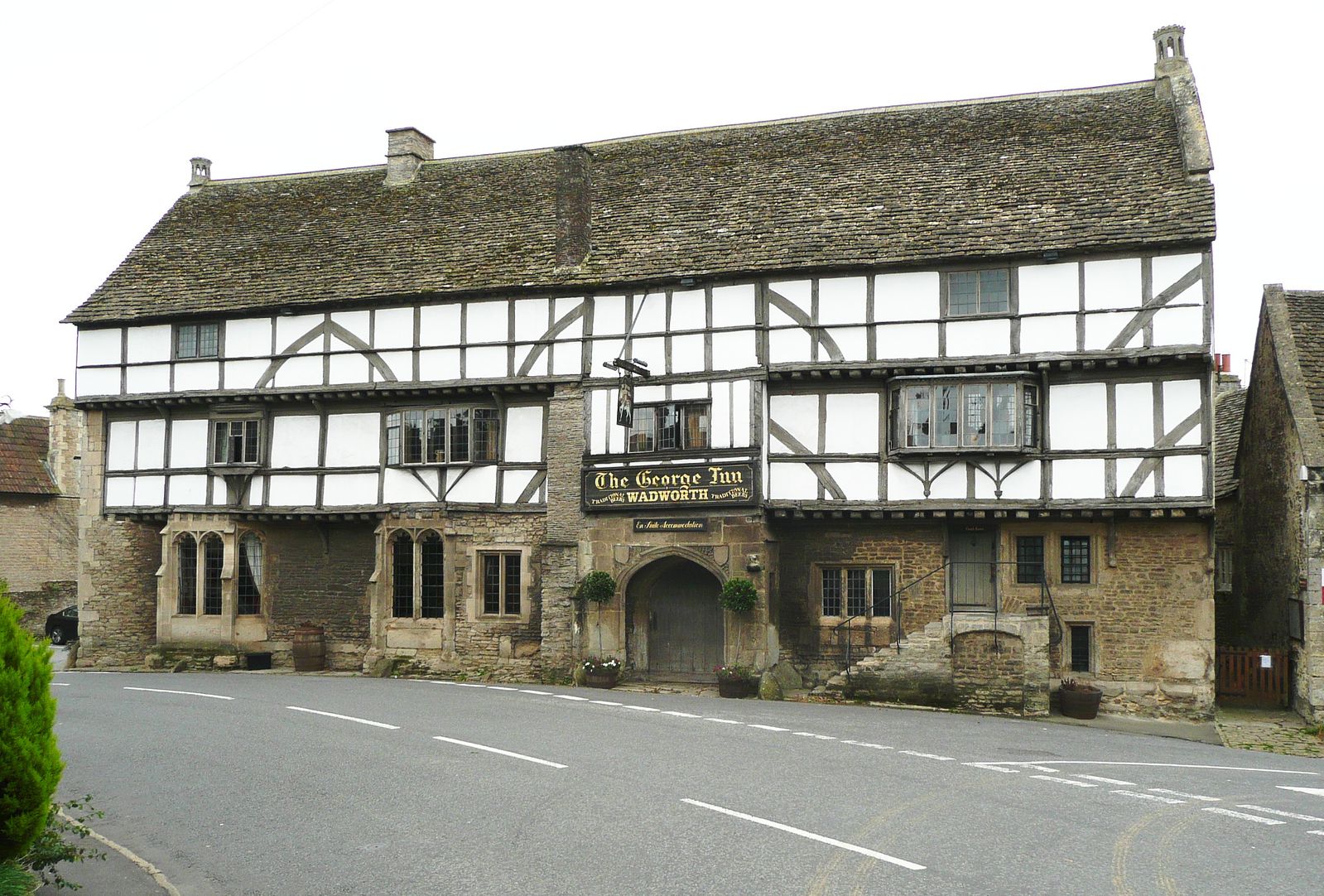
Tree-ring dating shows that a historic tavern in Somerset has been continually operating as an inn since the 1430s, when local monks built it to lodge wool merchants October 30, 2026 11:57 a.m. The George Inn in the village of Norton St. Philip in Somerset has been crowned the oldest pub in England. Humphrey Bolton via Wikimedia Commons under CC BY-SA 2.0 Across England, dozens of historic taverns claim to have poured pints longer than any of their competitors. Yet according to a recent forensic investigation, nearly all those ancient founding dates are myths brewed by shrewd landlords rather than historical reality. The findings follow a comprehensive architectural survey by James Wright, a buildings archaeologist working with Historic England. By analyzing surviving medieval timbers and cross-referencing historic documents, Wright tested the validity of more than two dozen establishments that claim the mantle of England’s oldest pub. “Not one of the claimants to be the oldest pub (and there are over two dozen of them) are even vaguely close to being so in reality,” Wright tells the Guardian’s Helena Horton. To separate legend from architectural fact, Wright relied on dendrochronology, the science of dating through the growth rings of wooden timbers. He believes he has identified the true titleholder of England’s earliest surviving purpose-built inn: the George Inn in Norton St. Philip, Somerset. “The architectural history of the George Inn’s stone and timber suggests that this building has been in continuous service for over 600 years,” he tells the Guardian. “Because we know medieval carpenters didn’t muck around at all, that they would fell the timber when it was green and they would build almost immediately afterwards, the actual date of felling gives us the near-date of construction,” Wright explains in a video for Historic England. “We’re not guessing at its age … Now that’s the difference between a local legend and a national treasure.” The ACTUAL Oldest Pub in England Charo Havermans, a pub historian, echoes the importance of this method. “The strongest claims are when the history meets the science,” she tells the BBC’s Chris Lockyer and Pippa Rifka. The analysis determined that the George Inn’s lower stone walls were constructed in the late 14th century by Carthusian monks from the nearby Hinton Priory. The monks expanded the inn during the early 15th century, adding an imposing timber-framed facade and roof framed with oak cut down between 1430 and 1432. During the Middle Ages, inns differed from everyday alehouses, which sold ale, and taverns, which served wine, per the Telegraph. Purpose-built inns were substantial commercial hubs designed to provide beds, food and stables for traveling merchants. The George Inn served as a central storehouse for the priory’s wool trade and hosted merchants attending regional wool fairs, generating vital lodging fees, storage dues and sales tolls for the monks. Did you know? Storied pub In 1668, diarist Samuel Pepys stayed overnight at the George Inn, noting that it was already “a very old house.” In 1685, the Duke of Monmouth, the illegitimate son of Charles II, commandeered the inn as his headquarters during his ill-fated rebellion. Following Monmouth’s defeat, the inn’s dining hall served as a courtroom for George Jeffreys, the infamous “Hanging Judge,” who sentenced local rebels during the Bloody Assizes. In crowning the George Inn, Wright debunked several famous long-standing contenders. Ye Olde Fighting Cocks in St. Albans, Hertfordshire, has frequently claimed an origin year of 793. However, archival research reveals that the octagonal timber structure was originally built as a monastic dovecote around 1400 and was not licensed as an alehouse until roughly 1807; its early medieval date appeared on a 20th-century tourist postcard. Similarly, the Bingley Arms near Leeds claims a founding date of 953 and an entry in the Domesday Book of 1086. Yet its structure dates to the 18th century. “There are no pubs mentioned—at all—in the Domesday Book, so any pub claiming to be in it is having you on,” Wright tells the Guardian. Even Nottingham’s Ye Olde Trip to Jerusalem, which advertises an 1189 crusade-era pedigree, only first appears in licensing records (under the name “the Pilgrim”) in 1751. Pinpointing the definitive champion has proven so fraught that Guinness Book of World Records retired its entry for England’s oldest pub in 2000, conceding that tracking unbroken historical hospitality across centuries had become impossible to adjudicate, per the BBC. Nevertheless, for surviving buildings specifically constructed as inns that have continuously served travelers, Wright found that only about a dozen medieval structures survive across England. Alongside early rivals like the King’s Head in Shrewsbury and the New Inn in Gloucester, the George Inn stands alone at the front of the line, its 600-year-old timbers anchoring it firmly as a living artifact of English history. You Might Also Like Get the latest stories in your inbox every weekday. More about: Alcohol Archaeology Architecture Beer England Food History Historians Historical Documents History
Where Is England's Oldest Pub? An Archaeologist Drilled Into 600-Year-Old Timbers to Answer the Contentious Question
Full Article
Original Source
Read the full article at Smithsonianmag →KhanList aggregates and links to publicly available news content. We do not host full articles from third-party sources. Always verify important information with original sources.