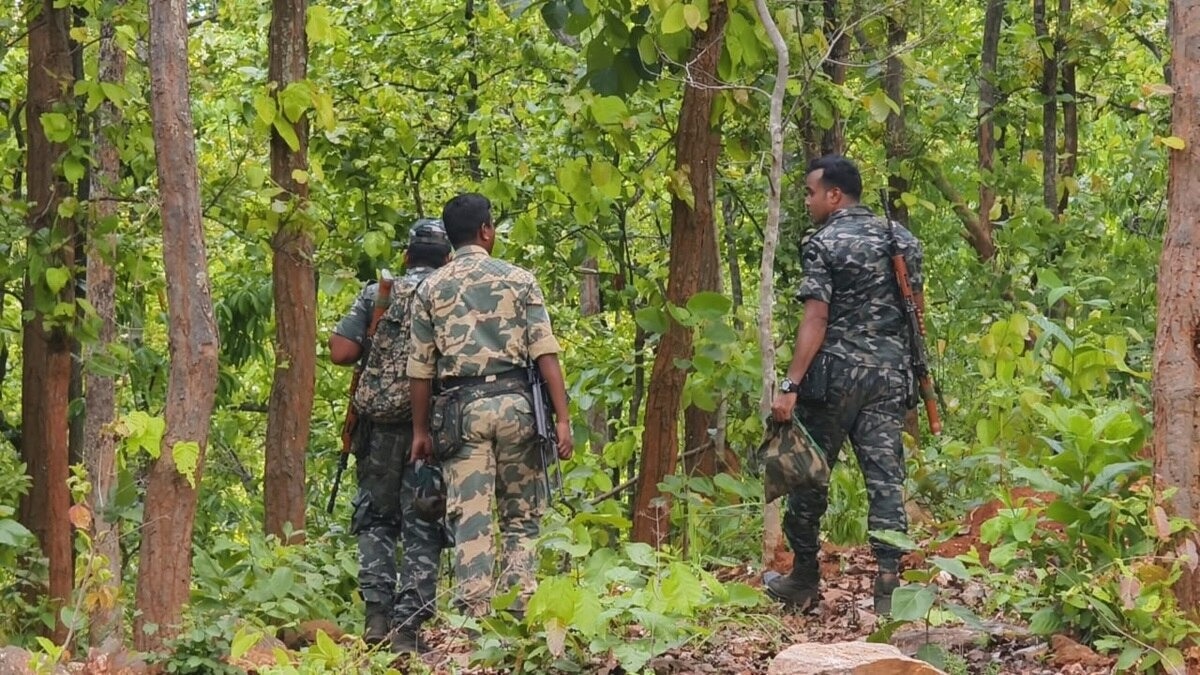
In the forested edge of Chamarajanagar, three families are waiting for an answer far more basic than the political tempest that has followed their bereavement. Antony Swamy, John Rose Peter, and Kumar Sawariyappan were Tamil residents of Hanur taluk. They died in a firing involving Karnataka Forest Department personnel in the early hours of August 15, within the dense, riverine expanse of the Cauvery Wildlife Sanctuary.Karnataka's official account is that an anti-poaching patrol encountered armed men in the dark, faced resistance, and returned fire in self-defence. The families and fellow villagers tell a completely contrary story of men searching for missing livestock. Between these competing versions lies an urgent question that must now be answered with contemporaneous documents, rigorous forensics, and untainted testimony — not regional anger. Three men are dead; everything else, including the labels attached to them, remains strictly subject to proof.The Chamarajanagar tragedy has rapidly travelled far beyond the village settlements from which the deceased belong. It has echoed across the floors of the Karnataka and Tamil Nadu assemblies, landed on the desks of chief ministers, dominated party rostrums, and ignited television debate studios.Leaders in Tamil Nadu have called for a comprehensive investigation, with demands escalating to a Central Bureau of Investigation (CBI) probe. Karnataka has instituted a magisterial inquiry, with Chief Minister D.K. Shivakumar maintaining that the administrative and legal facts must be allowed to emerge through that statutory process. Yet the true centre of this story is not Bengaluru, Chennai, or the familiar gladiatorial theatre of inter-state friction. It is the rural household that must identify a bullet-ridden body, secure a death certificate, navigate complex legal terrain across an administrative boundary, and live with the permanent, agonising uncertainty of how a father, husband, son, or brother met his end in a forest before dawn. A state border changes jurisdiction. It must never diminish a citizen's worth. THREE DEATHS, TWO NARRATIVESThe immediate circumstances surrounding the incident are grave, fraught, and incomplete. The fatal shooting occurred at approximately 5 am in the Hanur Forest Range of the Cauvery Wildlife Sanctuary. The deceased have been identified as Antony Swamy, John Rose Peter, and Kumar Sawariyappan. A fourth man, Joseph Das, was injured and survived, according to statements placed on record in the Karnataka assembly.The Forest Department has said that its patrolling personnel were acting upon specific intelligence regarding wildlife poaching received the previous evening. Officials maintained that after spotting a torchlight and suspicious movement within the sanctuary, they approached the group, issued warnings, and were immediately fired upon. The department claims that country-made firearms and bags containing animal meat were recovered from the scene. Under this narrative, the fatal firing was an act of justifiable self-defence during a high-risk operation in perilous forest terrain. That is an official claim the inquiry must scrutinise; it is not a conclusion the public is obliged to accept without independent verification.Relatives and residents have forcefully disputed the official version. Lourdu Mary, the wife of Antony Swamy, lodged a formal murder complaint against the forest personnel, alleging that the men had ventured into the fringes solely to search for missing cattle. Police subsequently registered a case under Section 103(1) of the Bharatiya Nyaya Sanhita, initiating a formal investigation. The villagers have vehemently rejected the allegation that the men were poachers or that they opened fire on uniformed personnel, demanding an impartial, external investigation.The distance between these two narratives is not a matter for partisan convenience. It is the whole case. The Forest Department's account must be heard with professional seriousness, but it must not be the only account that survives institutional scrutiny.THE ANATOMY OF A FORENSIC INQUIRYA magisterial inquiry has been ordered, and Karnataka's Forest Minister has stated that the process is underway. An inquiry, however, is not established merely by government notification. Its integrity will depend on whether it is visibly independent, structurally insulated from departmental pressure, time-bound, and willing to place its primary findings in the public domain.The central question is not whether protected wildlife areas have a right to be safeguarded. They indisputably do. The Cauvery Wildlife Sanctuary presents an unforgiving operational environment. Forest personnel routinely confront organised poaching networks, timber smugglers, and perilous terrain. Field staff dispatched into such operations deserve adequate training, modern safety equipment, legal protection, and the absolute assurance that the state will defend them when they act lawfully.Yet physical isolation does not create a constitutional vacuum. The forest may be dark. The law cannot afford to be. The more remote the forest tract, the greater the institutional obligation for meticulous documentation, uncompromised forensics, and strict adherence to statutory guidelines.The inquiry must establish the operational sequence with forensic precision. Who received the original intelligence tip-off? At what exact hour was it logged in the general diary? Which specific personnel formed the anti-poaching team? What exact firearms and ammunition were officially issued to them? What wireless or mobile communications transpired before, during, and immediately after the encounter? Who discharged the first round? How many total rounds were fired, at what angles, and from what distances? Were warnings issued, and were there realistic opportunities to disengage, contain, identify, or apprehend the men before lethal force became necessary?Self-defence is a legal justification, not an administrative password. Once invoked after three human deaths, it must be demonstrated fact by fact.If firearms and wildlife meat were recovered, forensic science must be permitted to speak without bureaucratic interference. What was the exact condition of the recovered country weapons? Were they mechanically functional? Had they been discharged recently? What do the gunshot residue tests reveal on the hands of the deceased and the forest personnel? Do ballistics match the recovered projectiles and cartridge cases to specific barrels? Were latent fingerprints and DNA samples lifted from the seized bags and weapons before they were handled?Crucially, was the physical scene immediately cordoned off, sketched, photographed, and videographed before physical evidence was moved? In an encounter disputed from the first hour, evidence cannot merely exist; it must arrive in court with its biography intact.The post-mortem examinations will carry immense evidentiary weight. The trajectory of the bullet wounds, the precise entry and exit points, the presence of powder burns or tattooing that could help establish firing distance, the position of the bodies relative to the shooters, and the nature of secondary injuries will either corroborate or dismantle competing versions.Furthermore, the testimony of the surviving injured man, Joseph Das, is of paramount importance. The inquiry must document where he was apprehended, the clinical nature of his injuries, whether his statement was recorded before a judicial magistrate under Section 183 of the Bharatiya Nagarik Suraksha Sanhita without coercive presence, and whether he has been provided independent legal representation.An injured survivor is not an inconvenient detail in an official press release; he is the principal living eyewitness to the fatal moments in the forest. In every disputed firing, the first casualty is often certainty. The duty of law is to recover it.STATE FORCE AND THE RULE OF LAWThis evidentiary imperative is not a matter of administrative charity; it is anchored in established constitutional principles. The Supreme Court, in its landmark ruling in PUCL vs State of Maharashtra (2014), laid down 16 binding procedural requirements governing deaths in police encounters, establishing that a plea of self-defence cannot be accepted as a pre-investigative conclusion.While those specific directives were framed expressly around police encounters, the constitutional principles underpinning them— prompt FIR registration, independent investigation insulated from the involved unit, preservation of the physical scene, videographed post-mortems by independent medical boards, and immediate ballistic testing of weapons — provide an obvious, compelling benchmark whenever state agents deploy lethal force.Complementing this, the National Human Rights Commission (NHRC) maintains standing protocols requiring that encounter deaths in police action and related state force operations be reported to the commission within 48 hours, followed by the submission of post-mortem reports, inquest papers, and magisterial findings to ensure independent oversight.The statutory powers may differ when the uniform changes from khaki to forest green; the constitutional value of the life taken does not. Statutory authority permits the weapon; it does not place its use beyond the law.When the state takes human life inside a wildlife sanctuary, it must satisfy the exacting standards of strict necessity, proportionality, and public accountability that govern any fatal exercise of sovereign power.THE FAMILIES BEHIND THE LABELSThe vocabulary deployed in the immediate aftermath of an armed encounter often dictates how the dead are perceived by the public. They are swiftly categorised as "poachers", "suspects", "armed trespassers", or sterile statistics in an operational diary.Yet before they became subjects of an official FIR, Antony Swamy, John Rose Peter, and Kumar Sawariyappan were members of rural households and settled communities. They had families, livelihoods, kinship networks, debts, and daily obligations. They were rooted Tamil residents of Hanur taluk, living on Karnataka soil — not nameless trespassers without a local history.This context is vital. Communities living on the periphery of protected forests inhabit complex socioeconomic realities where formal agriculture, informal cattle grazing, minor forest produce collection, and seasonal labour frequently overlap with conservation boundaries. A sanctuary boundary may be precise on a survey map; livelihood at the forest edge is rarely drawn with such geometric confidence.The inquiry must examine whether there was an established history of grazing disputes, prior forest offences, or documented human-wildlife friction in those specific villages. To examine the socioeconomic fabric of forest-edge settlements is not to romanticise forest crime; it is to recognise that rural realities require sociological understanding rather than instant criminalisation.The constitutional status of the dead must be stated unequivocally. The deceased were permanent residents of Karnataka. Their fundamental right to life and procedural justice does not arise because Tamil Nadu claims them culturally; it arises because Karnataka governed them territorially and the Constitution protects them universally. They do not need Tamil identity to qualify for Karnataka’s justice; their Tamil identity merely explains why Tamil Nadu cannot be indifferent.TAMIL NADU'S CONSTITUTIONAL RESPONSIBILITYTamil Nadu has a legitimate duty toward the affected families, but that duty must be executed with constitutional maturity. Karnataka Chief Minister DK Shivakumar is formally correct in asserting that one state cannot usurp the administrative jurisdiction or supervise the statutory police machinery of a neighbouring state.Yet institutional concern across a state border is not unlawful interference when it seeks transparency, due process, and legal protection for Tamil-speaking residents.Tamil Nadu's role is not to annex another state's investigation. It is to ensure that Tamil-speaking families are not left alone and resource-deprived before another state's enforcement apparatus.To achieve this, Tamil Nadu should establish a dedicated legal-administrative liaison team — not an extra-jurisdictional parallel investigation unit — to work directly with the families.This liaison team should formally request certified copies of the FIR, inquest papers, post-mortem reports, and seizure mahazars from Karnataka authorities; provide experienced, independent legal counsel to represent the families before the magisterial inquiry; ensure robust witness protection for villagers and the surviving witness; and insist that the final inquiry report be made fully accessible to the legal representatives of the deceased.This crisis serves as an early test of statecraft for Chief Minister C Joseph Vijay. Having articulated a governing philosophy rooted in non-confrontational federal engagement, the Chief Minister's task is to champion the rights of the deceased without descending into regional grandstanding.The easier politics is to raise the border; the harder statecraft is to cross it without lowering the temperature. Transforming genuine grief into an inter-State political feud serves partisan interests; transforming it into structured legal assistance serves the families.COMPENSATION, RELIEF, AND LEGAL LIABILITYFollowing the incident, the Karnataka government announced Rs 5 lakh in ex gratia assistance to each of the bereaved families, with additional assistance subsequently promised through local legislative channels. Immediate material support is indispensable. A rural household that has lost its primary earner cannot be expected to pause its basic survival while an administrative inquiry winds its way through bureaucracy.However, interim financial assistance must never be conflated with the resolution of legal liability. Ex gratia relief is an immediate humanitarian measure; it does not extinguish the state's accountability if an inquiry establishes the unlawful use of lethal force. Relief is paid because a family cannot wait; liability is decided because justice cannot guess.Financial compensation cannot become a transaction that closes the file on truth. True rehabilitation requires comprehensive support: educational sponsorship for dependent children, sustainable livelihood assistance for the widows, complete medical care for the injured survivor, and unhindered access to the legal process. A compensation receipt cannot answer the enduring question of how three men met their deaths.CONSERVATION, ENFORCEMENT, AND STATE LEGITIMACYKarnataka bears two constitutional obligations that are entirely compatible. It must preserve its forest wealth, enforce the Wildlife Protection Act, and protect its frontline forest staff from armed violence.Simultaneously, it must ensure that its enforcement personnel operate strictly within the boundaries of the law, treating lethal force as a measure of absolute last resort governed by the principles of strict necessity and proportionality.The institutional danger lies in assuming that rigorous human rights scrutiny weakens wildlife enforcement. It does not. When an enforcement agency operates with uncompromised transparency and welcomes independent scrutiny, it strengthens its operational legitimacy.An honest inquiry is not a concession extracted from the uniform; it is the uniform's best defence when the evidence supports it. Accountability does not disarm honest enforcement; it arms it with credibility. If forest guards acted in genuine self-defence under life-threatening fire, an unblemished forensic probe will exonerate them. If excessive or unlawful force was deployed, accountability protects the integrity of the broader conservation service.Significantly, critical questions regarding the Hanur firing have not emerged solely from Tamil Nadu; voices within Karnataka itself have underscored the necessity for an impartial, unhindered probe, demonstrating that procedural justice is not a linguistic monopoly.HISTORICAL SHADOWS: SESHACHALAM AND BORDERLAND MEMORYThe Chamarajanagar–Kollegal forest belt carries a long, turbulent historical memory. For decades, this rugged border terrain was shaped by forest crimes, ivory and sandalwood smuggling, and the protracted, militarised security operations associated with the Veerappan era. That prolonged conflict produced an exceptional security culture among enforcement agencies.Yet the end of an outlaw's reign must not lead to a permanent dilution of standard legal accountability. Emergency habits have a longer shelf life than emergencies. The exceptional security measures of the past cannot be permitted to normalise a lower threshold for the use of lethal force against vulnerable forest-edge communities today.This institutional anxiety is intensified by the historical memory of the 2015 Seshachalam encounter in Andhra Pradesh, where 20 men from Tamil Nadu were shot dead by a specialised task force. Seshachalam must not be imported as evidence into Chamarajanagar; every incident must stand strictly on its own evidentiary merits.Yet Seshachalam inevitably travels as a cultural memory. It explains why the public in Tamil Nadu reacts with swift, deep-seated apprehension whenever Tamil-speaking labourers or forest dwellers die in an armed operation across a State border.This dynamic touches the core of Indian federalism. India reorganised its states along linguistic lines for administrative efficiency and cultural preservation; it did not reorganise citizenship by language. A Tamil in Karnataka, a Kannadiga in Tamil Nadu, or a Telugu speaker in Odisha remains fully protected by the fundamental rights guaranteed under Part III of the Constitution.A state boundary marks where administrative authority changes hands, not where constitutional empathy expires.THE FINAL STANDARDThe Hanur shooting has triggered the predictable reflexes of regional politics: competitive rhetoric in the Assemblies, immediate official justifications, and mutual interstate recriminations.The families in Hanur taluk require a process that is slower, quieter, and infinitely more rigorous. They need the records, the forensics, the survivor's protected testimony, and an inquiry they can trust.Tamil Nadu must stand beside them through structured legal aid and administrative liaison, demonstrating that cultural kinship can express itself through disciplined constitutional assistance. Karnataka must provide a transparent, accountable investigation, demonstrating that its commitment to forest conservation is matched by its fidelity to the rule of law.Justice need not speak Tamil or Kannada. It must speak evidence. The alphabet attached to an inquiry — whether magisterial, CID, or CBI — matters far less than the independence attached to its evidence. Karnataka has the undeniable duty to protect its forest sanctuaries. Tamil Nadu has the legitimate duty to ensure that its linguistic kin are not denied legal justice.Neither constitutional duty diminishes the other. The ultimate test of this tragedy is whether the investigative process produces something far rarer and more enduring than a political resolution: an unvarnished, forensically verified truth that the families, the border communities, and the law can independently examine — and fully trust.- EndsPublished By: Abhishek DePublished On: Aug 19, 2026 14:35 IST
When Tamil identity crosses a state border: The Chamarajanagar test
Full Article
Original Source
Read the full article at Indiatoday →KhanList aggregates and links to publicly available news content. We do not host full articles from third-party sources. Always verify important information with original sources.