
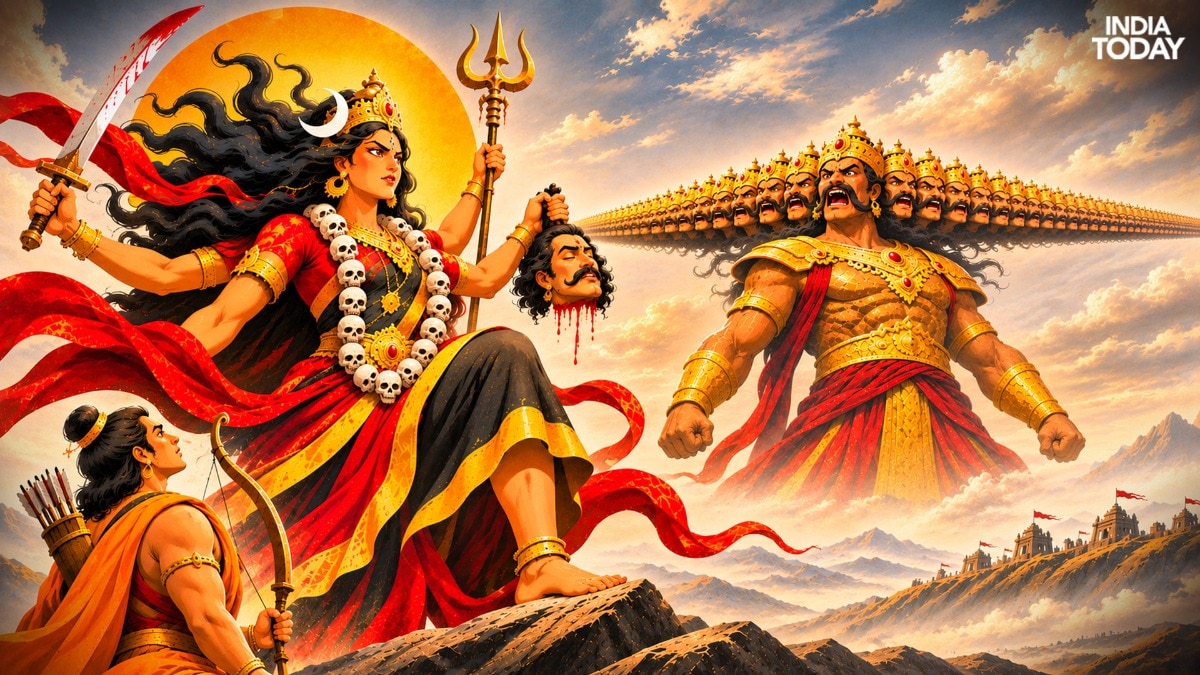
What if Yash Ravana in director Nitesh Tiwari's Ramayana: Rise of a Legend was only the beginning? Do you think Lord Rama’s victory over the king of Lanka brought the greatest battle of the Ramayana to an end? Think again.The ten-headed antagonist is dead. The war that brought Ranbir Kapoor's Lord Rama and his allies to the battlefield has reached its conclusion. The demon who abducted Goddess Sita, played by Sai Pallavi has been defeated, and the familiar story appears to have arrived at its decisive moment.But the Adbhuta Ramayana, on which parts of Nitesh Tiwari's Ramayana are based, introduces an adversary who changes everything. His name is Sahasra Ravana. He is the thousand-headed brother of the ten-headed Ravana, whom Rama has already vanquished. And unlike his more familiar sibling, this demon possesses a power that proves extraordinarily difficult to overcome.The story takes an unexpected turn. Sahasra Ravana proves so formidable that Rama himself is unable to defeat him. The episode shifts the spotlight from the celebrated warrior to a figure whose power has remained largely concealed: Sita. Meet Sahasra Ravana: Enemy who changes the rulesIn the Adbhuta Ramayana, Sahasra Ravana is no ordinary successor to the fallen king of Lanka. His thousand heads establish him as a formidable adversary in his own right. This is not simply a retelling of Rama’s familiar confrontation with Ravana. It is a story that expands the conflict beyond the limits of the battle most audiences know.Rama takes on the challenge of defeating the thousand-headed demon. His allies, including the Vanara warriors, join the campaign. The gods and celestial beings witness the confrontation. Yet the enemy proves overwhelming. The familiar balance of power begins to collapse. The warrior whose victory over Lanka has become synonymous with the triumph of good over evil is now fighting an adversary he cannot vanquish. What to do when the hero of a story can no longer save the day? What happens next?It is at this moment that Sita changes the course of the war.Sita has been watching. Now she acts.From much of the familiar Ramayana narrative, Sita's story unfolds through her relationships with Rama, Ravana and the world around her. She is abducted, held captive in Lanka, reunited with Rama and subsequently subjected to trials that test her dignity and place in society.The Adbhuta Ramayana offers a strikingly different dramatic moment. When Rama is unable to defeat Sahasra Ravana, Sita does not remain a spectator to the unfolding crisis. She steps into the battle herself. What follows is not merely the intervention of a wife determined to save her husband. The episode reveals a different understanding of who Sita is and what she represents.Her familiar appearance has concealed a formidable divine power. As the battle reaches its most desperate point, Sita assumes the terrifying form of Mahakali. The premise for the same was already set during sequences of Sita joining forces with Rama and Lakshman while fighting demons during their exile in Tiwari's Ramayana.This is also where the backstory of Sita as a six-year-old picking up Shiv Dhanush (Lord Shiva's divine bow) - becomes more than just a childhood depiction of a warrior. What makes this transformation so striking, though? First of all, in this retelling of Ramayana, Sita enters a battle that has defeated Rama. The gentle, composed figure familiar from the Ramayana is revealed in a fierce new form and the story places her power at the centre of its climax.When Sita becomes MahakaliThe transformation is the defining moment of this retelling. Sita manifests as Mahakali, the fierce goddess associated with the destruction of evil and the power to overcome forces that threaten cosmic order.The woman who has stood at the centre of Rama’s life now occupies the centre of the battlefield. The change is dramatic. The conflict is no longer being decided by the warrior whose exploits dominate the better-known version of the story. Sita herself becomes the decisive force.Is Sita's transformation a departure from her familiar character or a revelation of who she has always been? The interpretation lies at the heart of the Adbhuta Ramayana. Sita’s fierce manifestation reveals a divine power that was not absent before the battle; it had simply not been expressed in this form. Sita's transformation into Mahakali offers a different perspective on a character often remembered for her suffering and resilience.Rather than merely revisiting Rama’s victory over evil, the Adbhuta Ramayana places Sita’s divine power at the centre of its climactic battle.Sita’s victory does not erase Rama’s heroism. Instead, it reveals another dimension of the Ramayana tradition, one in which the woman at the heart of the story becomes the decisive force on the battlefield.As Nitesh Tiwari has already attributed inspiration from Adbhuta Ramayana, it would be fascinating to see if the Sahasra Ravan incident is incorporated into Ramayana: Part 3. Both Ranbir and producer Namit Malhotra have already hinted at a possible third instalment.- Ends
When Goddess Sita became Mahakali to save Lord Rama: The story of Sahasra Ravana
Full Article
Original Source
Read the full article at Indiatoday →KhanList aggregates and links to publicly available news content. We do not host full articles from third-party sources. Always verify important information with original sources.