
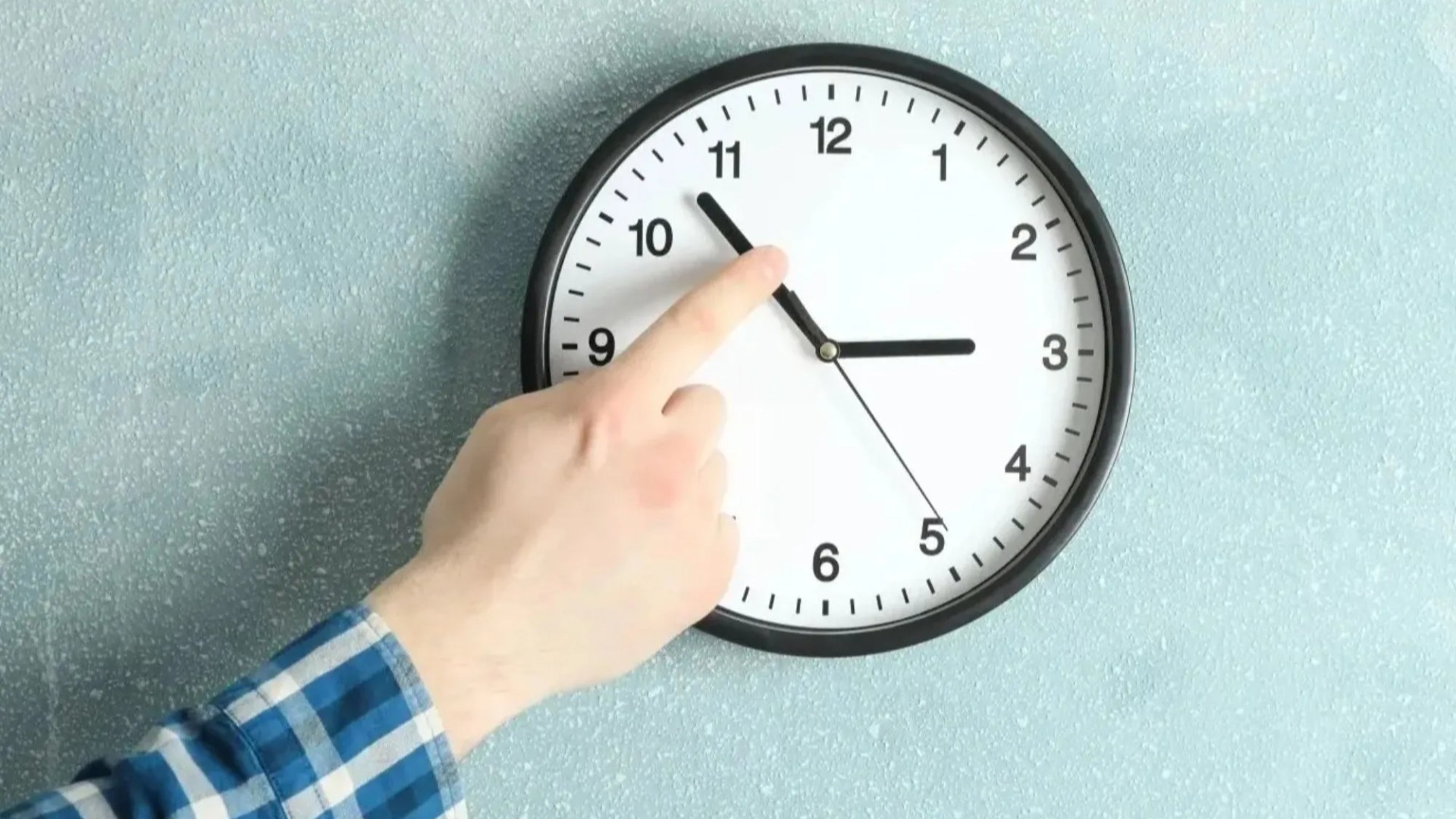
THE CLOCKS are set to go back in the coming weeks, giving us an extra hour in bed – but darker evenings and shorter days. The UK switches to Greenwich Mean Time in October – here’s everything you need to know about exactly when it happens. Clocks in the UK go back an hour in late October It marks the end of British Summer Time, with autumn well underway Credit: Getty When do the clocks go back in 2026? The clocks go back on Sunday, October 25, 2026, at 2am, when the time jumps to 1am. It happens on the last Sunday in October each year and marks the end of British Summer Time (BST). Sign up for The Sun newsletter Thank you! Phones, computers and most smart devices update on their own, but older watches, stereos, clocks in cars, and some kitchen appliances may need changing manually. But not everyone gets an extra hour in bed; people working a night shift when the clocks change could end up working an extra hour. When do the clocks go forward in 2027? British Summer Time returns on Sunday, March 28, 2027, when the clocks jump forward from 1am to 2am, meaning we effectively lose an hour of sleep. The yearly schedule is fixed, with clocks moving forward an hour at 1am on the last Sunday in March every year, and then back an hour at 2am on the last Sunday in October. If you can’t remember which way the clocks go, there’s a simple phrase to help you remember – “spring forward, fall back.” Why do the clocks change? The weekend changeover was chosen because moving the clocks overnight on a Saturday into Sunday causes less disruption to schools and businesses. Most read in The Sun The idea of making better use of daylight goes back hundreds of years. Benjamin Franklin discussed the benefits of getting up earlier to make use of morning sunlight in a satirical essay written in 1784. But the campaign to change Britain’s clocks was led more than a century later by builder William Willett. In 1907, he published a pamphlet called The Waste of Daylight, arguing that clocks should be moved forward during the summer so people could make better use of daylight. His original proposal was more complicated than the system that was eventually adopted. He called for clocks to move forward by a total of 80 minutes in four separate 20-minute steps. Attempts to introduce daylight saving legislation were rejected by Parliament several times between 1908 and 1916. But that changed during World War I, when The Summer Time Act received Royal Assent on May 17, 1916, with the clocks going forward for the first time on May 21 of that year. The wartime measure was intended partly to boost productivity and reduce fuel use. Britain later went even further during World War II, when Double Summer Time put clocks two hours ahead of GMT during parts of the year. The system was dropped after the war but was briefly brought back during the fuel crisis of 1947. Britain has also experimented with keeping the clocks permanently an hour ahead. British Standard Time was introduced on October 27, 1968, meaning the UK remained on GMT+1 through the winter instead of putting the clocks back. The trial ended on October 31, 1971, after Parliament voted against making it permanent. Opposition was particularly strong in Scotland and other northern areas, where the change meant much darker winter mornings, and also among groups including farmers and industrial workers. The debate over changing the clocks has never completely gone away. Around 70 countries use some form of daylight saving time. The European Commission proposed ending seasonal clock changes across the EU in 2018, and the European Parliament backed the move the following year. But the proposal has not taken effect and no final decision has been agreed. Until that happens, EU countries continue to change their clocks twice a year on the same Sundays as the UK. Comment now
When do the clocks change? Date the UK clocks go forward and back, and what time it happens
Full Article
Original Source
Read the full article at Thesun →KhanList aggregates and links to publicly available news content. We do not host full articles from third-party sources. Always verify important information with original sources.