
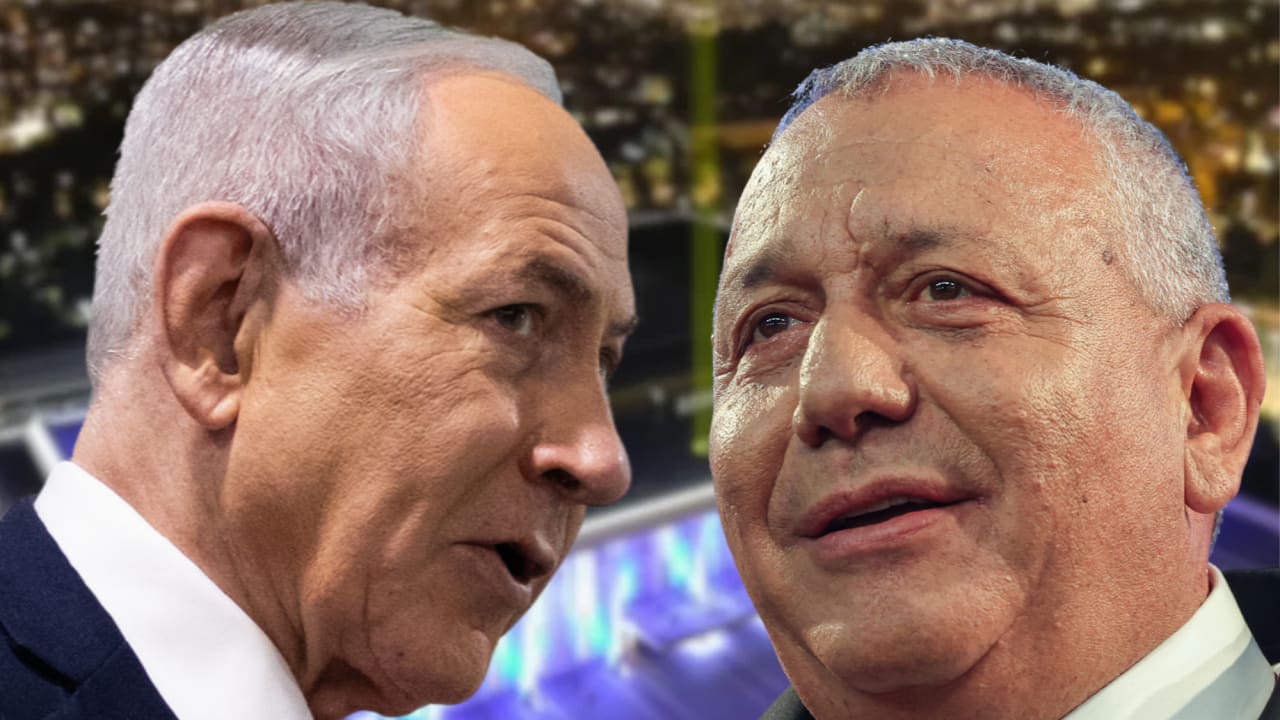
NOVEMBER 2, 2026 14:39After what may have been Israel’s most divisive election in recent history, the real challenge has begun as the leaders of the two largest parties, Likud’s Prime Minister Benjamin Netanyahu and Yashar’s Gadi Eisenkot, attempt to pull support in the race to form a coalition.As consultations with party representatives are set to begin Wednesday, President Isaac Herzog has been vocal in his hope that party leaders will keep “open hearts,” with the goal being to “find creative solutions to prevent another election." Given the seat distribution, neither Netanyahu nor Eisenkot has an easy path to 61 without some compromise, potentially needing to work together to form a stable majority.Netanyahu and Eisenkot could potentially offer each other a political lifeline, but the issues separating them are also among the most divisive in Israeli politics.The real question is: Would Netanyahu be prepared to abandon some of the policies that have sustained his political alliances in exchange for Eisenkot's support?Ultra-Orthodox Jewish men block a road and clash with police during a protest against the jailing of yeshiva students who failed to comply with an army recruitment order, outside the ultra-Orthodox city of Bnei Brak, October 29, 2026. (credit: FLASH90)Haredi conscription One of the biggest issues dividing the political blocs is the haredi draft. Each of the four main opposition parties - Yashar, B’Yachad, Yisrael Beytenu, and the Democrats - ran on the promise that they would enforce an equal draft for all. On the other hand, Netanyahu and his allies have pushed forOn the other hand, Netanyahu and his allies have pushed for legislation that would preserve broad exemptions for haredi yeshiva students, introducing gradual enlistment targets and limited financial sanctions rather than enforcing universal conscription.Netanyahu has defended the need to preserve Torah study and opposed the arrest of draft evaders, arguing that haredi enlistment should be encouraged without coercion.As a potential concession, Netanyahu may consider abandoning the haredi draft exemptions favored by his traditional coalition partners and agree to push forward legislation imposing meaningful military or national service obligations.This would be a major concession to Eisenkot, but could effectively end Netanyahu's longstanding alliance with Shas and United Torah Judaism, whom he has repeatedly insisted are non-negotiable coalition partners.However, Netanyahu might be more willing to sacrifice haredi political demands if Eisenkot could replace their parliamentary support.Calls for a state commission of inquiry have continued as Israelis seek an authoritative account of the failures that led to October 7. Families of victims of the October 7 attacks and supporters hold photos and signs during a protest march on July 2, 2026, in Tel Aviv. (credit: Amir Levy/Getty Images)October 7 commission of inquiryAnother major obstacle to a Netanyahu-Eisenkot unity government would be the establishment of a state commission of inquiry into the failures surrounding the October 7 massacre, an issue on which the two leaders have remained sharply divided.Netanyahu's government has resisted establishing a traditional state commission of inquiry, instead advancing legislation to create an alternative investigative body whose members would be appointed through a political process.Eisenkot, meanwhile, has made establishing a state commission of inquiry a central campaign promise. In September, he joined Naftali Bennett, Avigdor Liberman, and Yair Golan in pledging that such an investigation would be among the first measures an opposition-led government would take.The issue is particularly sensitive for Netanyahu, as an independent commission could examine not only the military and intelligence failures preceding the massacre but also the decisions made by his government.Unlike the haredi draft, where Netanyahu could potentially compromise by abandoning the demands of his coalition partners, a state commission of inquiry could have direct implications for his own political legacy.The question, therefore, is whether Netanyahu would accept an independent investigation into his government's conduct as the price of securing Eisenkot's participation, or whether the issue represents a red line neither leader is prepared to cross.Israelis protest against the government’s proposed judicial reforms in Tel Aviv on February 4. (credit: RONEN ZVULUN/REUTERS)Judicial reform disputesThe judicial overhaul could offer Netanyahu another opportunity to reach a compromise with Eisenkot, particularly given the link between the government's proposed reforms and its resistance to establishing a state commission of inquiry into October 7.Netanyahu's government has spent much of the past four years advancing legislation to reshape the judiciary, including changes to the judicial appointments process and efforts to limit judicial oversight of government decisions. The reforms have been championed by Justice Minister Yariv Levin and fiercely opposed by much of the political opposition.Eisenkot, meanwhile, has pledged to repeal legislation associated with the judicial overhaul, making the issue another potential obstacle to a unity government.However, the judicial dispute is also closely connected to the question of investigating October 7. Under existing law, the president of the Supreme Court appoints the members of a state commission of inquiry, a mechanism Netanyahu has opposed in favor of a politically appointed investigative body.A potential compromise could therefore involve Netanyahu agreeing to freeze further judicial legislation, reconsider reforms already passed, and accept the Supreme Court president's authority to appoint an independent October 7 commission.Such an agreement would require Netanyahu to make concessions on two of the most contentious issues separating him from Eisenkot, while potentially facing opposition from Levin and other Likud members.In this instance, the question is whether Netanyahu would be willing to abandon key elements of his judicial agenda to secure a unity government, particularly if doing so also meant accepting an independent investigation into his own government's failures.(L-R): National Security Minister Itamar Ben-Gvir and Finance Minister Bezalel Smotrich seen in the Knesset plenum, December 29, 2022 (credit: YONATAN SINDEL/FLASH90)Smotrich, Ben-Gvir as partnersAnother potential concession Netanyahu could offer Eisenkot would be the exclusion of National Security Minister Itamar Ben-Gvir and Finance Minister Bezalel Smotrich from his next government, effectively abandoning two of his most prominent political allies.Such a move could also align with the interests of US President Donald Trump's administration.Prior to the election, American sources stated that Trump wants both ministers excluded from Israel's next government, believing that settler violence is undermining his broader regional ambitions.Additional reports have indicated that Trump’s advisers believe a government without Ben-Gvir and Smotrich would be better positioned to advance Washington's diplomatic objectives, particularly normalization with Saudi Arabia and the implementation of Trump's plans for Gaza.However, Trump has not formally endorsed a unity-government proposal, and US Ambassador Mike Huckabee has denied that Washington is attempting to dictate Israel's coalition composition.For Netanyahu, replacing his far-right partners and sacrificing longstanding political partnership to secure Eisenkot's support could therefore serve two purposes: securing a broader coalition and strengthening cooperation with Washington.Voters cast their ballots on Election Day, October 27, 2026. (credit: Marc Israel Sellem/Jerusalem Post)The premiership itselfEven if Netanyahu were to concede on conscription, judicial reform, and a state commission of inquiry, the greatest obstacle to a unity government may be his insistence on remaining prime minister.Sources close to Netanyahu have floated a rotation agreement under which he would remain prime minister for approximately two years, allowing him to complete diplomatic initiatives with US President Donald Trump and address the Iranian threat before handing the premiership to Eisenkot. Other Likud figures, however, have suggested Netanyahu would offer Eisenkot a senior ministerial portfolio rather than a rotation.Eisenkot has explicitly rejected both possibilities. Speaking to 103FM, he said he “would not serve under Netanyahu, not even in a rotation agreement. If that happens, you'll see it; I'll resign an hour later."However, he made this declaration when Yashar was believed to be the biggest party, and Eisenkot believed he had a clear path to a majority coalition and the premiership.The former IDF chief of staff has previously served alongside Netanyahu in the emergency government established following October 7, but has since ruled out another partnership under his leadership.For Netanyahu, offering Eisenkot a rotation could preserve his premiership in the immediate term while providing a path toward a broader coalition. For Eisenkot, accepting such an arrangement would mean reversing one of his clearest campaign commitments.Ultimately, the question is not simply how much Netanyahu would be willing to concede to Eisenkot, but whether any combination of concessions could overcome the fundamental political divide between them.With neither bloc securing the 61 seats needed to form a government, both leaders face difficult choices. Netanyahu could abandon longstanding coalition partners, retreat from controversial legislation, and even offer to share the premiership. Eisenkot, however, would have to explain to his voters why he had agreed to serve alongside the very prime minister he campaigned to replace.For now, the central obstacle to a unity government may not be the policies on which the two leaders disagree, but the political price each would have to pay for compromising.Follow us on Google
What would Netanyahu sacrifice to bring Eisenkot into a unity government? - analysis
Full Article
Original Source
Read the full article at Jpost →KhanList aggregates and links to publicly available news content. We do not host full articles from third-party sources. Always verify important information with original sources.