
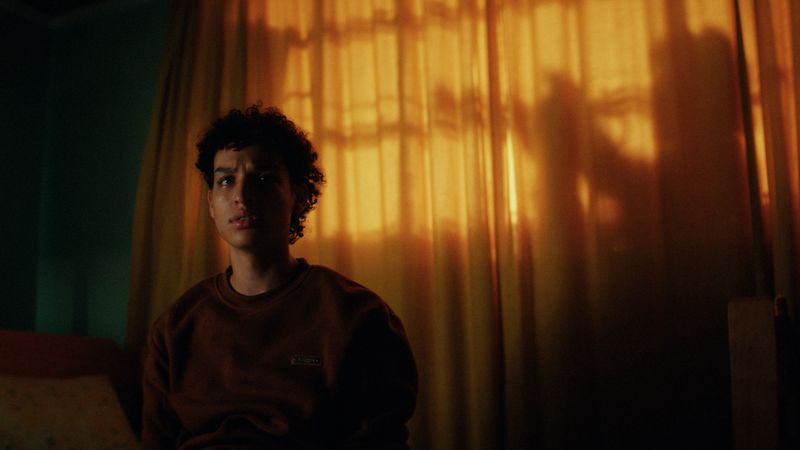
“Dude, check out my Heritage Day outfit. I look like one of the dudes from Sound of Music.”Seventeen-year-old Gabriel Lombard is sitting on the toilet, reading a text message from a classmate.“Ohhhh f**k, is that today?” he responds. “Brah, it’s easy for a white dude, but what do I wear?”September 24 is a day beaming with pride and festivity for many, but not necessarily for everyone. Like Gabriel, I grew up dreading school celebrations of Heritage Day – the annual reminder that I couldn’t pinpoint “where I came from” in the same way that my peers could, let alone put together an outfit to capture the breadth of a heritage I couldn’t grasp. So, like Gabriel, I opted to stick to my school uniform instead. But the weight of the shame and loneliness that rooted itself in my mind back then sat a little lighter after experiencing this one-of-a-kind film.In Al Wat Ek Weet – the film adaptation of Marita van der Vyver’s young adult novel of the same name – Gabriel Lombard confronts the complexities of heritage, romance and grief after a tragic loss in the family, ultimately learning what it is not only to open oneself up to the ache of heavy emotions, but also to let them be heard.Written and directed by Devon Delmar and Jason Jacobs, the filmmakers behind South Africa’s official international feature submission to the 99th Academy Awards, Al Wat Ek Weet casts Cape Town in the golden glow of a coming of age.The city is captured through a whimsical, adolescent perspective, where a first-love montage sees Gabriel and his romantic interest gallivanting across streets, from a local art gallery and pizza joint to Cape Town’s beloved indie cinema, concluding with a nod to classic Hollywood romances as a taxi bus takes flight, soaring off into the horizon. Much like Delmar and Jacobs’s previous work, Al Wat Ek Weet is told with a sprinkling of surrealism through which Gabriel’s bottled-up trauma manifests as a four-part brass band, attired in shimmering, glittering suits of the Kaapse Klopse tradition. Jazzy tunes weep and waltz from their instruments as the musicians make unexpected appearances squashed inside a kitchen cabinet, hiding behind a shower curtain, and even sprinting through Cape Town’s streets in hot pursuit of a shoeless Gabriel.It’s a poignant and playful motif that becomes, too, a striking example of how cultural specificities can be meaningfully infused into storytelling devices. Gabriel’s inner turmoil manifests as a four-part brass band. (Photo: Meria Productions) Al Wat Ek Weet draws from a thoughtful and socially topical series of narrative threads, yet it does opens up more themes than the film is able to bring together convincingly.Gabriel’s grappling with his heritage, for instance, is one such element that is set in motion during the first act, though left relatively unexplored beyond skin-deep dialogue.Most impactful, however, is Gabriel’s emotional development through the art of poetry, which teaches him not only to trust his creative voice but also to listen – whether it’s amid the noisy bustle of the city taxi rank or on the tranquil dock of Kalk Bay harbour. By portraying the intricacies underlying unfamiliar emotions through the eyes of a teenage boy, Al Wat Ek Weet brings into its story the contemporary conversation around masculinity.When Gabriel finds a magazine from his Aunty Lotta conveniently opened to an article titled “10 reasons teenage boys should cry”, he tosses it aside with an exasperated sigh. Later, through Gabriel’s desperate, though amusingly futile, attempt to cry, the film’s latter half asserts its focus on mental health, articulating the message that sincere self-expression, particularly among boys, is about more than just nurturing emotional maturity. It’s about opening up conversations that could protect youth from real harm.The brass band in hot pursuit of Gabriel in Al Wat Ek Weet. (Photo: Meria Productions) Al Wat Ek Weet captures Cape Town sites through a whimsical, adolescent perspective. (Photo: Meria Productions) Jonan Mouton’s performance as Gabriel is reserved and understated, but not without the unintentional humour that arises from simply trying to get through adolescence in one piece.Mouton conjures a socially awkward protagonist who is almost frustratingly sealed off. Yet as the film progresses, that perceived flatness reveals itself to be the impenetrable, withdrawn nature of a teen who hasn’t learnt what it is to embrace emotional vulnerability. Mouton’s Gabriel is supported by Zenobia Kloppers as the hilariously fed-up, yet equally bereaved, Aunty Lotta, who balances caregiving for both her nephew and her mother (played by June van Merch), who’s overcome by a dissociative state of grief. The family’s relationship is introduced by unrestrained chaos, which establishes a movie whose comedy exists both in its writing and stylistic form.Zenobia Kloppers and June van Merch in Al Wat Ek Weet. (Photo: Meria Productions) To watch films like Al Wat Ek Weet is to witness South African filmmaking broadening its representation of national narratives, reaching for stories beyond the thrillers where characters must survive worlds of crime and destitution.While those darker genres crucially speak to one of the country’s core truths, it is but one reality – one that exists alongside rose-tinted romances and typical teenage troubles. Even though Al Wat Ek Weet’s protagonist is still shown to be vulnerable to the presence of crime, the film joins a growing body of contemporary films revelling in painting a colourful, hopeful picture of a local life worth envisioning (but perhaps without the flying taxis). DMAl Wat Ek Weet opens in cinemas on 30 October.
WHAT WE’RE WATCHING: Al Wat Ek Weet — a local film’s heartfelt message about adolescent mental health
Full Article
Original Source
Read the full article at Dailymaverick →KhanList aggregates and links to publicly available news content. We do not host full articles from third-party sources. Always verify important information with original sources.