
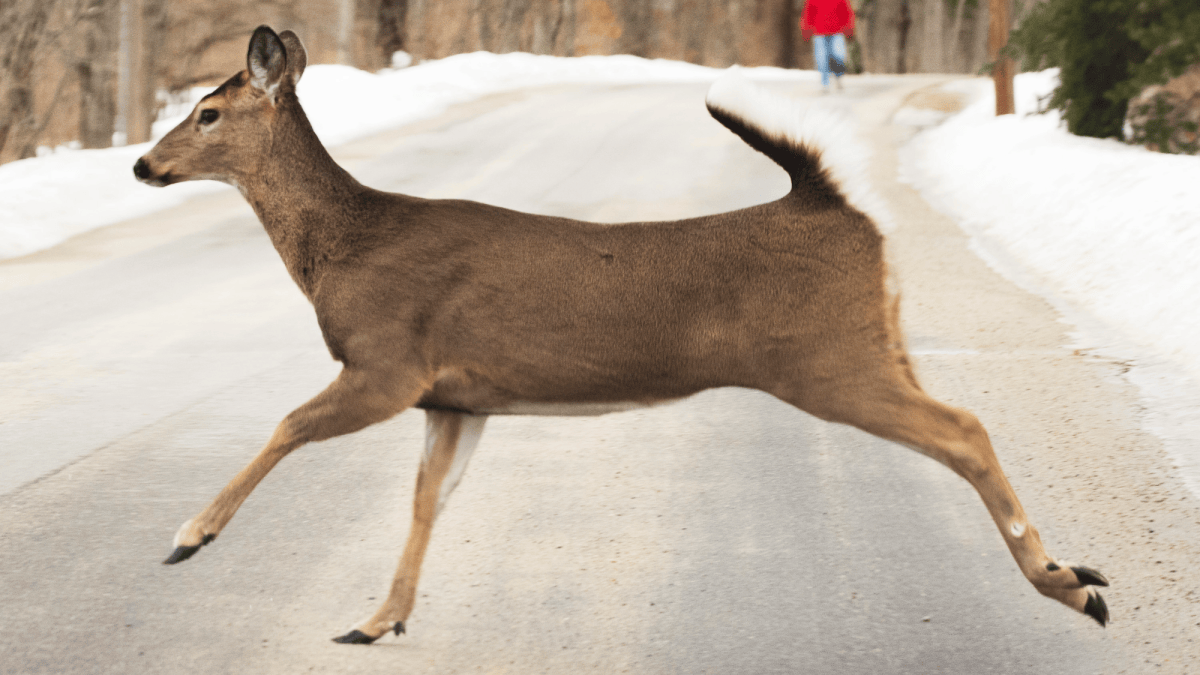
A white tail deer crosses Charles E. Jordan Road in Cape Elizabeth, Maine on February 12, 2018. Image: Carl D. Walsh/Portland Portland Press Herald via Getty Images When you think of the fall season, chances are that gorgeous foliage, brisk sweater weather, and Halloween decorations come to mind. Deer, on the other hand, think of sex. Deer breeding behavior, known as the rut, aligns with the changing length of daylight. As daylight decreases, buck (male deer) and doe (female deer) hormones increase. While in southern states the rut can last several months, it only runs for a short period of time during the fall in the Northeast. During the rut, bucks seek out does that are ready to breed, and the amorous pursuit can be intense. Because some bucks are so obsessed with breeding, they can eat little and burn through up to 20 percent of their body weight during the season. And just like love-crazed high schoolers, deer during the rut are more distracted and less cautious, as well as more active during the day than they usually are. “During this period, many yearling bucks leave their birth areas in search of new territory, sometimes dozens of miles away. At the same time, adult bucks are actively roaming their home ranges in pursuit of doe, often chasing those they encounter,” according to Raven Ridge Wildlife Center in Pennsylvania. What’s more, “The end of daylight-saving time means more vehicles will be on the road during dusk and dawn, which are the peak hours for deer movement.” In fact, most deer-vehicle accidents take place in October through December. While there are things you can do to lessen your chances of hitting one—such as staying alert and paying close attention when you see deer crossing signs—sometimes accidents are unavoidable. So what should you do if you hit a deer? Safely pull over and turn your emergency flashers on. While your instinct might be to go see the deer or move the body off of the road, resist the temptation. Care for any injured passengers, and call 911. The dispatchers will send the appropriate authorities to help. And if you narrowly avoided one deer, remember that, “deer often travel in groups and walk single file,” per the Raven Ridge Wildlife Center. “So even if one deer successfully crosses the road in front of a driver, it doesn’t mean the threat is over. Another could be right behind it.” 2026 Popular Science Home of the Future Awards 39 products that will improve your everyday life.
What to do if you hit a deer
Full Article
Original Source
Read the full article at Popsci →KhanList aggregates and links to publicly available news content. We do not host full articles from third-party sources. Always verify important information with original sources.