
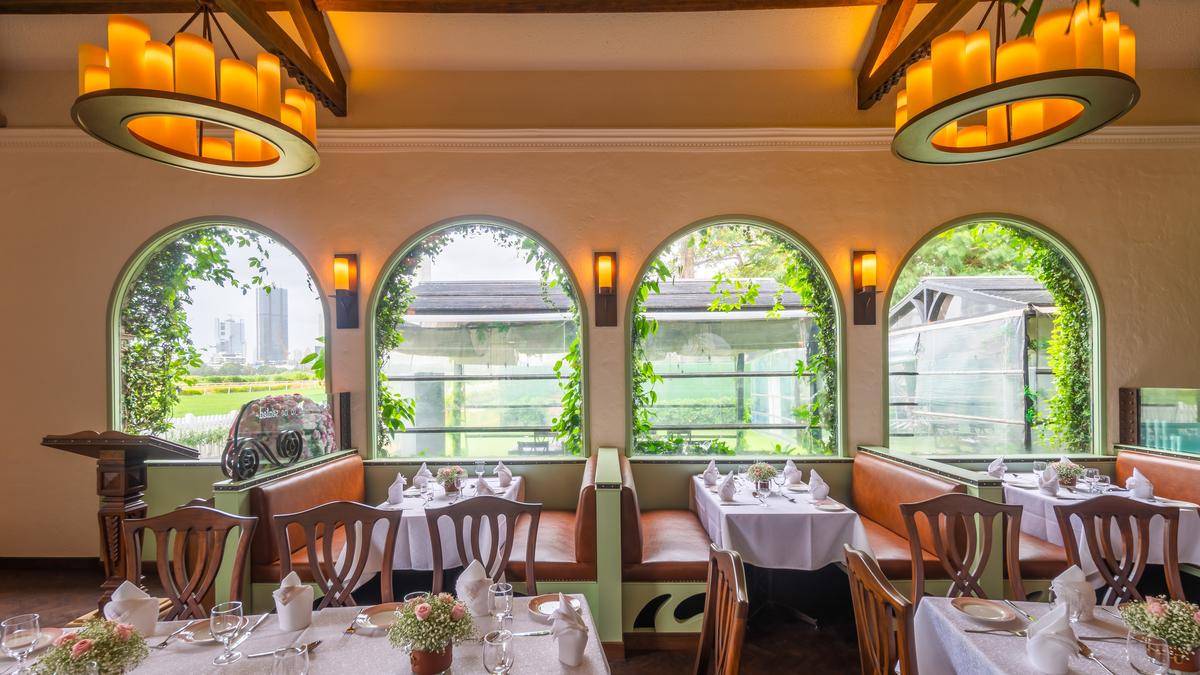
Every week, a new restaurant opens in Mumbai promising to be different. Most will not be around long enough to prove it. Industry estimates suggest that 70-80% of new restaurants in India shut within their first few years, according to Petpooja, a restaurant technology platform that tracks industry data. Rent alone can sink a business before it finds its footing. Add fickle diners, rising food costs and a city always chasing the next big thing, and most restaurants disappear before they become anyone’s memory.Yet a handful of Mumbai institutions have dodged that fate. Gulmurg, tucked inside The Shalimar Hotel at Kemps Corner, has been serving North Indian cuisine since 1962. Gaylord in Churchgate, once frequented by Raj Kapoor and George Harrison, is still thriving nearly seven decades later. Gallops, which has been around since the 1980s, overlooking the Mahalaxmi Racecourse, remains the dining room of choice for generations of old Mumbai. Between them, they have survived recessions, the pandemic and the relentless churn of the city’s dining scene. Plush seating at the newly revamped Gulmarg | Photo Credit: Special arrangement So what keeps a restaurant alive once nostalgia alone isn’t enough? The answer, it turns out, is not reinvention but refinement.At Gulmurg, that responsibility now rests with third-generation owner Yash Advani, who recently oversaw an 18-month restoration. The revamp introduced a contemporary bar and an elevated cocktail programme, featuring drinks such as the Nimbubani highball and a fat-washed Old fashioned. But the heart of the restaurant remains unchanged. Lotus stem chaat at Gulmarg | Photo Credit: Special arrangement “We are still a North Indian-focussed restaurant, not going the whole fusion route at all,” says Yash.Roughly half the menu still consists of the classics that built Gulmurg’s reputation: paneer makhanwala, murg makhanwala, tikka masala and the biryanis regulars have been ordering for decades. The changes, however, are subtler — a chaat trolley, tapas-style small plates and more polished presentation.He attributes the restaurant’s longevity as much to business discipline as to culinary instinct. Long-standing vendor relationships have helped cushion rising ingredient costs, while the family diversified beyond the dining room. During Gulmurg’s renovation, they strengthened delivery, takeaway and outdoor catering operations instead of relying solely on dine-in business. A consulting chef was also brought in to develop contemporary additions without compromising the legacy menu. Murg makhanwala from Gulmurg | Photo Credit: Special arrangement The detail Yash returns to most, however, is his staff. Several members have been with Gulmurg for nearly three decades.“People are the most valuable thing in this industry,” he says. “If our own people are happy, our guests will be looked after. And there’s a comfort in returning to staff who know your name and remember your order.”Secret sauceGaylord tells a similar story. After decades under Sunil Lamba’s stewardship, the restaurant is now run by his sons, Dhruv and Divij, who oversaw a 11-month renovation in 2024. The time-worn interiors gave way to crystal chandeliers, a faux skylight ceiling and softly lit booths, while sepia photographs of Mumbai landmarks and famous regulars, including George Harrison and Sir Edmund Hillary, continue to line the walls. Live piano and saxophone performances now accompany dinner service. Art Deco entrance at Gaylord | Photo Credit: Special arrangement The menu, meanwhile, added around 15 new dishes while retaining favourites such as chicken à la Kyiev, prawn cocktail and the iconic Kwality chana bhatura.Gallops has followed much the same playbook. In 2024, the Mahalaxmi institution underwent its own facelift carried out by the same architect who designed it 26 years ago, Vistasp Kharas of Vistasp Kharas Studio. The dining room now has arched glass windows that frame the racecourse and walls decked out with equestrian memorabilia including original racecourse drawings from the private collection of architect Minocher Mistri. A new bar featuring a paper installation by Dutch artist Peter Gentenaar now anchors the room. Food spread at Gaylord | Photo Credit: Special arrangement Around 40 new dishes have been included in the menu, while signatures such as chicken à la Kyiev, chicken Cecilia, prawn thermidor and vegetable au gratin remain untouched. Newer additions, including the chicken liver pâté, chargrilled cauliflower with harissa tahini and daab chingri, sit alongside the classics. The cocktail programme, curated by partner Mikhail Singh, follows the same philosophy, pairing drinks with both the food and the restaurant’s mood. The new bar at Gaylord | Photo Credit: Special arrangement For chef and co-owner Yajush Malik, the second generation now running Gallops, balancing legacy with change is a daily exercise.The restaurant’s chicken in red wine pepper sauce is its highest food-cost dish. Economically, it makes little sense to keep, yet regulars continue to order it, so it stays. View of the Mahalaxmi Racecourse from Gallops | Photo Credit: Special arrangement At the same time, Yajush has steadily expanded the menu beyond the Punjabi repertoire that once defined fine dining in Mumbai. Regional dishes from Kashmir, Bengal and Kerala, once considered too niche for mainstream diners, have become some of the restaurant’s strongest performers.To him, however, none of it matters without consistency.“It essentially boils down to something very simple: quality,” he says. “Food and service quality can’t be erratic. When someone has an incredible meal, they’re likely to come back. But if the second visit isn’t as good as the first, you have a high chance of losing that customer.”It is a lesson he believes many new restaurants overlook as they focus on opening-week buzz rather than the experience that follows. The daab chingri at Gallops | Photo Credit: Special arrangement Longevity also presents challenges newer restaurants rarely encounter. In the early 2000s, Gallops nearly lost its signature galawat kebab when the Lucknow supplier behind its proprietary spice blend passed away. Unable to find a suitable replacement, Yajush’s father Rahul Malik painstakingly reverse-engineered the masala in-house rather than depend on an outside supplier again.When Yajush and Mikhail took over the restaurant in 2013, they also inherited something less tangible: institutional memory.“Our parents were very clear that we couldn’t walk in as the new bosses,” recalls Yajush. “The habits and preferences of our regulars live with our staff, not in a manual. That’s knowledge that has to be inherited.”In an industry obsessed with what’s next, Mumbai’s oldest restaurants have endured by perfecting what they already do well.
What keeps Mumbai’s iconic restaurants alive decades later?
Full Article
Original Source
Read the full article at Thehindu →KhanList aggregates and links to publicly available news content. We do not host full articles from third-party sources. Always verify important information with original sources.