
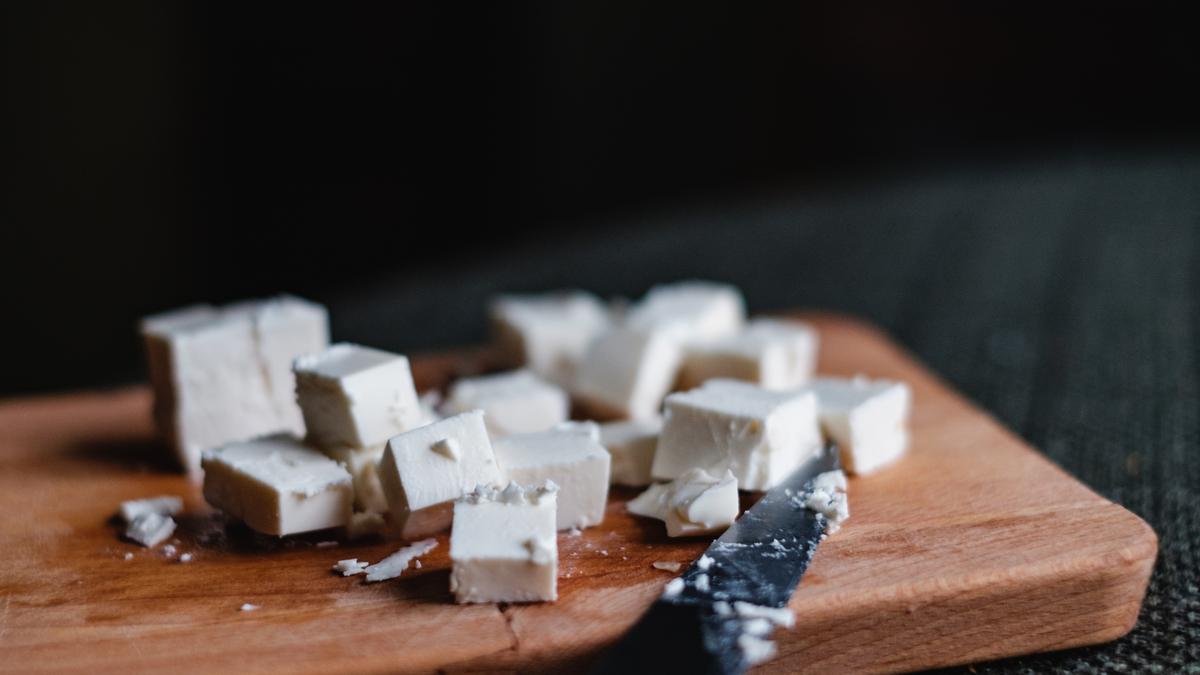
: The Food Safety and Standards Authority of India (FSSAI) has proposed restrictions on the manufacture and sale of paneer made from constituents not derived from milk. The draft amendment, published on September 24, proposes adding “paneer made of constituents not derived from milk” to the list of substances whose sale is prohibited. Products already licensed or registered as “Analogue in Dairy Context” would have to drop the word “paneer” from their nomenclature, labelling and marketing.What is analogue paneer?Paneer, as defined under FSSAI’s standards, is a milk product made from milk, with or without added milk solids, that is precipitated using permitted acidulants and heat. The standard specifies milk and milk solids as the raw materials. Depending on the category, paneer must meet prescribed limits for moisture and milk fat.Analogue paneer is different. It is a product designed to resemble paneer in appearance, texture and functionality, but in which some or all of the milk constituents are replaced by ingredients that are not derived from milk.FSSAI defines a “dairy analogue” as a product in which non-milk constituents replace, wholly or partly, one or more milk constituents, while the final product resembles milk or a milk product. The regulator has specifically said that replacing major milk constituents such as milk fat or milk protein with vegetable oil, vegetable fat, or vegetable protein can result in an analogue.In practical terms, formulations can contain combinations of vegetable fats or oils, starches, plant proteins, milk solids, emulsifiers and stabilisers. The exact formulation varies between products.An analogue is not necessarily an illegally adulterated product merely because it is an analogue. FSSAI has recognised “Analogue in Dairy Context” as a category. The regulatory concern arises when such a product is represented to consumers as conventional paneer or another dairy product.Why is FSSAI acting now?The immediate reason is consumer information. For several years, FSSAI has had provisions governing dairy analogues. Its guidance says non-dairy products must not be misrepresented as milk or milk-based products. It has also required products for which no specific identity standard exists to carry the word “Analogue” along with the relevant food-category information.But the regulator has increasingly found a problem at the food-service level -- a consumer ordering a dish described as paneer may not know that the restaurant is using a non-dairy analogue.In April this year, FSSAI’s West Region issued a public notice specifically stating that selling a cheese analogue as “paneer” was a violation and directed manufacturers and food-service establishments to ensure accurate product naming.The issue has also moved beyond individual inspections. Several States have introduced restrictions or bans on analogue paneer, with Maharashtra, Punjab and other States taking action against its manufacture, sale or representation as paneer. Maharashtra, for instance, reported that it had tested 308 paneer and dairy-analogue samples between April 2025 and March 2026; 109 did not conform to prescribed standards, including 30 that were declared unsafe.What exactly has FSSAI proposed?The latest draft is significant because it goes beyond simply asking manufacturers and restaurants to disclose that a product is an analogue.FSSAI proposes inserting a new clause in the Food Safety and Standards (Prohibition and Restrictions on Sales) Regulations, 2011, covering “paneer made of constituents not derived from milk.” The draft says the move is intended to restrict the manufacture and sale of an analogue product to paneer and prevent consumers from being misled about its nature and composition.It also specifically states that products already licensed or registered under the “Analogue in Dairy Context” category would have to discontinue the use of the term “Paneer” in their nomenclature, labelling or marketing.The proposal is still a draft. FSSAI has invited objections and suggestions and has said these will be considered after the stipulated 60-day period. It should therefore not be described as an already effective nationwide ban.Is analogue paneer unsafe?Calling a product “analogue” does not automatically establish that it is unsafe. The central regulatory issue is that it is not conventional paneer made from milk, and therefore should not be represented as such.Its nutritional composition can also differ substantially from dairy paneer, depending on the formulation. Replacing milk fat and milk protein with vegetable fats and plant proteins means that consumers cannot automatically assume that an analogue has the same nutritional profile as milk-based paneer.This matters particularly in India, where paneer is often consumed as a source of protein. During FSSAI’s deliberations on dairy analogues, some States and stakeholders argued that analogue paneer could deprive consumers—particularly vegetarians who use paneer as a protein source—of the nutritional benefits expected from dairy paneer. These were submissions during deliberations, rather than an FSSAI finding that all analogues are nutritionally harmful.Can consumers identify analogue paneer?Analogue products are specifically designed to resemble their dairy counterparts. Differences in taste, texture or cooking behaviour may sometimes be noticeable, but these are not substitutes for proper labelling or laboratory testing.This is particularly difficult when eating outside the home because consumers generally do not see the original packaging or ingredient declaration used by the restaurant.That is why FSSAI’s approach has increasingly focused on the supply chain—from manufacturers and distributors to restaurants and other food-service establishments. Its 2025 surveillance drive directed States and Union Territories to undertake testing and label examination of dairy analogues to prevent adulteration and mislabelling.So, is “fake paneer” being banned?The phrase “fake paneer” is technically not correct. There is a distinction between a non-dairy analogue that is properly identified as such and a non-dairy product sold or represented as conventional paneer, note experts.So, what FSSAI’s latest proposal seeks to address is the latter—and, importantly, it proposes to prevent products in the analogue category from using the word “paneer” at all in their nomenclature, labelling, or marketing.
What is analogue paneer, and why is FSSAI cracking down on it? | Explained
Full Article
Original Source
Read the full article at Thehindu →KhanList aggregates and links to publicly available news content. We do not host full articles from third-party sources. Always verify important information with original sources.