
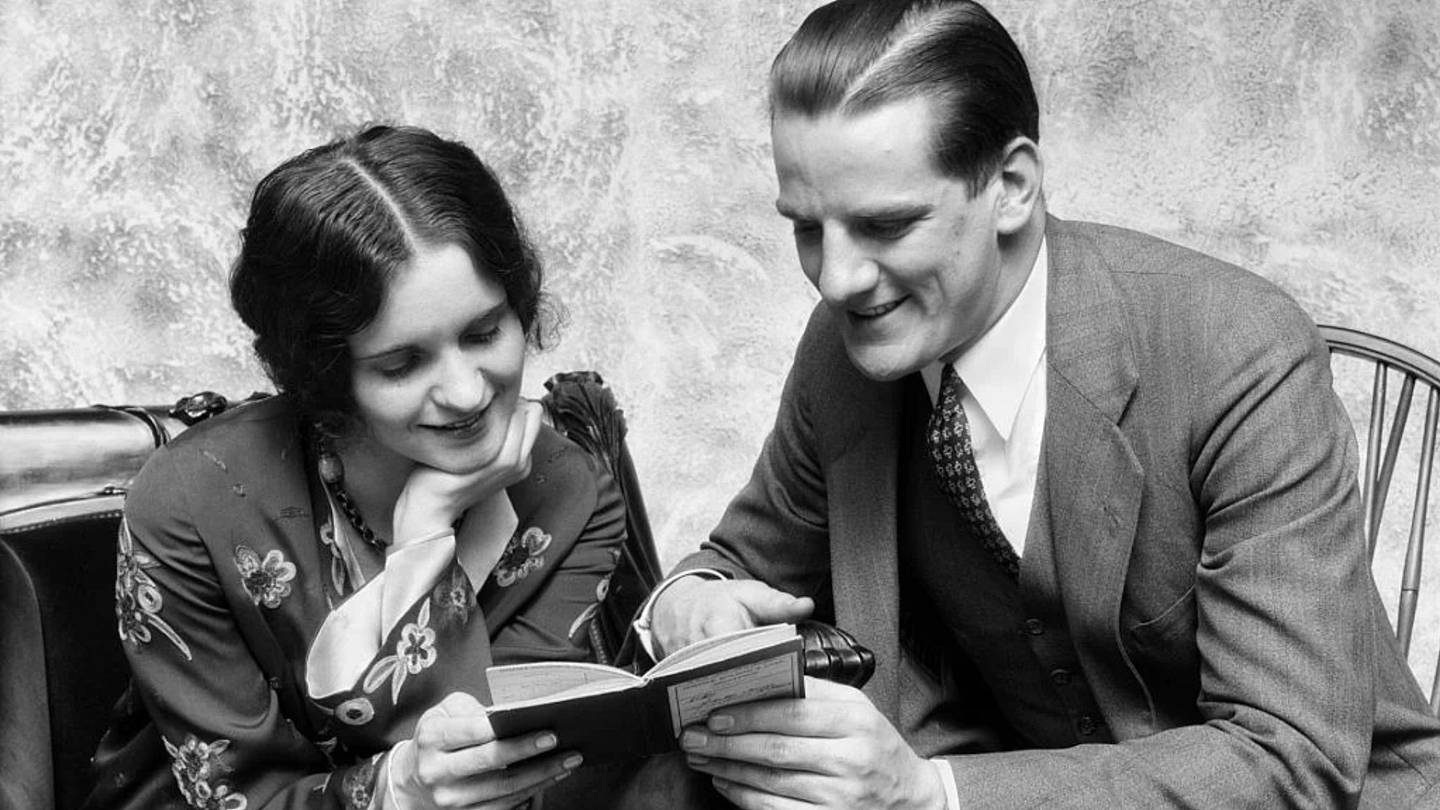
You're transported back to 1926, and it’s the bee's knees, but you want someone to share it with. Feeling lonely, you reach into your sweatpants pocket for your phone to swipe through Hinge; only apps don’t exist yet, cell phones won’t be invented for decades, and you’re probably wearing nice trousers, or a long skirt or dress instead.So, how are you meant to find a date?Long before people downloaded dating apps and sent DMs, romance relied on courtship and chaperones to uphold reputation and virtue, at least, until the 1920s.COURTSHIP BEFORE WORLD WAR ICourting Couple | Archive Photos/GettyImagesBefore World War I ended, dating as we know it today was nonexistent. Parents guided their children toward a possible match, and the courtship process was very strict. A suitor, approved by the woman's parents, would leave a "calling card" at her doorstep to let her and her family know he intended to court her (spend time getting to know her).If the parents were pleased with his efforts, they would invite him into their home for a "supervised" visit with their daughter. The actual "date" might’ve consisted of the woman entertaining the man with piano playing or a dance. The suitor would then “call” regularly, bring gifts to his intended match and her family, and eventually, the pair would go on public outings together… chaperoned, of course. This continued until the suitor asked the woman's father for permission to propose and the family deemed him financially capable of taking care of her.This was the typical process that led to marriage throughout the 1800s and into the early 1900s. DATING IN THE 1920sCouples Dancing at Speakeasy Nightclub | Bettmann/GettyImagesThe war ended in 1918; women secured the right to vote in 1919, joined the workforce in droves, and everyone began putting on the Ritz as the Roaring ‘20s rolled in. Possible suitors rang their dates on the telephone, and new, close-bodied automobiles kept young daters more concealed; a feature that concerned the older generation. Finding a partner became less of a marital strategy and more of a casual ordeal. Movies and dance halls grew in popularity, providing the perfect setting for an informal date. According to The Mob Museum, upper- and middle-class citizens socialized on the train, with the Pullman Company offering "dining, lounge and ballroom cars with live bands." Sometimes, a date was simply driving around in the car and maybe stopping by the local ice cream parlor for a delicious cherry phosphate. As car ownership among young people accelerated, the need for a chaperone lessened, diminishing the courtship process.Cities boomed as more people left rural communities for the excitement of urban oases, where meeting new people was more common. While traditional expectations and standards still held true in rural areas, city dwellers thought unconventional dating was the cat’s pajamas in the 1920s. The 18th Amendment, which banned the sale and transportation of liquor, created speakeasies, secret bars that became popular spots for drinks, dancing, and jazz music, especially in metropolitan areas.Urbanization, entertainment, updated transportation, and changing laws and lifestyles all contributed to the disappearance of traditional courtship and the rise of casual dating 100 years ago. This concept is still alive and well in 2026; only there are fewer chance encounters at dance halls and soda shops, and more online dating profiles and split-the-bill dinners.Read More:
What Dating Was Like 100 Years Ago
Full Article
Original Source
Read the full article at Mentalfloss →KhanList aggregates and links to publicly available news content. We do not host full articles from third-party sources. Always verify important information with original sources.