
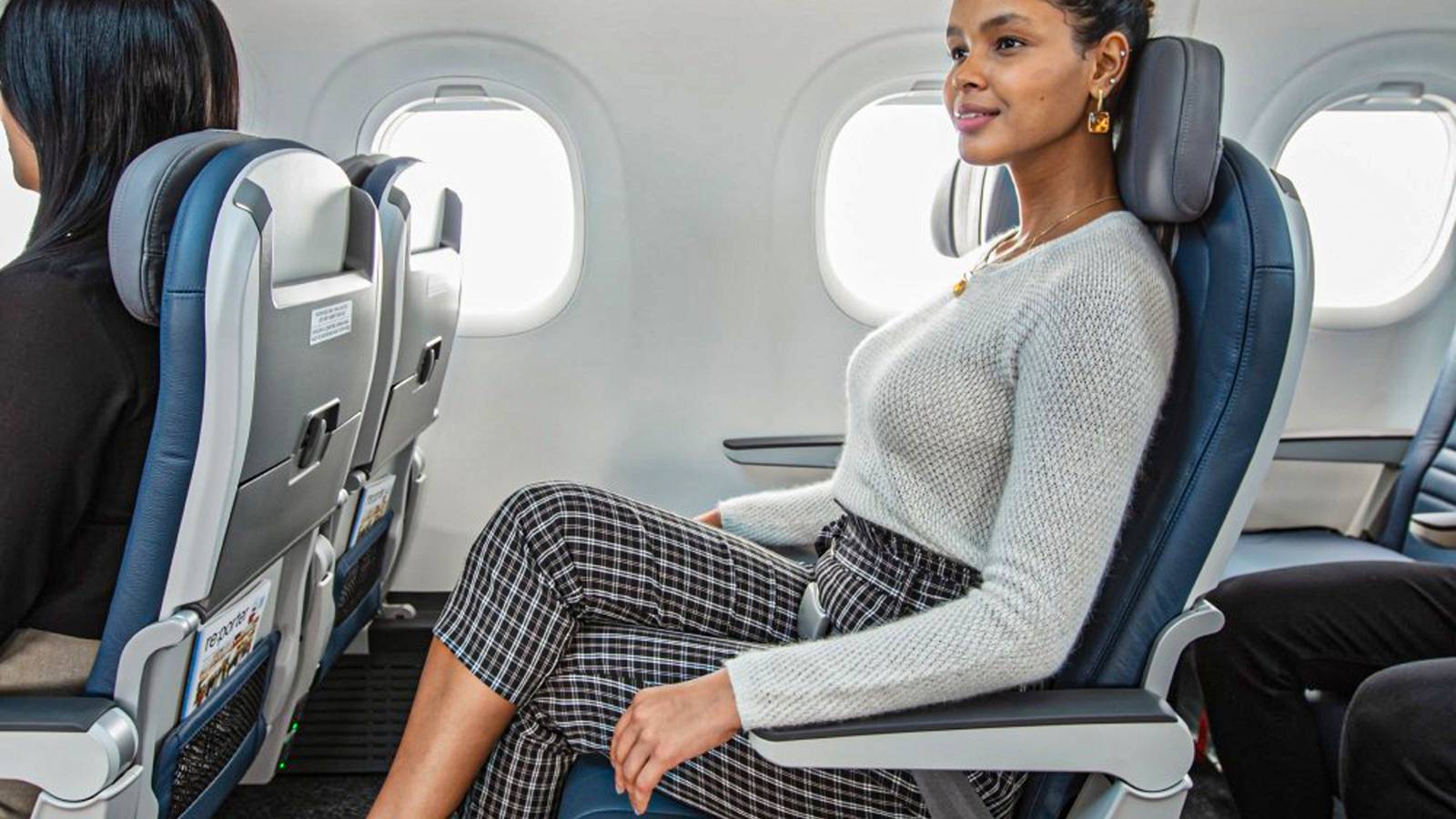
Canadian air travel has long been defined by a strict dual-class hierarchy, with flag carriers drawing a hard line between elite business class amenities and standard main cabin seating. However, as Porter Airlines aggressively expands its fleet of Embraer E195-E2 jets from coast to coast, the definition of a premium domestic flight has undergone a dramatic transformation. WestJet counters by refining its Boeing 787-9business class and rolling out high-speed Starlink WiFi across its narrowbody fleet, so now, Canadian travelers face two fundamentally different visions of luxury. Deciding which airline holds the true premium crown depends entirely on whether a passenger values front-of-cabin hard product hardware or an upgraded baseline economy experience. As both carriers vie for market share across transcontinental and transborder routes, comparing their cabin products, seat pitches, and inflight services is more important than ever before booking. Comfort Or Luxury? WestJet offers the superior high-end premium product, while Porter Airlines delivers a far more upscale everyday experience for the average passenger. WestJet’s top-tier product is its business class cabin on the 787-9, which features fully lie-flat seats, direct aisle access, premium dining, and dedicated lounge access on long-haul routes. Conversely, Porter does not fly widebody aircraft or offer lie-flat seats, instead focusing on what it markets as an elevated economy experience across its entire fleet. The fundamental difference lies in how each airline treats the main cabin. As per Seat Maps, Porter’s E195-E2 jets feature a two-by-two seating configuration with no middle seats, complimentary beer and wine served in real glassware, premium Canadian snacks, and fast, free WiFi for every passenger. WestJet’s narrowbody Boeing 737 fleet sticks to a traditional three-by-three layout in economy, where middle seats remain standard and buy-on-board food and drink policies apply. Ultimately, WestJet wins for long-haul luxury and dedicated premium seating upfront, whereas Porter wins for overall comfort and inflight amenities in the main cabin. For anyone seeking true intercontinental luxury, complete with fully lie-flat suites, direct aisle access, multi-course dining, and dedicated airport lounge access, WestJet’s 787-9 fleet provides a full-service hard product that Porter cannot match. However, for standard domestic economy travel, Porter completely reshapes expectations by removing the dreaded middle seat across its entire E195-E2 fleet. A Close Battle For Seat Pitch On narrowbody routes, WestJet’s premium product is WestJet Premium, situated in the forward rows of its 737s. This dedicated cabin features much wider recliner seats in a two-by-two layout, 37 inches to 38 inches (94 centimeters to 97 centimeters) of seat pitch, hot meal choices, and complimentary alcoholic drinks served on multi-hour flights. Porter takes a different hardware approach with its top fare, PorterReserve. Rather than installing wider business-class seats, PorterReserve utilizes the same two-by-two seat frame found throughout the E195-E2 cabin, but expands seat pitch substantially to 36 inches (91 centimeters) across the first four rows. Instead of a wider chair, PorterReserve is a fully bundled, all-inclusive fare tier that includes fresh meals, pre-mixed cocktails, dedicated airport check-in, priority security screening, early boarding, two free checked bags, and fee-free flight changes. On shorter domestic hops, PorterReserve frequently delivers comparable legroom and superior soft-product perks at a fraction of the cost of traditional business class. However, on transcontinental flights exceeding four hours, flyers seeking a true widebody recliner or lie-flat bed will find WestJet’s hardware significantly more comfortable. Loved By Passengers? Aviation analysts and industry reviewers frequently frame PorterReserve not as a traditional business class, but as an enhanced, all-inclusive economy product. A September 2026 review by Frugal Flyer noted that even though PorterReserve falls short of international long-haul business class standards, citing cold meals served in cardboard packaging and standard seat padding, its price-to-value ratio directly challenges Air Canada’s domestic business class and WestJet Premium. The reviewer concluded that Porter is best understood as an upgraded, hassle-free way to fly economy without surprise add-on fees. Porter’s strategy of democratizing cabin comfort has earned substantial industry accolades. Passengers voted Porter an APEX Four Star Major Airline, while the carrier also earned USA Today’s Readers’ Choice award for Best Economy Class and was named Skytrax’s Best Regional Airline in North America. Meanwhile, WestJet continues to defend its premium positioning by expanding its long-haul Dreamliner network across Europe and Asia, operating non-stop routes as long as Calgary International Airport (YYC) to Rome Fiumicino Airport (FCO). WestJet executives emphasize that their two-tier strategy, combining international widebody luxury with a high-density regional fleet, provides the full-service flexibility that global business travelers demand, as reported by AvioRadar. Challenging The Flag Carrier When compared with Canada's flag carrier, Air Canada, both WestJet and Porter fill distinct operational niches in the domestic and transborder markets. Air Canada’s Signature Class on Boeing 787, 777, and Airbus A330 aircraft remains the traditional benchmark for long-haul business class in North America, featuring private executive pods and extensive Maple Leaf Lounge networks. However, on domestic and transborder narrowbody routes, Air Canada’s standard economy cabin features the same three-by-three seating grid and buy-on-board food service found across WestJet’s 737 fleet. Against low-cost alternatives like Flair Airlines, Porter and WestJet sit in a completely different tier of reliability and service. Ultra-low-cost carriers strip away all passenger amenities to offer bare-bones transport, whereas Porter elevates the baseline flight experience without charging flag-carrier premium prices. Meanwhile, WestJet approaches its own soft product differentiation by offering a spectrum of products ranging from ultra-basic economy up to widebody transcontinental business suites. This positioning explains why customer choice varies so much by market segment. For price-sensitive travelers wanting an uncompromised economy flight, Porter beats both Air Canada and WestJet on value. However, for corporate travelers who rely on alliance connections, global lounge access, or international lie-flat seats, traditional network carriers like Air Canada and WestJet are still considered the necessary choice. Growing, But Still Small Overall It is clear that Porter’s product highlights are compelling, but there are very real and impactful trade-offs that exist, trade-offs that travelers really need to evaluate carefully before booking. Network scale and schedule redundancy are the major factors to keep a close eye on as Porter’s jet fleet and route map, though expanding rapidly across North America, is a fraction of the size of Canada's traditional market leaders. If an aircraft suffers a mechanical delay or severe weather cancellation, WestJet’s broader fleet and dense flight schedules offer far more daily rebooking options to help stranded travelers recover. Passengers on thin Porter routes may face significantly longer wait times for the next available seat during irregular operations. Rapid network expansion also introduces operational strain that directly impacts schedule reliability. Industry tracking data from Cirium records Porter’s on-time arrival rate trailing competitors at 71.9%, compared to WestJet’s 73.6% on-time performance. In real-world terms, this gap means a higher likelihood of flight delays for passengers working around tight connection windows or strict business itineraries. Combined with Porter’s leaner fleet infrastructure, a single delayed turnaround can trigger compounding schedule slippage throughout the day, whereas WestJet's operational scale lets it manage aircraft swaps and delay buffers more effectively across its main hub channels. Operational Metric WestJet Airlines Porter Airlines On-Time Arrival Performance ~73.6% ~71.9% Widebody / Lie-Flat Fleet Boeing 787-9 available None (Embraer E195-E2 / Dash 8-Q400 only) Seating Geometry 3-3 on narrowbodies 1-2-1 on 787 2-2 across entire jet fleet (zero middle seats) Passengers that are accustomed to traditional business-class perks should note that PorterReserve does not grant access to third-party airport lounges. Those seeking quiet terminal spaces or complimentary meals before departure must rely on independent credit card lounge passes or opt for WestJet Premium and Business fares. Additionally, dual-airport cities present routing traps, as Porter operates out of both Toronto Pearson International Airport (YYZ) and Billy Bishop Toronto City Centre Airport (YTZ), meaning travelers need to double-check departure locations to avoid costly airport mix-ups. Two Diverging Premium Concepts The rivalry between WestJet and Porter Airlines in 2026 shows a clear division of passenger priorities across North American skies. If your primary goal is securing a true lie-flat suite on an international flight, or sitting in a wide, dedicated recliner seat with lounge access on a long transcontinental route, WestJet offers the superior hardware product. However, for short-haul regional routes and transcontinental travel in standard economy, Porter delivers an unmatched base experience. With zero middle seats, free fast Wi-Fi, and an amazing drinks service included for every single passenger, Porter has successfully raised the bar for everyday domestic air travel. When choosing between the two Canadian carriers, the best way to make the right choice is to take a closer look at specific aircraft types and total route duration. For quick two-to-three-hour hops, Porter’s standard cabin or PorterReserve fare offers extraordinary overall value. For long-haul intercontinental journeys where seat width and flat-bed rest are paramount, WestJet’s premium cabins will be the definitive choice.
WestJet Vs. Porter Airlines: Which Carrier Is More Premium In 2026?
Full Article
Original Source
Read the full article at Simpleflying →KhanList aggregates and links to publicly available news content. We do not host full articles from third-party sources. Always verify important information with original sources.