
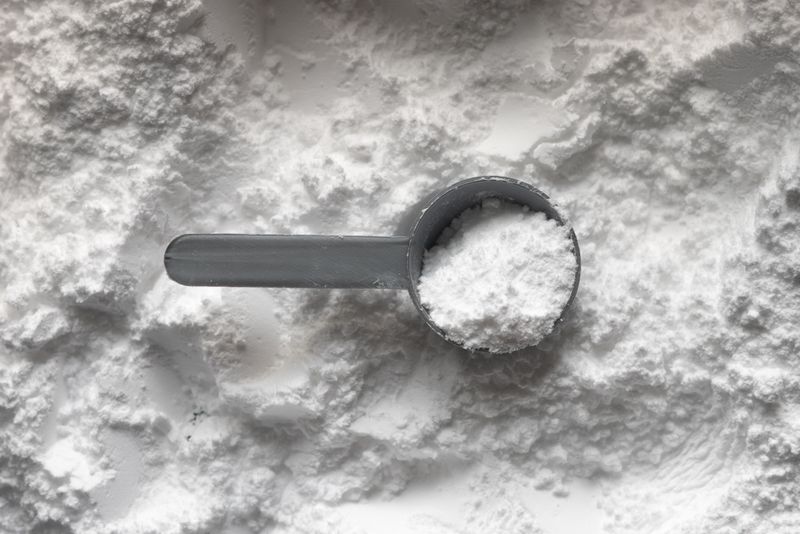
Health advice has never been easier to find. With TikTok, Instagram and AI at our fingertips, every second person seems to have become a health fundi, ready to tell us what we should be doing to stay younger, stronger and healthier for longer.The problem is that algorithms can keep feeding us the same claims until a promising new study begins to look like hard evidence, and an interesting supplement starts to feel like something we should all be taking.Creatine fits neatly into this trend, except for one important difference: it is hardly new and is already one of the most extensively studied sports supplements. What is new is the growing interest in benefits that may extend well beyond strength and athletic performance. Researchers are investigating its effects on the brain, preventing muscle loss, improving bone density, and even its possible supportive role during cancer treatment.So what does creatine actually do, who is most likely to benefit, and how much of the excitement is justified?Nick Bester, one of South Africa’s best-known endurance athletes, won the Comrades Marathon in 1991, collected nine gold medals over 15 finishes and was also a multiple Ironman winner. He remembers starting creatine in the early 1990s, when it first became available in South Africa.At the time it was largely associated with bodybuilders, weightlifters and serious athletes who relied on repeated bursts of power. Bester says the company marketing used him as something of a “guinea pig”. He noticed a difference quickly: his times in track sessions improved and he felt stronger.But there was a downside for an endurance runner: he also gained weight; the extra weight came off after he reduced his daily dose from 5 grams to 2.5g per day.Decades later, Bester, now manager of the Nedbank elite running team, still recommends small doses of creatine to select athletes to boost training quality and race performance. Among them is Dutch runner Piet Wiersma, who won the Comrades Marathon in 2024 and placed second in 2026. Still, Bester emphasises that creatine is just one piece of the puzzle. “At the end of the day it’s like any supplement, vitamin or mineral. You still have to eat properly and put in the training and hard work to get the benefit,” he says.Former Springbok prop CJ van der Linde, who was part of South Africa’s 2007 World Cup-winning team, had a different experience. He remembers being encouraged to use creatine in the early 2000s, when advice around dosage and diet was far more hit and miss. Although some teammates swore by it, it did not work as well for him. He put on too much weight and developed cramps, so he stopped taking it. For South Africa’s sprinting star Akani Simbine, every fraction of a second counts. In April, he ran the 100m in 9.98 seconds. It was his 12th consecutive season running under 10 seconds and his 51st sub-10-second race. At that level, even the smallest improvement can make a difference.For Simbine, creatine is not a silver bullet, but one small part of a carefully managed training and nutrition programme. He takes about five grams a day to support the strength and muscle he needs for explosive sprinting. When he experimented with more, the additional water weight did not suit him.The benefit, he says, shows up mainly in training. Creatine helps him maintain the quality and volume of the explosive work that ultimately allows him to be the best he can be.His diet is carefully tailored according to his competition schedule. Generally, he has about 50% vegetables, with the other half divided between protein and carbohydrates. This changes according to his weight and training load. Occasionally he has something sweet, but he tries to cut out processed foods completely.As he prepares for a major competition, his carbohydrate and protein intake is adjusted according to his training schedule and health tests. His dietitian, Nicki de Villiers, who has a special interest in sports nutrition, makes the same point as Bester: creatine is the tip of the iceberg. It cannot compensate for poor nutrition, inadequate training, insufficient sleep or too little recovery time.What the experts make of itDr Lervasen Pillay, a sports and exercise medicine physician at the University of Pretoria’s Sport, Exercise Medicine and Lifestyle Institute, says the evidence that creatine can improve performance in certain types of exercise is now well established.Today its use is far wider and includes sprinters, rugby and football players, tennis and squash players, rowers, canoeists and recreational gym-goers.The common thread is not the sport itself, but the type of effort involved. Creatine is most useful when muscles repeatedly have to produce a lot of power over a short period.What does creatine actually do?Creatine is a naturally occurring compound made from amino acids. The body makes some of it, while the rest comes mainly from foods such as meat and fish. We need to replace roughly one to three grams a day, depending largely on muscle mass.About 95% is stored in our muscles. As a rough guide, a person weighing 70kg carries around 120 grams of creatine in the body. Supplementation can increase these stores further; most of it is stored in skeletal muscle, where it forms part of what Pillay describes as the body’s “quick-start” energy system.He clarifies that it is not an energy drink; it does not give you a sudden buzz, it is not a stimulant such as caffeine and it does not provide a quick hit of sugar.Instead, taking creatine regularly can increase the amount of creatine and phosphocreatine stored in muscle. Those stores help the body rapidly regenerate adenosine triphosphate, or ATP, the molecule cells use as their immediate source of energy.ATP is used up quickly when a muscle is working at maximum intensity. Having more creatine stored in the muscle helps it replenish ATP more rapidly and repeat that intense effort. This also explains how creatine can help build strength and muscle during training.It does not simply build muscle on its own though; rather, it may allow someone to do an extra repetition, lift a slightly heavier weight or complete another high-quality sprint before fatigue takes over.That difference may sound small – but repeated over weeks and months of training, those small gains can translate into greater strength and muscle development.The same stored creatine is available during competition. Taking a spoonful immediately before a race will not suddenly make an athlete faster. The benefit comes from having well-stocked creatine stores in the muscles and from the training those stores have helped support.Are the benefits similar for men and women?Pillay says measurable changes have traditionally appeared greater in men, who generally have more skeletal muscle and greater potential for absolute muscle growth. Hormones and genetic differences also influence how much muscle an individual can build. But he cautions against assuming from this that women benefit less.One of the problems is that much of the traditional creatine research involved men between roughly 18 and 60. Women, particularly peri- and postmenopausal women, as well as older people, were studied far less.That imbalance is still visible in the research, although researchers are beginning to fill the gaps. This is where the evidence becomes less certain.In older people, some of the more convincing research suggests that creatine combined with resistance training may help preserve or increase muscle and strength. That matters because loss of muscle with age can gradually make everyday activities such as getting out of a chair, climbing stairs or recovering from illness more difficult.The claims around bone health are less convincing. Research has not established that creatine increases bone density, although some studies have found possible changes in bone structure when it is combined with exercise.Researchers are also looking at the brain. Some controlled studies suggest creatine may help memory or attention and may reduce the drop in cognitive performance caused by severe sleep deprivation. That does not mean it improves sleep itself, and there is currently no good evidence that it prevents or treats conditions such as Alzheimer’s or Parkinson’s disease.Possible cardiovascular benefits are also being investigated, but findings remain inconsistent. And while small studies involving young athletes, particularly swimmers and football players, have reported improvements in performance, the evidence in children and adolescents is still limited. The studies have generally been too small and too short to make confident claims about either long-term benefits or safety.In other words, there are interesting leads. But they are not yet reasons for everyone to start adding creatine to breakfast.A possible role during cancer treatmentOne of the newer areas of particular interest for Pillay comes from what he has seen in his own clinical practice. Cancer and its treatment can cause substantial loss of muscle and strength. Pillay says he has seen improvements in the muscle capacity of his cancer patients who have been able to continue exercising while taking creatine.He is careful not to suggest that creatine treats cancer; rather, he sees it as a possible supportive role. Alongside appropriate nutrition and exercise, it may help some patients preserve muscle and strength during a period when maintaining both can be difficult.It is an intriguing possibility, but one that still needs stronger clinical research.How safe is it to take regularly?Marie MacGregor, a registered dietitian at the Sports Science Institute of South Africa, says creatine monohydrate is one of the most extensively studied sports supplements and has a strong safety record when taken at recommended doses by healthy adults.But her advice echoes that of De Villiers – get the basics right first. It may be beneficial only when the foundations are in place. MacGregor often suggests trying creatine for three to four weeks and then assessing whether it is actually making a difference. Perhaps you can train a little harder, recover better or gradually improve your strength.If there is no noticeable or measurable benefit, she sees little reason to keep taking it. Individual responses vary considerably. Creatine monohydrate remains the simplest choice: it is the form used in most of the research and is generally the least expensive. For healthy adults, recommended doses have not been shown to damage the kidneys. People with existing kidney disease should, however, discuss supplementation with their doctor.Evidence during pregnancy is still limited, so pregnant women should also seek medical advice before taking it.Competitive athletes face an additional concern: creatine itself is not a banned substance, but supplements can become contaminated during manufacturing or contain ingredients that are not clearly declared on the label.Under anti-doping rules, athletes are ultimately responsible for what is found in their bodies. MacGregor therefore recommends choosing products that have been independently tested for prohibited substances, such as those carrying Informed Sport certification, and checking that the specific batch has been tested.How much and when?For most people there is no need to make creatine supplementation complicated. A common maintenance dose is about three to five grams of creatine monohydrate a day, adjusted where necessary for body size and individual goals.Some athletes use a loading phase to build muscle creatine stores more quickly. This typically involves around 20 grams a day, divided into four smaller doses, for five to seven days before dropping to three to five grams daily. But loading is optional.Taking the smaller daily dose will eventually raise muscle creatine stores as well, it simply takes longer. Timing appears to matter far less than consistency. Creatine does not need to be swallowed immediately before a workout. Taking it every day, perhaps with a meal or after training, is a simple approach.Taking large amounts at once, particularly on an empty stomach, can cause stomach discomfort in some people.The most noticeable early side effect is often a small increase in weight. Creatine draws water into muscle cells, so this initial gain is largely water rather than body fat. With resistance training, some later weight gain may also reflect increased lean muscle.Bester, Van der Linde and Simbine all noticed that weight mattered, although it affected each of them differently.It is also sensible to pay attention to water intake when taking creatine, particularly during hard training or in hot weather. There is no need to drink excessive amounts, but staying well hydrated throughout the day is important.Is creatine worth taking?Perhaps the simplest answer is that it depends on what you expect it to do. If the aim is to improve strength, power, repeated bursts of high-intensity exercise or to get slightly more from resistance training, creatine has an unusually solid body of evidence behind it.For older people doing resistance training, there is also encouraging evidence that it may help preserve muscle and strength.If the aim is better memory, stronger bones, improved sleep, cardiovascular protection or some broader anti-ageing effect, the answer is far less certain. These are interesting areas of research, but they should not yet be spoken about with the same confidence as creatine’s established benefits for strength and exercise performance.And that brings the story back to the athletes.Bester believes it helps some of the runners he coaches. Simbine uses it as one small part of an extraordinarily disciplined training and nutrition programme. Van der Linde decided that, for him, the weight gain and cramping outweighed any benefit.Creatine may help. It may even help enough to make a measurable difference. But the training still has to be done. DM
WELLNESS: Creatine: What works, what might work, and what is still unproven
Full Article
Original Source
Read the full article at Dailymaverick →KhanList aggregates and links to publicly available news content. We do not host full articles from third-party sources. Always verify important information with original sources.