
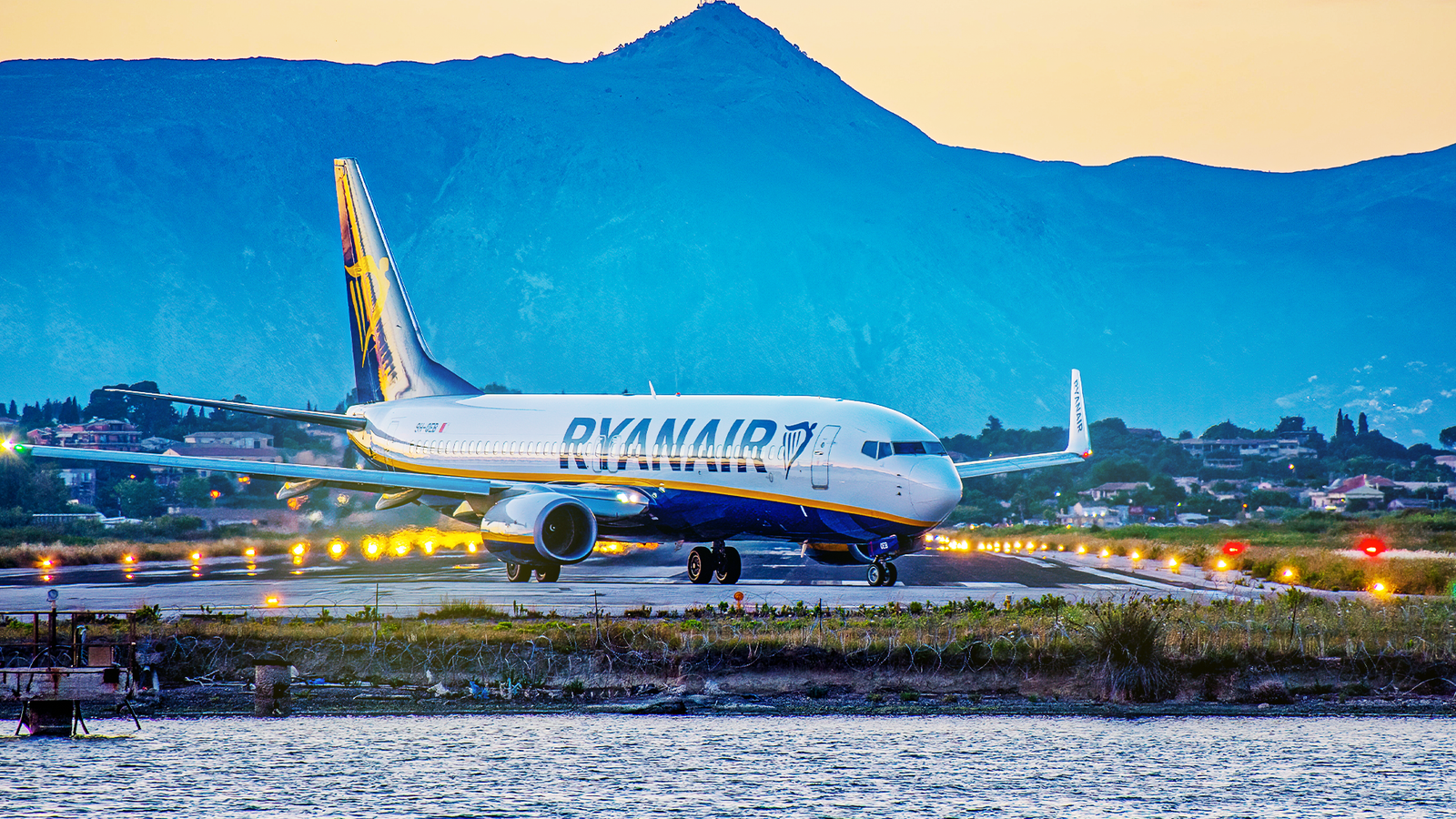
European aviation thrives on relentless efficiency, and few aircraft illustrate this operational discipline quite like a Ryanair Boeing 737-800, one of the most common sights in European skies and airports alike. Operating under the Malta Air certificate with registration 9H-QEB, this single narrowbody airframe goes on a very tough multi-sector rotation, day in and day out, that puts commercial aviation logistics on full display. To see just how much work this aircraft actually goes through, we tracked this specific aircraft for an entire day on Monday, October 12, a day where an eight-flight marathon occurred, crisscrossing the continent from Mediterranean island bases to northern European hubs. Observing these movements through the Simple Flying Flight Tracker provides a clear window into how ultra-low-cost carriers maximize asset velocity. Squeezing eight distinct flights into a single calendar day is impossible without absolute precision across ground operations, crew scheduling, and air traffic management. Outside of the tracking screen, each sector of this 24-hour cycle actually opens up a view to the backbone of Europe's most profitable short-haul business model. Starting The Day In Sicily Daylight breaks over Sicily as 9H-QEB prepares for its earliest departure from Catania / Fontanarossa Airport (CTA). FR8369 pushes back into the morning darkness, taking off at 04:27 UTC bound for Tirana International Airport Mother Teresa (TIA) in Albania. Airborne for one hour and two minutes, the aircraft cuts across the Ionian Sea before touching down at Tirana International Airport at 05:28 UTC, establishing the rapid cadence needed for the remainder of the day. Following a brisk passenger deplaning and boarding cycle, the aircraft gears up for the immediate return rotation as FR8370. Lifting off from Tirana at 06:16 UTC, the 737 tracks southwest back toward Sicily, landing in Catania at 07:16 UTC after an exactly one-hour airborne block. Completing two international sectors before most European business commuters arrive at their local terminals highlights the sheer speed of morning scheduling. The morning momentum continues without pause as 9H-QEB transitions onto domestic Italian routes. FR3750 departs Catania at 08:22 UTC, heading north toward Bologna / Borgo Panigale Airport (BLQ) with a 1-hour and 20-minute flight time, touching down at 09:43 UTC. The return leg, operating as flight FR3749, departs Bologna at 10:34 UTC and arrives back in Sicily at 11:52 UTC, meaning that 9H-QEB has already four completed flight legs before noon. Only 25 Minutes To Get Moving Again? Achieving an eight-sector daily schedule depends entirely on mastering the aggressive turnaround target that underpins the carrier's profitability. Industry data from Passenger Terminal World (June 2024) highlights that while legacy hub airlines typically budget fifty to seventy minutes for narrowbody aircraft turnarounds, low-cost operators enforce a rigid 25-minute window. Every minute an aircraft sits stationary at a gate means lost revenue and wasted capital expenditure. Actually completing a 25-minute turn is very challenging, needing synchronized choreography between flight deck crew, cabin attendants, and ground handlers at all times. Passengers deplane simultaneously through forward and aft airstairs, bypassing slower jetbridge connections. Cabin crew conduct rapid sweeps of the rows while fuel trucks and baggage loaders swarm the tarmac, ensuring catering and cargo are swapped out before incoming passengers begin streaming back up the stairs. During the midday stopover in Bologna, 9H-QEB demonstrates how buffer times can aid any minor schedule slippages. Although air traffic control congestion occasionally stretches gate intervals beyond the theoretical 25-minute benchmark, dispatchers build operational resilience into the daily roster. Ground teams perform rapid servicing protocols that return the aircraft to active taxiways before minor delays can make their way down the line. The Longest Trip Of The Day Credit: Simple Flying After completing its morning Italian and Balkan rotations, the aircraft stretches its legs on longer international sectors during the afternoon peak. Flight FR2851 departs Catania at 13:00 UTC, pointing northwest toward Paris Beauvais Airport (BVA). This longer trunk route features two hours and 45 minutes of sustained cruising altitude, testing the endurance of both flight crew and passenger cabin systems before landing at 15:46 UTC. The return journey from Northern France operates as flight FR2850, pushing back from Paris Beauvais at 16:30 UTC. Tracking data replay illustrates the aircraft tracing standard European air traffic control corridors across the Alps back into Italian airspace. Touching down in Catania at 18:52 UTC after a two-hour and 22-minute flight, the airframe completes its longest legs of the day without any operational hiccups along the way. Operating consecutive multi-hour international flights places sustained demands on onboard systems and flight deck crews. Dual-pilot rosters rotate duties carefully across these extended sectors to maintain peak alertness. Ground teams in Beauvais use rapid turnaround protocols identical to those at smaller regional bases, a perfect example of how that standardization scales effectively across major European secondary airports. Returning To Where It All Began Entering the evening hours, 9H-QEB embarks on its final pair of domestic island flights. Flight FR375 departs Catania at 19:42 UTC, heading west toward Cagliari / Elmas Airport (CAG) on the island of Sardinia. The 55-minute dash lands passengers at 20:37 UTC, maintaining high load factors even on late-evening regional hops that feed regional connectivity. The final rotation of the 24-hour cycle operates as flight FR376, lifting off from Cagliari at 21:25 UTC and returning to Catania at 22:25 UTC. Touching down just past midnight, the aircraft completes eight distinct flights totaling over ten hours of active airborne time. Ground personnel secure the cabin and power down systems as the airframe heads into its overnight parking slot, ready for yet another day of relentless flying. Operating this intense schedule smoothly stems directly from the absolute fleet uniformity that Ryanair is so famous for. Because 9H-QEB belongs to a standardized family of Boeing 737-800 aircraft, maintenance technicians at base carry identical spare parts, tooling manuals, and troubleshooting guides. Overnight checks proceed rapidly because engineers encounter no unfamiliar avionics or engine configurations, allowing the aircraft to clear routine inspections before the next dawn departure. The Difference Between Low-Cost & Legacy Evaluating 9H-QEB's eight-sector marathon highlights the vast operational chasm separating ultra-low-cost carriers from legacy network operators. Traditional legacy airlines operating short-haul European routes frequently schedule only three or four daily sectors per airframe, as noted in analysis by Airways Magazine. These legacy schedules often route aircraft back to a primary mega-hub multiple times per day, incurring heavy airport slot fees and extended ground holding delays. Financial implications of high aircraft utilization massively dictate airline profitability margins. Squeezing eight revenue-generating flights out of a single physical airframe spreads fixed ownership costs, lease rates, and insurance expenses across a massive volume of passenger kilometers. This high asset velocity drives unit operating costs down significantly, allowing low-cost operators to offer aggressive base fares while still maintaining healthy operating margins. Balancing extreme aircraft utilization does, however, mean accepting specific operational compromises that can come back around to bite. Network schedules leave minimal buffer time for weather disruptions, industrial action, or airspace restrictions. Traditional network carriers can fend off these irregular operations by holding spare aircraft at major hubs, whereas low-cost operators rely on tight schedule margins where any single disruption ripples across subsequent evening sectors very quickly, and quite uncontrollably. One Of Many Stars Of The Show Following Malta Air's 737-800 registration 9H-QEB through its day on October 12, illustrates the sophisticated machinery and the people that make that machinery move that are powering European low-cost aviation every day. Successfully completing eight sectors across Sicily, the Balkans, mainland Italy, France, and Sardinia is only achievable through flawless coordination between flight crews, ground handlers, and maintenance engineers. Ultimately, all of the airborne hours this aircraft has accumulated are for something very special, being part of Ryanair's proof that a standard narrowbody asset can be an exceptionally productive revenue generator. Industry benchmarks established by such intensive 24-hour rotations continue to challenge traditional legacy carriers attempting short-haul cost control. Fleet modernization initiatives and airport slot constraints are evolving, but maintaining high asset velocity is still the defining principle of low-cost operational resilience. The success of 9H-QEB's daily marathon can be attributed to many other aircraft in the fleet, so head on to the Simple Flying Flight Tracker and see what other similar aircraft are out there in the skies.
We Tracked A Boeing 737 For 24 Hours: Here's How Many Flights It Squeezed In
Full Article
Original Source
Read the full article at Simpleflying →KhanList aggregates and links to publicly available news content. We do not host full articles from third-party sources. Always verify important information with original sources.